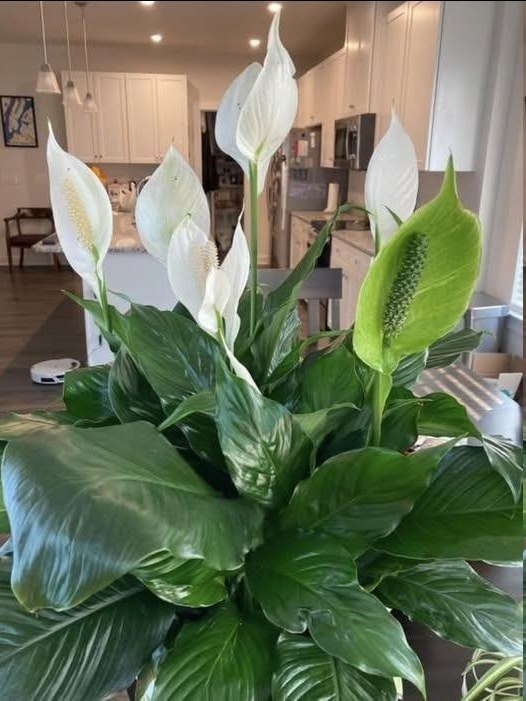
The Peace Lily is a popular indoor plant known for its elegant white flowers and lush green leaves. Its scientific name is Spathiphyllum, and despite the name “lily,” it is not a true lily.
🌿 Overview
Peace lilies are tropical evergreen plants native to the rainforests of Central and South America. They are widely grown as houseplants because they tolerate low light and are relatively easy to care for.
🌼 Appearance
- Leaves: Dark green, glossy, and oval-shaped
- Flowers: White “spathe” (a leaf-like bract) surrounding a central spike called a spadix
- Size: Typically 1–4 feet tall indoors, depending on variety
- Growth habit: Clumping plant that spreads slowly over time
The white “flower” is not a true flower—it’s a modified leaf that helps attract pollinators in the wild.
☀️ Light Requirements
- Prefers low to medium indirect light
- Can survive in low-light rooms, making it ideal for offices and bedrooms
- Avoid direct sunlight, which can burn leaves and cause browning
A common sign of low light: fewer or no blooms.
💧 Watering Needs
- Keep soil slightly moist but not soggy
- Water when the top 1–2 inches of soil feels dry
- Drooping leaves are a strong indicator it needs water
- Sensitive to chlorinated or hard water (brown leaf tips may appear)
🌡️ Temperature & Humidity
- Ideal temperature: 18–27°C
- Does not tolerate cold drafts or temperatures below ~12°C
- Loves high humidity, but adapts well to normal indoor conditions
🌱 Soil & Fertilizer
- Well-draining potting mix (peat-based or aroid mix works well)
- Fertilize lightly every 4–6 weeks during spring and summer
- Avoid over-fertilizing (can damage roots and leaves)
🌸 Flowering
Peace lilies typically bloom in cycles:
- Spring and early summer are peak blooming seasons
- Flowers can last several weeks
- Proper light and feeding increase flowering frequency
🧼 Air Purification
Peace lilies are often praised for improving indoor air quality. They can help filter certain toxins like:
- Formaldehyde
- Benzene
- Carbon monoxide (in small indoor amounts)
(Note: air-purifying effects exist but are modest in real-world conditions.)
⚠️ Toxicity
- Toxic to pets and humans if ingested
- Contains calcium oxalate crystals
- Can cause:
- Mouth irritation
- Drooling (pets)
- Nausea or swelling
Keep away from cats, dogs, and small children.
🪴 Common Problems
- Brown leaf tips: low humidity, fluoride/chlorine in water
- Yellow leaves: overwatering or poor drainage
- No flowers: insufficient light or nutrients
- Drooping plant: either underwatering or overwatering
🌿 Propagation
- Usually propagated by division (splitting the root clumps)
- Best done during repotting in spring
🪴 Why People Love It
- Beautiful, calming appearance
- Low-light tolerance
- Relatively low maintenance
- Good for beginners
If you want, I can also explain how to make your peace lily bloom more often, or help diagnose a specific problem with yours.
