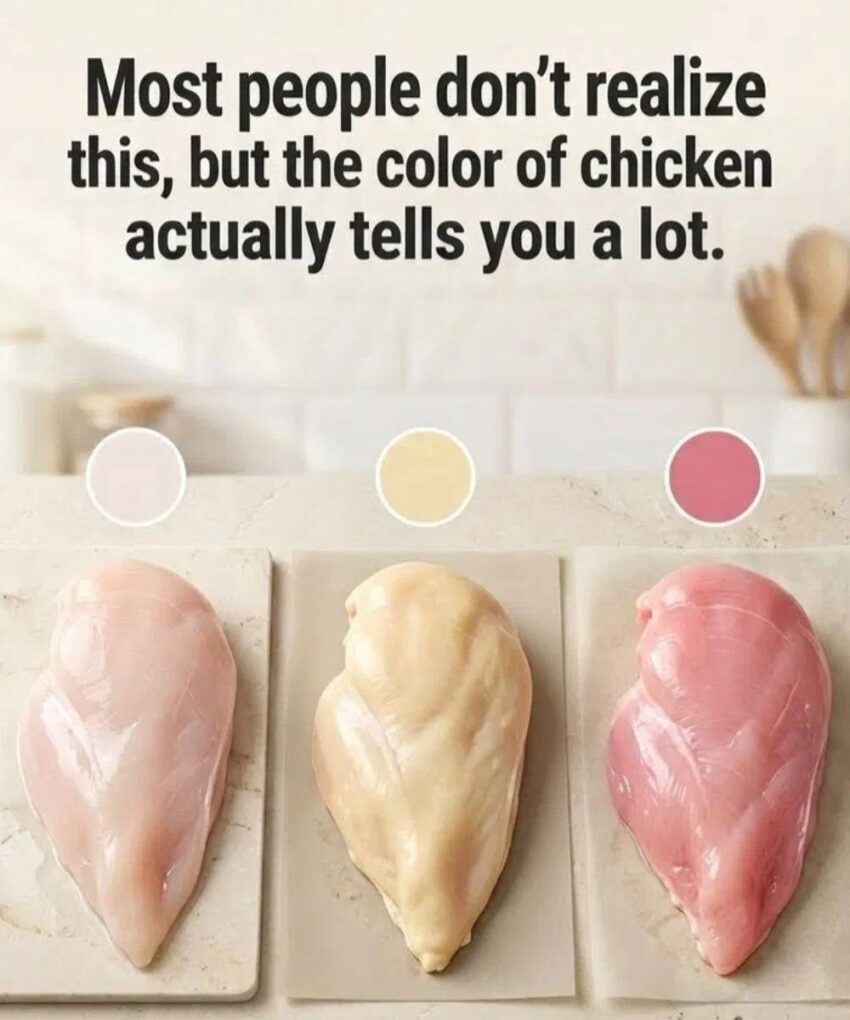
It does seem intuitive at first glance—people often assume “better-looking” or more vividly colored chicken must mean higher quality—but in reality the relationship is weak and often misunderstood.
Chicken color can refer to a few different things, and each is driven by different factors:
1. Skin color (white vs yellow):
This is mostly about diet and genetics, not quality. Yellow skin typically comes from carotenoids (from corn or certain plants in feed). White skin chickens don’t have those pigments deposited the same way. Neither is inherently “better.”
2. Meat color (pale pink vs darker pink):
This is influenced by muscle type and myoglobin levels. For example, thigh meat is darker because those muscles are used more. Breed, activity level, and age matter more than quality grading.
3. “Freshness” misconceptions:
Some people associate very pale or unusually colored meat with additives or poor quality, but color alone is not a reliable indicator of safety or nutrition. Proper handling, storage temperature, and processing matter far more.
4. What actually indicates quality:
In regulated markets, quality is assessed through factors like hygiene during processing, fat distribution, tenderness, feed quality, and inspection standards—not skin or meat color.
So the confusion persists because color is visible and easy to judge, while real quality is mostly invisible.
If you want, I can break down how to actually identify good-quality chicken when buying it—there are a few simple, reliable cues.
