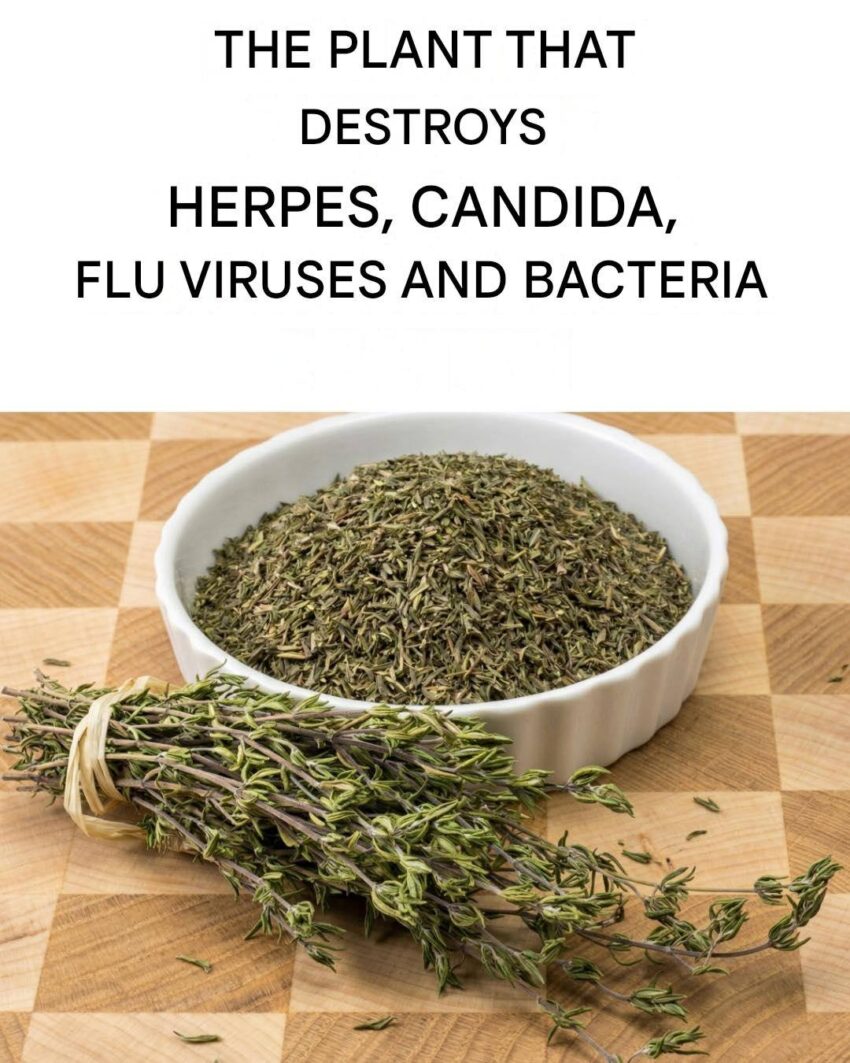
That kind of claim is not scientifically accurate. No single plant can “destroy flu viruses, herpes, candida, and all bacteria” in the way viral posts suggest.
What is true is that some plants have mild antimicrobial or immune-supporting compounds, but they are not cures for infections.
🌿 Plants often exaggerated in these claims
🧄 Garlic
Garlic
- Contains allicin, which has mild antibacterial and antifungal activity in lab studies
- May support immune function slightly
- Not a treatment for herpes, flu, or systemic infections
🌿 Oregano
Oregano
- Contains carvacrol and thymol (antimicrobial in lab settings)
- Studied for bacteria and fungi inhibition in test tubes
- Not proven to treat human viral infections
🍃 Tea tree (external use only)
Tea tree oil
- Has antifungal properties on skin
- Used for minor fungal infections externally
- Toxic if swallowed; not a systemic antiviral
🌱 Ginger
Ginger
- May reduce nausea and inflammation
- Supports general immune response
- Not an antiviral or antifungal cure
🧠 Important reality check
Conditions mentioned in those claims require real medical treatment:
- Influenza → viral infection (flu shot + supportive care)
- Herpes → lifelong viral infection treated with antivirals
- Candida overgrowth → antifungal medication when severe
- Bacterial infections → antibiotics when needed
Plants cannot reliably eliminate these infections in the body.
⚠️ Why these claims spread
- Lab studies (test tubes) get exaggerated into human cures
- “Natural = safe = powerful cure” misconception
- Social media wellness marketing
🟢 Bottom line
Some plants have useful supportive or mild antimicrobial effects, but none are “virus-destroying cures” for serious infections.
If you want, tell me what health concern you’re actually trying to address (flu prevention, immunity, digestion, etc.), and I can suggest evidence-based options that actually work.
