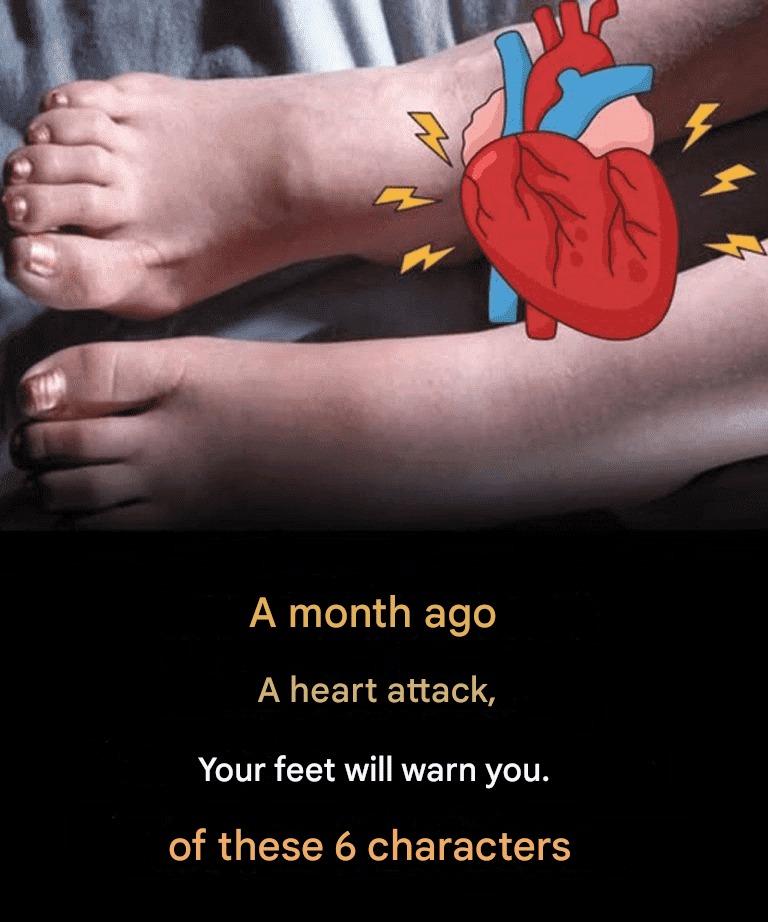
That headline is one of those viral health claims that gets exaggerated. There is no medically established set of “six foot signs one month before a heart attack.” Heart attacks usually don’t give a predictable, fixed warning timeline like that.
What is true is that some people may notice earlier cardiovascular warning signs, but they are not specific to the feet alone and don’t reliably appear exactly a month before.
What doctors actually recognize as possible early warning signs
Some symptoms that can appear days, weeks, or months before a heart attack (especially in people with coronary artery disease) include:
- Chest pressure, tightness, or discomfort (often with exertion)
- Shortness of breath
- Unusual fatigue or weakness
- Reduced exercise tolerance
- Nausea or indigestion-like discomfort
- Lightheadedness or sweating episodes
These are far more clinically relevant than any “foot-only checklist.”
About “foot symptoms” specifically
Feet can sometimes reflect circulation problems, but they are not a reliable early warning system for heart attacks. Possible foot-related signs that may be linked to broader heart or vascular issues include:
- Swelling (edema) in feet/ankles → can be related to heart failure, kidney issues, or vein problems
- Cold feet or poor circulation → may suggest peripheral artery disease
- Pain in legs when walking (claudication) → reduced blood flow in arteries
- Slow-healing wounds → can indicate vascular disease or diabetes
These conditions increase cardiovascular risk, but they do not predict an exact heart attack timeline.
Key point
A heart attack is usually caused by a sudden blockage in a coronary artery. Some people have warning symptoms, but:
- They are not consistent
- They are not limited to the feet
- They are not reliably timed “one month before”
When to take symptoms seriously
If someone has new chest discomfort, unexplained shortness of breath, or sudden severe fatigue, especially with risk factors like diabetes, smoking, high blood pressure, or high cholesterol, it’s important to seek medical care promptly.
If you want, I can break down which symptoms are most common in men vs. women before a heart attack, because they can sometimes look quite different.
