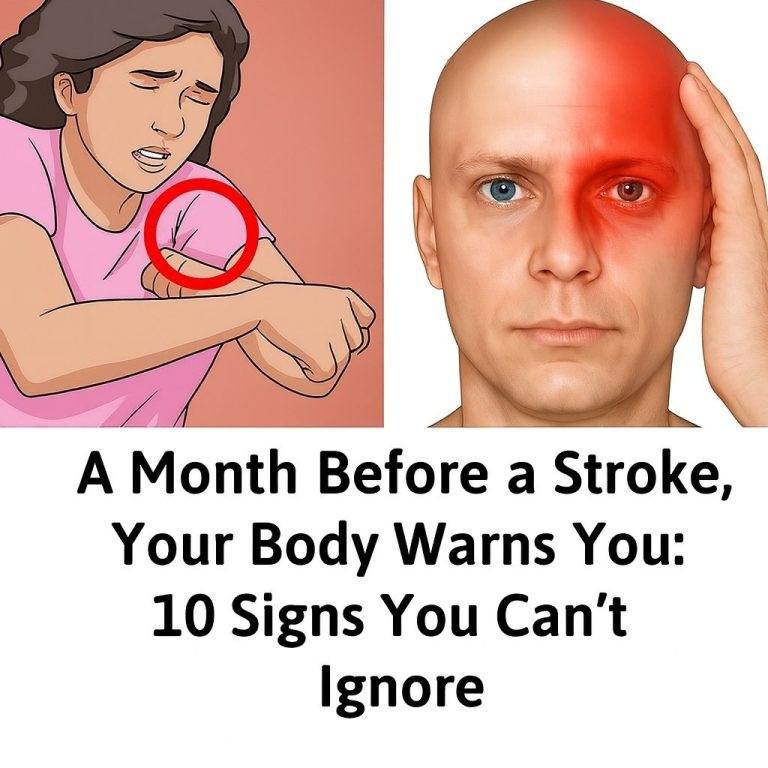
That headline—“A month before a stroke, your body warns you: 10 signs not to ignore”—is mostly clickbait. Strokes usually happen suddenly, and there isn’t a guaranteed list of symptoms that appear a full month in advance. That said, there are warning signs and risk indicators you can watch for. Here’s a clear, evidence-based breakdown:
1. Transient Ischemic Attacks (TIAs)
- Often called “mini-strokes”, these are brief episodes of stroke-like symptoms that last minutes to hours and then disappear.
- TIAs are the biggest red flag that a stroke may follow soon—often within 48 hours to a few days, not necessarily a month.
- Symptoms include: sudden numbness, weakness, trouble speaking, or vision changes.
2. Sudden Weakness or Numbness
- Especially on one side of the body (arm, leg, or face).
- Even mild, brief episodes should be evaluated.
3. Trouble Speaking or Understanding Speech
- Slurred speech or confusion can be an early warning sign.
4. Vision Problems
- Sudden blurred vision, double vision, or loss of vision in one eye.
5. Dizziness, Loss of Balance, or Coordination
- Unexplained vertigo or difficulty walking may indicate a mini-stroke or circulation issue.
6. Severe Headache
- A sudden, intense headache (often described as the “worst headache of your life”) could signal hemorrhagic stroke risk.
7. Facial Droop
- One side of the face may sag when smiling—a key sign captured in the BE-FAST stroke acronym.
8. Sudden Fatigue or Weakness
- Unexplained tiredness or heaviness in limbs can sometimes precede a stroke, though it’s non-specific.
9. Rapid Heartbeat or Palpitations
- Can indicate atrial fibrillation, a major stroke risk factor.
10. Memory or Cognitive Changes
- Brief episodes of confusion or trouble processing information may occur, particularly in people with vascular risk factors.
Key Points
- Most strokes occur suddenly, so waiting for a “month warning” is risky.
- TIAs are the most reliable early indicator, and they require immediate medical evaluation.
- Risk factors like high blood pressure, diabetes, smoking, high cholesterol, and atrial fibrillation increase your likelihood of stroke.
BE-FAST Reminder for Sudden Stroke Symptoms
- Balance: sudden dizziness or loss of balance
- Eyes: sudden vision trouble
- Face: facial droop
- Arms: weakness/numbness
- Speech: slurred or confused
- Time: call emergency services immediately
💡 Bottom line:
There isn’t a guaranteed “month-ahead warning,” but recognizing sudden neurological symptoms quickly can save lives. TIAs or any of the BE-FAST signs should trigger immediate medical attention.
I can also make a simple visual “10 Stroke Warning Signs” checklist that’s easy to remember and share—it’s life-saving. Do you want me to make that?
