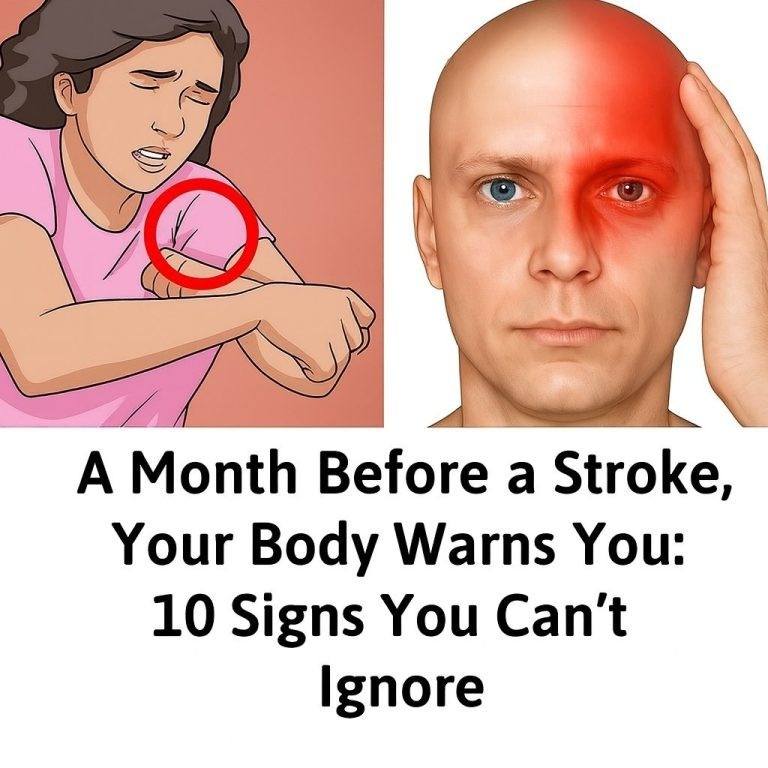
The idea that the body gives clear, reliable warning signs a month before every stroke is a bit misleading. Some people do experience early symptoms—often related to mini-strokes (transient ischemic attacks, or TIAs)—but many strokes happen suddenly without long warning.
Still, there are warning signs and risk signals that may appear days to weeks before a stroke in some people. Recognizing them matters because they can be a chance to prevent a major event.
Here are 10 possible warning signs that should never be ignored:
1. Sudden numbness or weakness
Especially on one side of the face, arm, or leg. Even if it comes and goes.
2. Brief episodes of vision problems
Blurry vision, double vision, or temporary loss of vision in one eye.
3. Sudden speech difficulty
Slurred speech, trouble finding words, or confusion while speaking.
4. Unexplained dizziness or balance issues
Feeling off-balance, unsteady walking, or sudden vertigo.
5. Severe or unusual headaches
A sudden, intense headache with no known cause (more concerning if it’s different from your usual headaches).
6. Short “mini-stroke” episodes (TIA)
Stroke-like symptoms that last minutes to hours and fully resolve. These are strong warning signs of future stroke risk.
7. Sudden confusion or memory problems
Difficulty understanding simple things or temporary disorientation.
8. Tingling or numb sensations
Pins-and-needles feeling, especially if it affects one side of the body.
9. Trouble walking or coordination problems
Dragging a foot, stumbling, or sudden loss of coordination.
10. Unexplained fatigue or cognitive slowing
A sudden drop in mental sharpness or extreme tiredness without clear reason.
Important reality check
A stroke (Stroke) is usually caused by either a blocked blood vessel or bleeding in the brain. While some people experience warning symptoms (especially TIAs), many strokes happen without a predictable “1-month warning period.”
What is important:
- TIAs are emergencies even if symptoms go away.
- High blood pressure, diabetes, smoking, high cholesterol, and heart disease are major risk factors.
- Early medical evaluation after any warning symptom can significantly reduce stroke risk.
When to seek help immediately
If any sudden symptoms occur (even if they fade), especially:
- Face drooping
- Arm weakness
- Speech difficulty
→ treat it as an emergency.
If you want, I can also explain how to tell a TIA from a stroke, or what daily habits actually reduce stroke risk the most.
