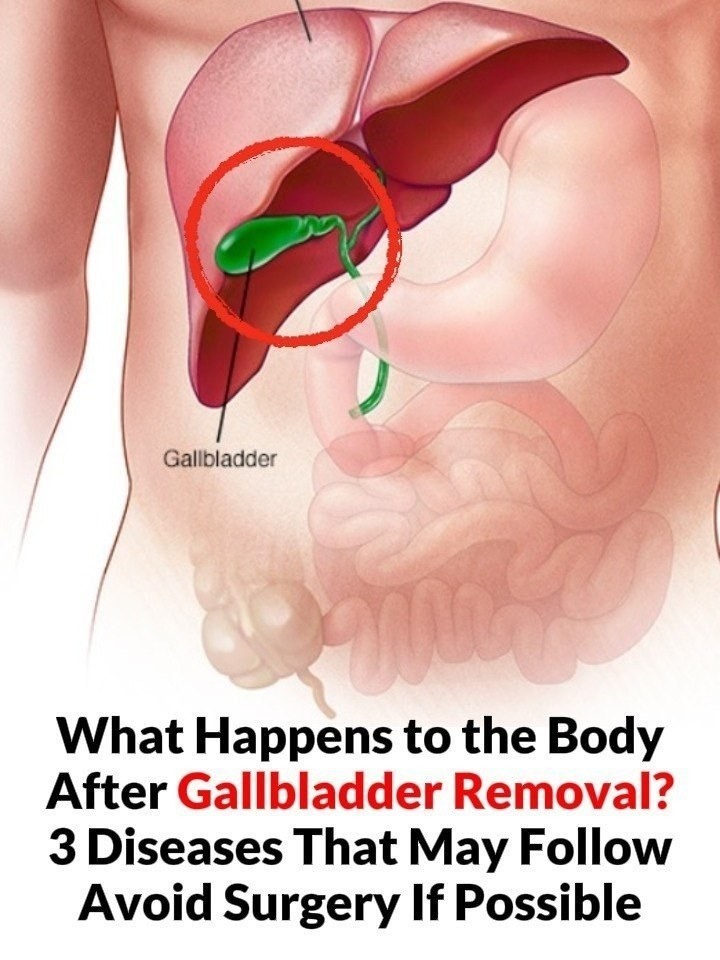
Here’s a clear, medically accurate breakdown of what actually happens after gallbladder removal (cholecystectomy), and why the idea of “avoiding it at all costs” is not always justified.
After Gallbladder Removal: 3 Conditions You Can Develop
Gallbladder removal is generally safe and often necessary (especially for gallstones, infection, or blockage). But a subset of people develop what’s called post-cholecystectomy syndrome, where digestive symptoms persist or appear after surgery. (MSD Manuals)
The main conditions linked to life after gallbladder removal are:
1) Bile Acid Diarrhea (most common issue)
After removal, bile is no longer stored and released in controlled bursts. Instead, it drips continuously into the intestine.
In some people, this excess bile irritates the colon and pulls water into the bowel → causing:
- Chronic or urgent diarrhea
- Loose, yellowish stools
- Bloating and cramping
This happens because bile acids aren’t properly reabsorbed and spill into the colon. (PMC)
👉 Important reality check:
This is usually treatable (diet changes or bile acid binders), and often improves over time.
2) Sphincter of Oddi Dysfunction (SOD)
The Sphincter of Oddi is a muscular valve controlling bile flow into the intestine.
After gallbladder removal, some people develop dysfunction where the valve becomes overly tight or spasms.
This can cause:
- Upper right abdominal pain (similar to gallbladder attacks)
- Nausea or vomiting
- Occasionally pancreatitis
It is more commonly reported after gallbladder surgery, especially in people who already had biliary issues. (Cleveland Clinic)
👉 Reality check:
It’s uncommon, and diagnosis is complex (not everyone with pain actually has SOD).
3) Post-Cholecystectomy Syndrome (PCS)
This is a broad term—not one disease.
It includes any persistent digestive symptoms after surgery, such as:
- Indigestion, bloating
- Fat intolerance
- Abdominal discomfort
- Diarrhea or reflux
Causes can include:
- Bile flow changes
- Reflux gastritis
- IBS-like symptoms
- Rare retained bile duct stones (NCBI)
👉 Reality check:
PCS is often functional (gut adaptation issues) rather than dangerous structural disease.
Should You “Avoid Surgery When Possible”?
This idea is partly misleading.
✔ When surgery IS appropriate:
Gallbladder removal is recommended when there are:
- Recurrent gallstone attacks
- Inflammation (cholecystitis)
- Blockage or infection
- Pancreatitis from stones
In these cases, delaying surgery can lead to:
- Severe infection
- Emergency surgery
- Pancreas complications (which are far more dangerous than the operation itself)
❗ Why people get worried online:
Most long-term symptom stories come from:
- A small percentage of patients
- Pre-existing gut or bile disorders
- Misdiagnosed functional bowel issues
- Adaptation period after surgery
The majority of people:
- Digest normally again after recovery
- Have no major long-term complications
The balanced truth
- Gallbladder removal does change digestion
- It can cause real but usually manageable issues
- But avoiding necessary surgery can be more dangerous than the surgery itself
If you want, I can break down:
- Who is most at risk of post-surgery problems
- How to reduce bile diarrhea naturally
- Or whether your symptoms suggest gallbladder surgery is even needed in your case
