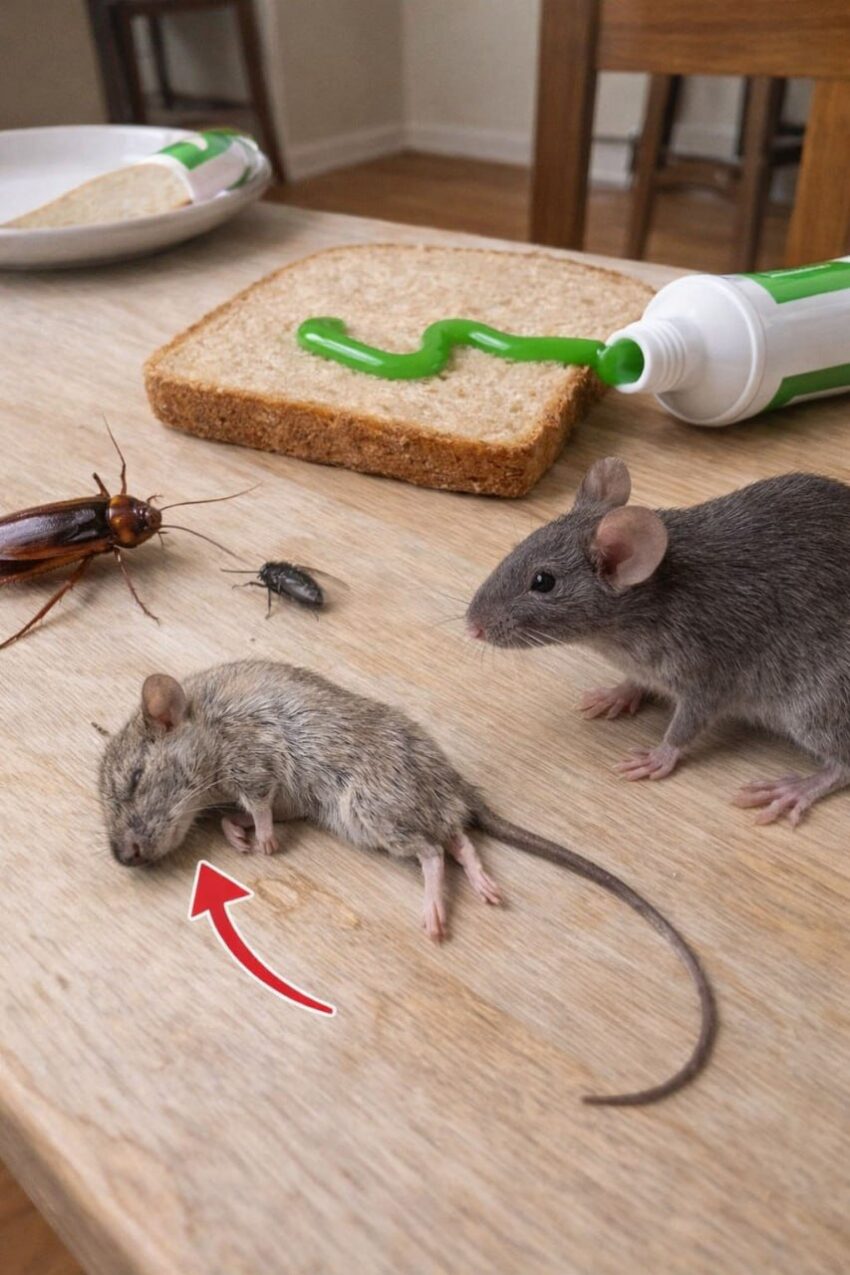
Yes—mint toothpaste can seem to repel some common household pests, but it’s not a strong or reliable pest control method.
Here’s what’s actually going on:
Mint toothpaste usually contains peppermint or spearmint flavoring oils, and those scents can temporarily confuse or irritate the sensory receptors of some pests like:
- ants
- spiders
- cockroaches (mildly)
- mosquitoes (limited effect)
So if you smear a little toothpaste near entry points, you might notice fewer insects for a short time. But that doesn’t mean they’re truly repelled in a lasting or effective way.
Why it “works” sometimes
- Strong mint smell can mask scent trails ants use to navigate
- Some insects avoid strong aromatic compounds
- It may act as a short-term barrier until it dries out or gets cleaned away
The catch (important)
- It wears off quickly
- It doesn’t kill pests or prevent infestation
- It’s far weaker than real peppermint oil or proper repellents
- Some pests simply ignore it after a while
Better “natural” version of the same idea
If you’re curious about the actual trick people are trying to copy, use:
- Peppermint essential oil + water spray (much stronger than toothpaste)
- Cotton balls with peppermint oil near entry points
- Sealing cracks + removing food sources (this is what really works)
Bottom line
Mint toothpaste can act like a temporary scent deterrent, but it’s more of a quick DIY experiment than a dependable pest solution.
If you want, I can suggest a few actually effective natural pest control methods depending on what pest you’re dealing with.
