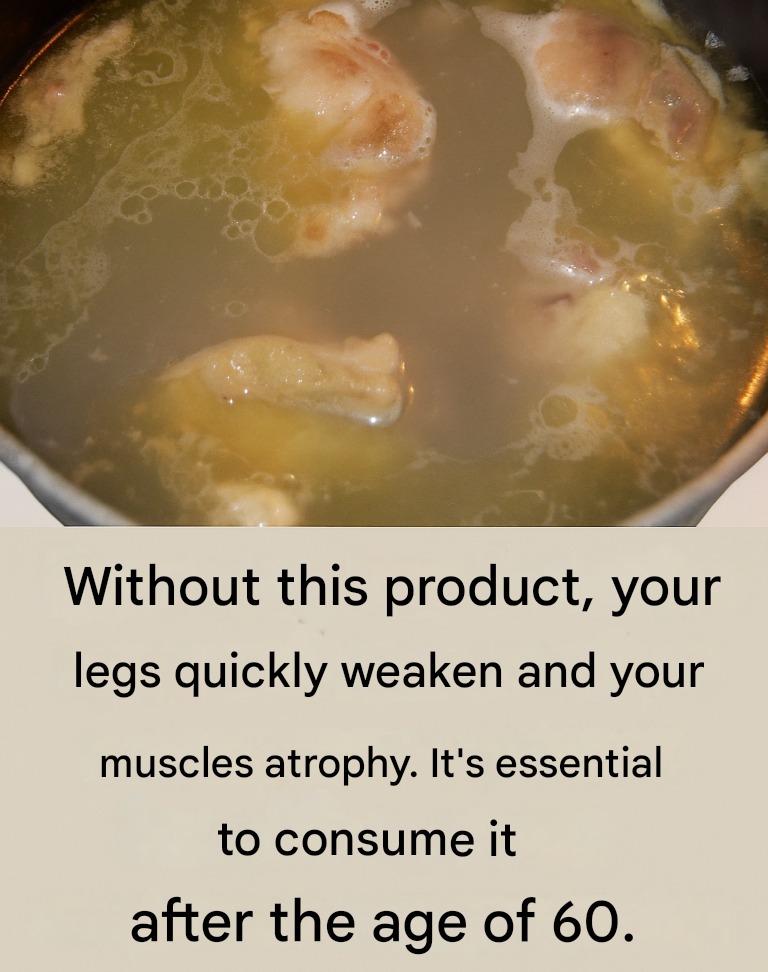
Consuming bone broth—often made from chicken bones or pig’s feet—is a long-standing traditional practice, and there are some real benefits behind it. But it’s important to separate what it can do from what it can’t.
🥣 Why People Use Bone Broth
Bone broth is rich in nutrients that come from slow-cooking bones and connective tissue:
- Collagen → gelatin
Helps support joints, skin, and connective tissue - Amino acids (like glycine and proline)
Important for tissue repair and overall health - Minerals (calcium, magnesium, phosphorus)
Support bone strength - Protein (small amount)
Contributes to muscle maintenance
💪 Potential Benefits
- Joint support: Gelatin may help cushion joints and improve comfort over time
- Gut health: Easy to digest and soothing for the digestive tract
- Hydration & recovery: Warm, mineral-rich liquid can support recovery, especially in older adults
- General nutrition: Adds nutrients without being heavy
⚠️ Important Reality Check
- It does not build muscle on its own — you still need enough total protein (from eggs, meat, legumes, etc.)
- Collagen from broth is broken down during digestion, so it’s not directly absorbed into joints
- Benefits are modest and gradual, not dramatic
🧠 Best Way to Use It
Think of bone broth as a supportive addition, not a miracle:
- Drink a cup daily or a few times a week
- Use it as a base for soups or stews
- Combine with protein-rich foods and exercise for real muscle and joint support
⚖️ Bottom Line
Bone broth can be a healthy, nourishing habit, especially for joints and overall wellness—but it works best as part of a balanced diet and active lifestyle, not as a standalone solution.
If you want, I can give you a simple homemade bone broth recipe that maximizes nutrients and flavor.
