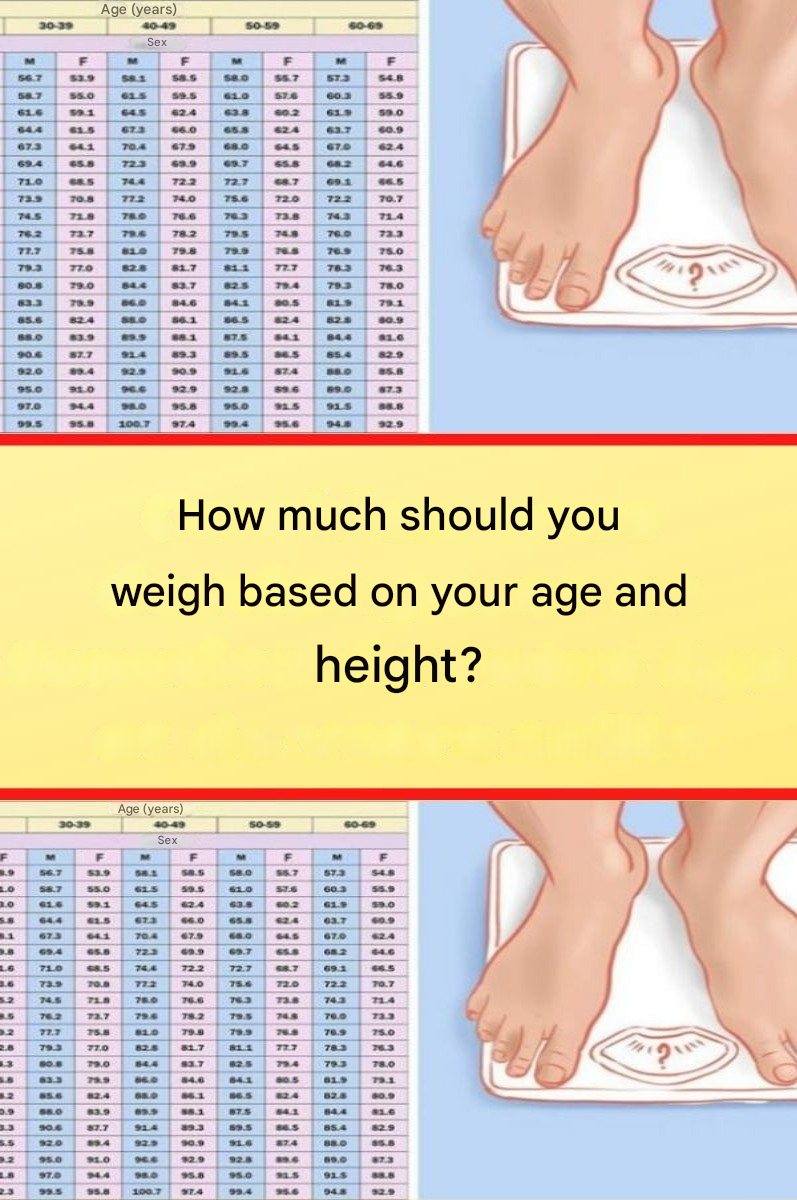
There isn’t a single “perfect weight by age and height” that applies to everyone. Doctors usually estimate a healthy range using height-based ranges (BMI) rather than age, because body composition matters more than age alone.A common tool is Body Mass Index (BMI).
⚖️ Healthy weight range (based on BMI 18.5–24.9)
You can estimate a healthy weight range from height like this:
📏 Quick guide (adults)
| Height | Healthy weight range |
|---|---|
| 5’0″ (152 cm) | 95–128 lb (43–58 kg) |
| 5’2″ (157 cm) | 101–135 lb (46–61 kg) |
| 5’4″ (163 cm) | 108–145 lb (49–66 kg) |
| 5’6″ (168 cm) | 115–154 lb (52–70 kg) |
| 5’8″ (173 cm) | 122–164 lb (55–74 kg) |
| 5’10” (178 cm) | 129–174 lb (59–79 kg) |
| 6’0″ (183 cm) | 136–184 lb (62–83 kg) |
👶 Does age matter?
Age affects body composition, not the basic healthy range:
- Muscle mass tends to decrease with age
- Fat distribution may change
- Metabolism slows slightly
But BMI ranges stay the same for adults. That’s why there is no separate “ideal weight for each age” in medical guidelines.
⚠️ Important limitations of BMI
BMI does NOT account for:
- Muscle vs fat
- Bone structure
- Body shape
- Fitness level
For example:
- A muscular person may weigh more but be very healthy
- An older adult may have normal weight but low muscle mass
🧠 Better indicators of health than weight alone
Doctors also look at:
- Waist circumference
- Blood pressure
- Blood sugar levels
- Cholesterol
- Physical strength and activity
🧭 Bottom line
- Healthy weight is mainly based on height, not age
- BMI 18.5–24.9 is the general healthy range for adults
- Individual health matters more than a single number on the scale
If you want, tell me your height and age, and I can calculate a personal healthy weight range just for you.
