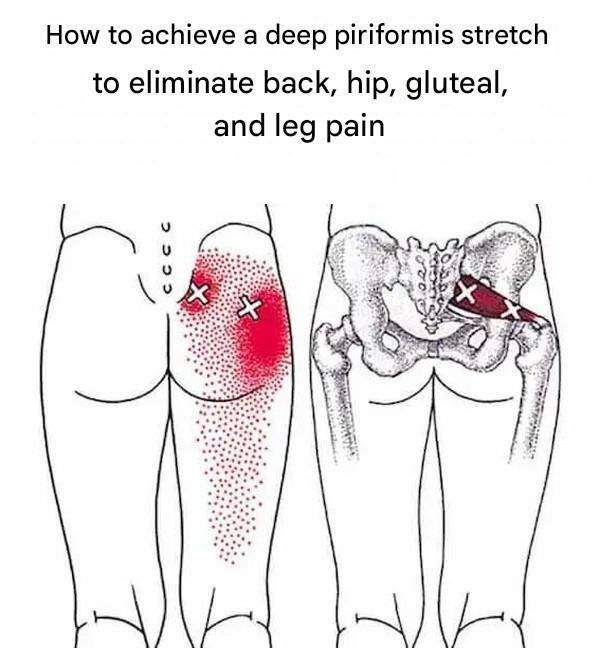
The piriformis muscle sits deep in the glute area and can irritate the nearby sciatic nerve, sometimes contributing to buttock, hip, or leg pain (often called piriformis-related pain or sciatica-like symptoms).Stretching can help in some cases—but it’s not a universal “elimination” of back or leg pain, because those symptoms can also come from the spine, discs, or other muscles.
🧘♂️ How to safely do a deep piriformis stretch
1. 🪑 Seated Figure-4 Stretch (most common)
- Sit on a chair
- Cross one ankle over the opposite knee (making a “4” shape)
- Keep your back straight
- Gently lean forward until you feel a stretch in the buttock
- Hold 20–30 seconds, repeat 2–3 times each side
2. 🛏️ Lying Figure-4 Stretch (deeper version)
- Lie on your back
- Cross one ankle over opposite knee
- Pull the uncrossed leg toward your chest
- You should feel a deep stretch in the glute area
- Hold 20–30 seconds
3. 🧍♂️ Standing wall stretch (gentle option)
- Place foot on a chair or low surface
- Keep hips square
- Lean forward slightly
- Good for beginners or tight hips
4. 🧘 Pigeon pose (yoga-based deep stretch)
- Bring one leg forward bent at the knee
- Extend the other leg behind you
- Lean forward slowly
- Very effective but should be done carefully
⚠️ Important safety notes
Stop if you feel:
- Sharp or shooting pain
- Numbness or tingling worsening
- Pain radiating strongly down the leg
These may suggest true nerve irritation rather than muscle tightness.
🧠 Why stretching alone may not “eliminate” pain
Pain in the back, hip, or leg may also come from:
- Lumbar disc issues
- Muscle imbalances
- Postural strain
- Nerve compression higher in the spine
So stretching helps some causes, but not all.
🧩 Best results usually come from combining:
- Piriformis stretching
- Glute strengthening
- Core stability work
- Walking or light movement
- Posture correction
🧭 Bottom line
A deep piriformis stretch can reduce tightness and ease some sciatic-like discomfort, but it is not a guaranteed cure for all back or leg pain. Consistency + correct diagnosis matters more than intensity.
If you want, tell me where exactly your pain is (buttock, lower back, one leg, etc.), and I can help you figure out whether it really looks like piriformis-related pain or something else.
