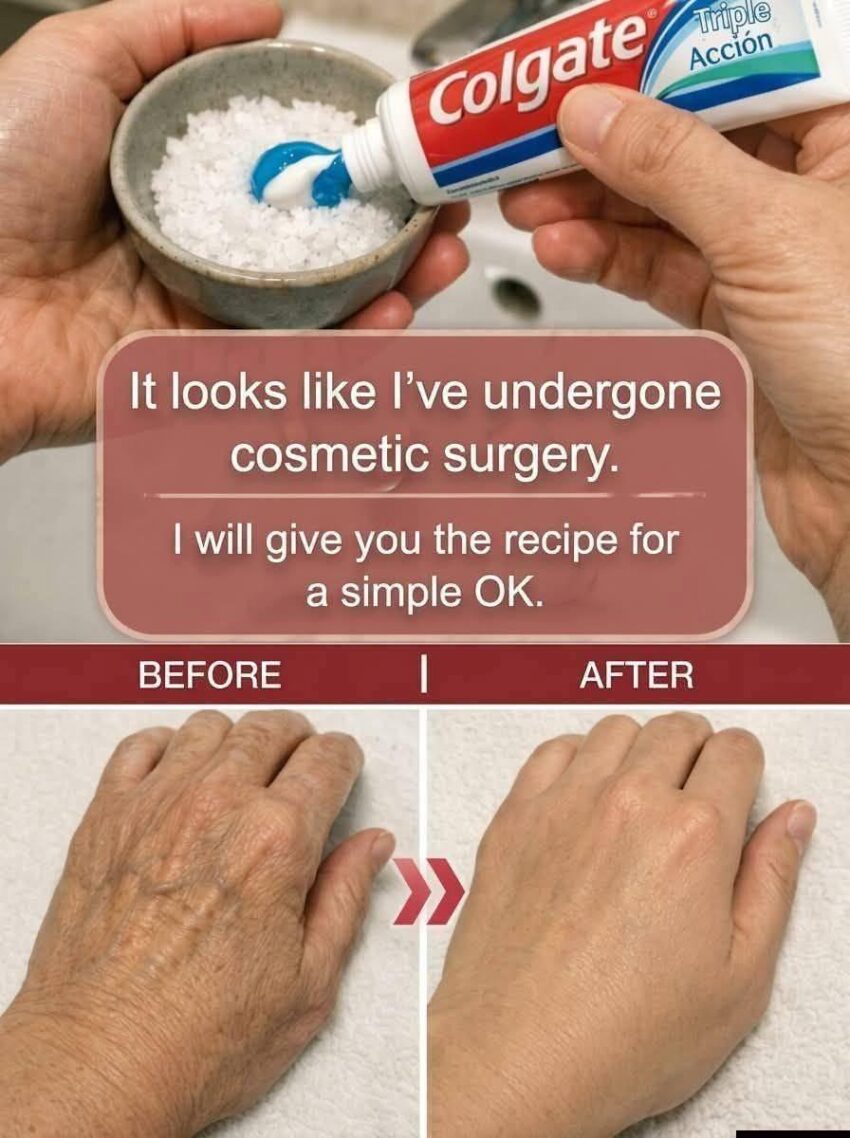
The idea that toothpaste can improve age spots or wrinkles is a common internet myth, but it is not supported by dermatology or scientific evidence.
Why people think it works
Toothpaste often contains ingredients like:
- Baking soda (mild abrasive)
- Hydrogen peroxide (in whitening formulas)
- Menthol (cooling sensation)
These can create a temporary “tight” or “brighter” feeling on skin, which some people mistake for improvement.
What actually happens
Toothpaste is not designed for skin use, and applying it to the face can cause:
- Irritation and redness
- Dryness and peeling
- Chemical burns (in sensitive skin)
- Worsening of pigmentation over time due to inflammation
Ironically, irritation can sometimes trigger more dark spots, not fewer.
About age spots and wrinkles
- Age spots (solar lentigines) are caused by sun exposure and melanin buildup over time
- Wrinkles are caused by collagen loss, sun damage, and aging
These require targeted skincare or medical treatments, not household products.
What actually helps (evidence-based)
For improving appearance safely:
- Sunscreen daily (most important step)
- Retinoids (vitamin A derivatives) – improve fine lines and pigmentation over time
- Vitamin C serums – help brighten skin tone
- Niacinamide – supports uneven pigmentation
- Dermatology treatments: chemical peels, laser therapy, microneedling
Bottom line
Toothpaste is not a safe or effective treatment for age spots or wrinkles. It may temporarily feel like it’s doing something, but it can actually damage skin and worsen discoloration.
If you want, I can suggest a simple, low-cost skincare routine that actually helps fade age spots safely.
