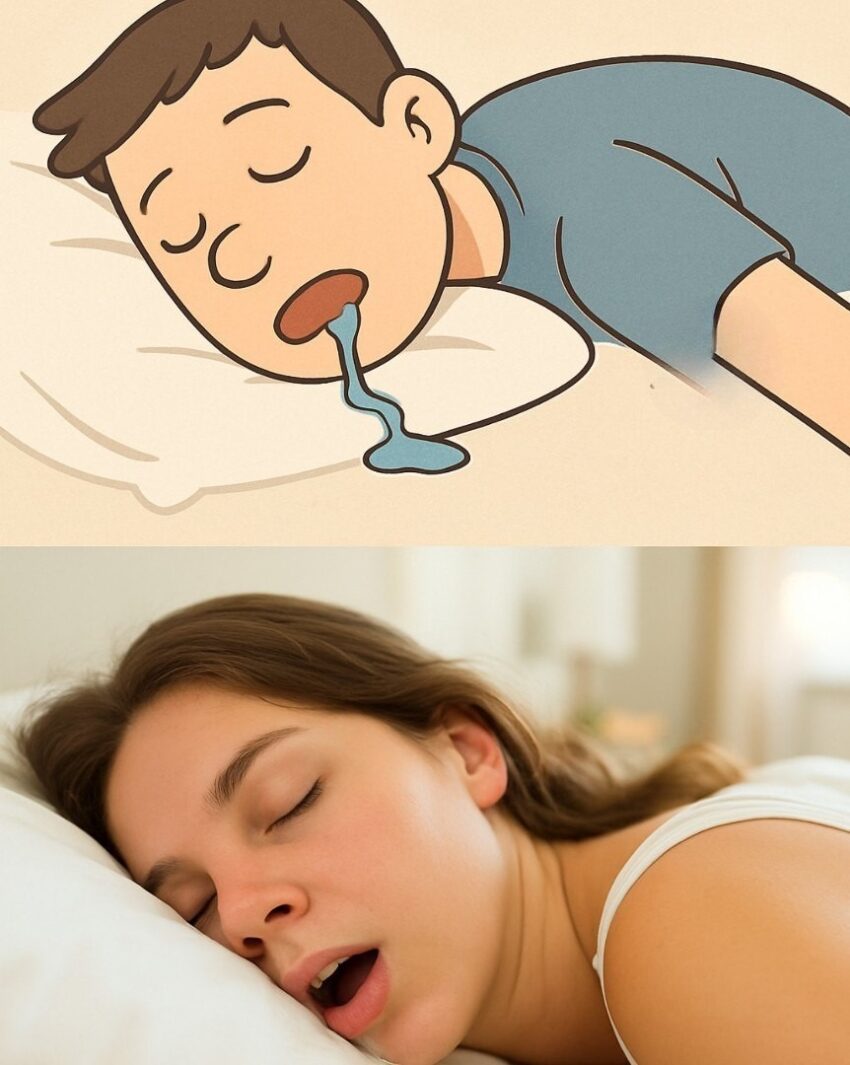
Claims like “If you drool while you sleep, it means your brain is…” are often exaggerated online. In most cases, drooling during sleep is normal and not a sign of brain problems.
Here are the real reasons it can happen:
1. Deep Sleep 😴
When you enter deeper sleep stages, especially during REM Sleep, your muscles relax. The muscles around your mouth relax too, which can let saliva escape.
2. Sleeping Position
Sleeping on your side or stomach makes it easier for saliva to flow out of the mouth instead of being swallowed.
3. Excess Saliva Production
Some conditions increase saliva production, such as:
- Acid reflux
- Sinus infections
- Certain medications
For example, Gastroesophageal Reflux Disease can sometimes lead to extra saliva.
4. Nasal Congestion 🤧
If your nose is blocked due to allergies or a cold, you may breathe through your mouth, which can lead to drooling. Conditions like Allergic Rhinitis can contribute.
5. Certain Sleep Disorders
Occasionally drooling may be linked with sleep conditions such as Sleep Apnea, where breathing repeatedly stops and starts during sleep.
When Drooling Might Need Medical Attention
See a doctor if drooling is severe or sudden and comes with:
- Trouble swallowing
- Slurred speech
- Facial weakness
Rarely, neurological conditions like Parkinson’s Disease or Stroke can cause excessive drooling.
✅ Bottom line:
For most people, drooling during sleep simply means your body is relaxed, not that something is wrong with your brain.
If you want, I can also share 8 strange things your body does during sleep that actually reveal your health. 🧠😴
