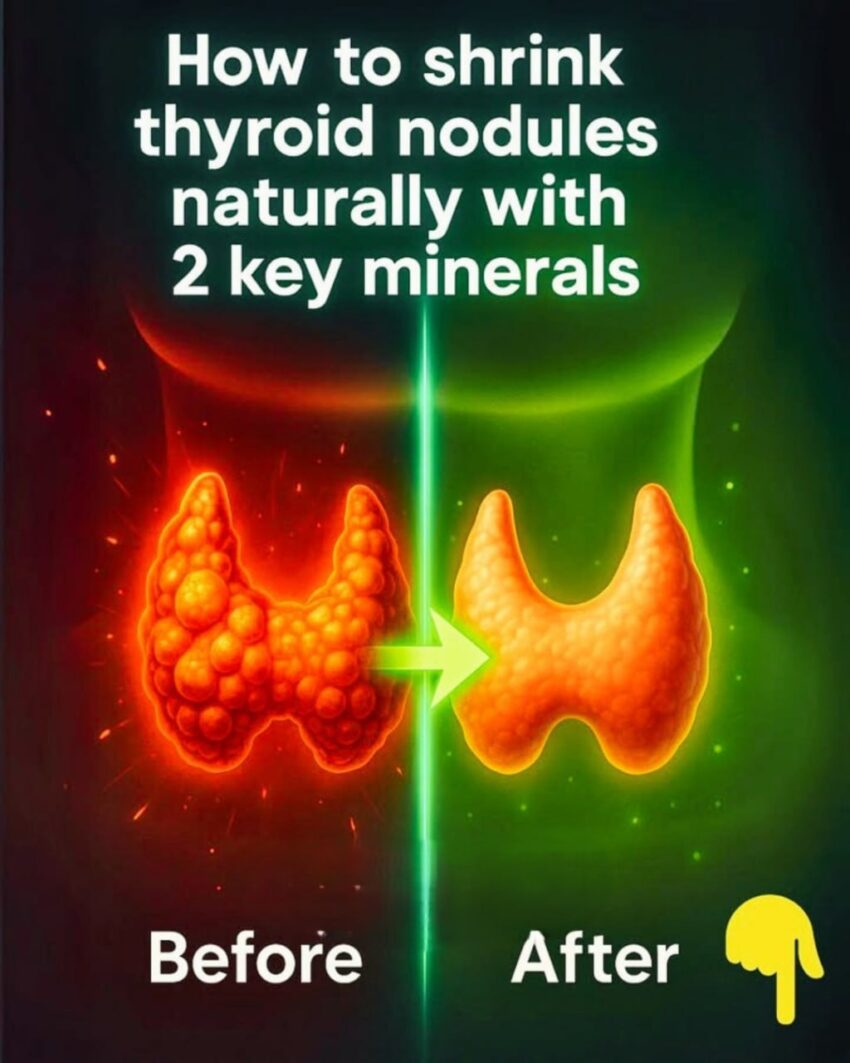
That idea has a grain of truth—but it’s a bit misleading as stated. Thyroid disorders aren’t usually caused primarily by missing minerals; many are autoimmune (like Hashimoto’s thyroiditis or Graves’ disease).
That said, certain nutrients do play a key supporting role in how the thyroid functions.
The two most talked-about are:
1. Iodine
Iodine is essential for making thyroid hormones (T3 and T4).
Why it matters:
- Without enough iodine, the thyroid can’t produce hormones properly
- Deficiency can lead to Hypothyroidism or goiter
But here’s the catch:
Too much iodine can also disrupt the thyroid, especially in people with autoimmune conditions. So more isn’t always better.
Where it comes from:
- Iodized salt
- Seafood
- Dairy (in some regions)
2. Selenium
Selenium helps convert the inactive thyroid hormone (T4) into the active form (T3).
Why it matters:
- Supports antioxidant defenses in the thyroid
- May help reduce inflammation in conditions like Hashimoto’s thyroiditis
Sources:
- Brazil nuts
- Fish
- Eggs
Important reality check
- If your thyroid issue is autoimmune, minerals alone won’t “fix” it
- Taking high-dose supplements without testing can actually worsen things
- Blood tests (TSH, T3, T4, sometimes antibodies) are the only reliable way to assess thyroid health
Bottom line
These nutrients are supportive, not magical cures. A healthy thyroid depends on:
- Balanced nutrition
- Proper diagnosis
- Medical guidance when needed
If you’re worried about your thyroid, it’s worth checking symptoms and labs rather than guessing—tell me what you’re experiencing and I can help you think it through.
