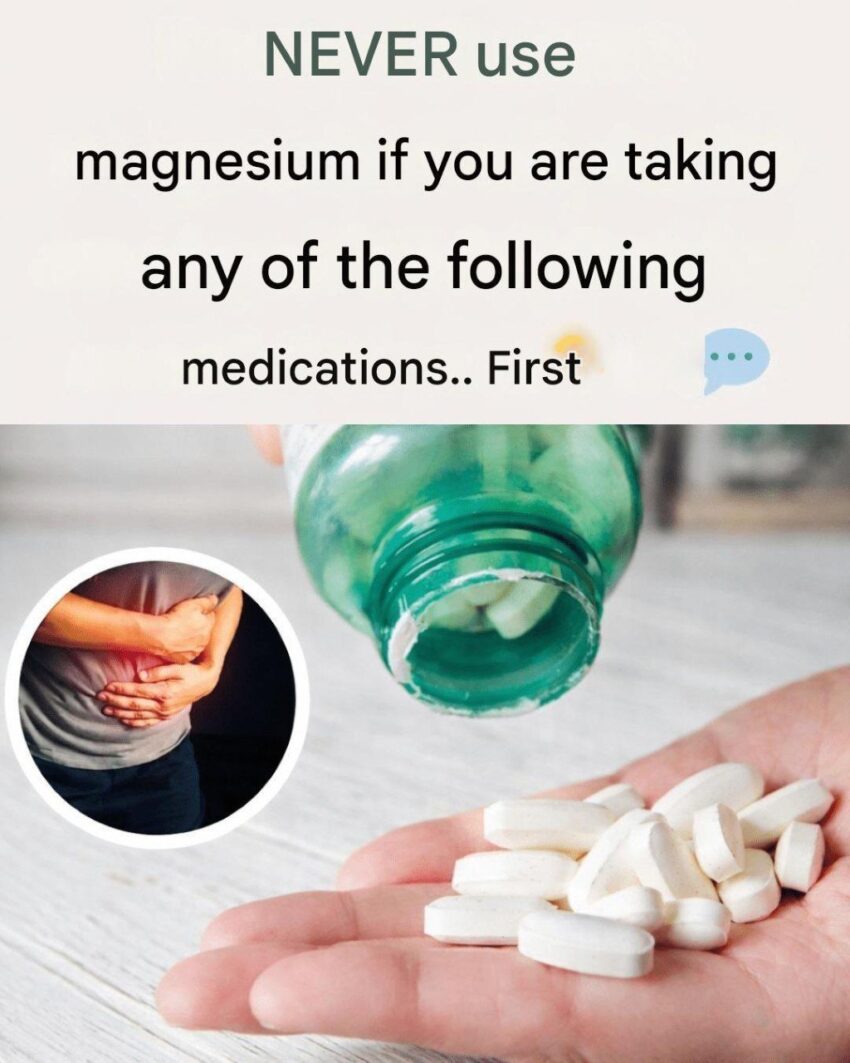
That kind of statement is too absolute and misleading.
Magnesium (from magnesium) is generally safe for many people, but it can interfere with certain medications. The real issue is timing, dose, and specific drug interactions—not a blanket “never use it” rule.
⚠️ Medications that DO interact with magnesium
💊 1. Certain antibiotics
Magnesium can bind to these in the gut and reduce absorption:
- Tetracyclines (e.g., doxycycline)
- Fluoroquinolones (e.g., ciprofloxacin)
👉 Solution: take magnesium 2–6 hours apart
💊 2. Thyroid medication
- levothyroxine
Magnesium can reduce absorption if taken together.
👉 Solution: separate by at least 4 hours
💊 3. Osteoporosis medications
- Bisphosphonates (e.g., alendronate)
Magnesium can reduce effectiveness.
👉 Timing separation is important.
💊 4. Certain blood pressure medications
Some interactions are mild, but magnesium may enhance BP-lowering effects in:
- Diuretics
- Calcium channel blockers like amlodipine
👉 Usually safe, but monitor for dizziness or low BP.
💊 5. Muscle relaxants or sedatives
Magnesium can slightly increase relaxation effects.
⚠️ When magnesium becomes risky on its own
Magnesium supplements can be dangerous in:
- Kidney disease
- Severe dehydration
- Very high doses
This can lead to hypermagnesemia, which may cause weakness, low blood pressure, or heart rhythm issues.
🧠 Key reality check
- Most people can take magnesium safely
- The main issue is drug timing, not total avoidance
- Food sources of magnesium (nuts, beans, leafy greens) are generally safe with all medications
🧭 Bottom line
You should NOT “never use magnesium” with medications. Instead:
- Check for specific drug interactions
- Separate doses when needed
- Avoid high-dose supplements without medical advice if you have kidney or heart issues
If you want, tell me your medications and I can check exactly whether magnesium is safe in your case and how to time it properly.
