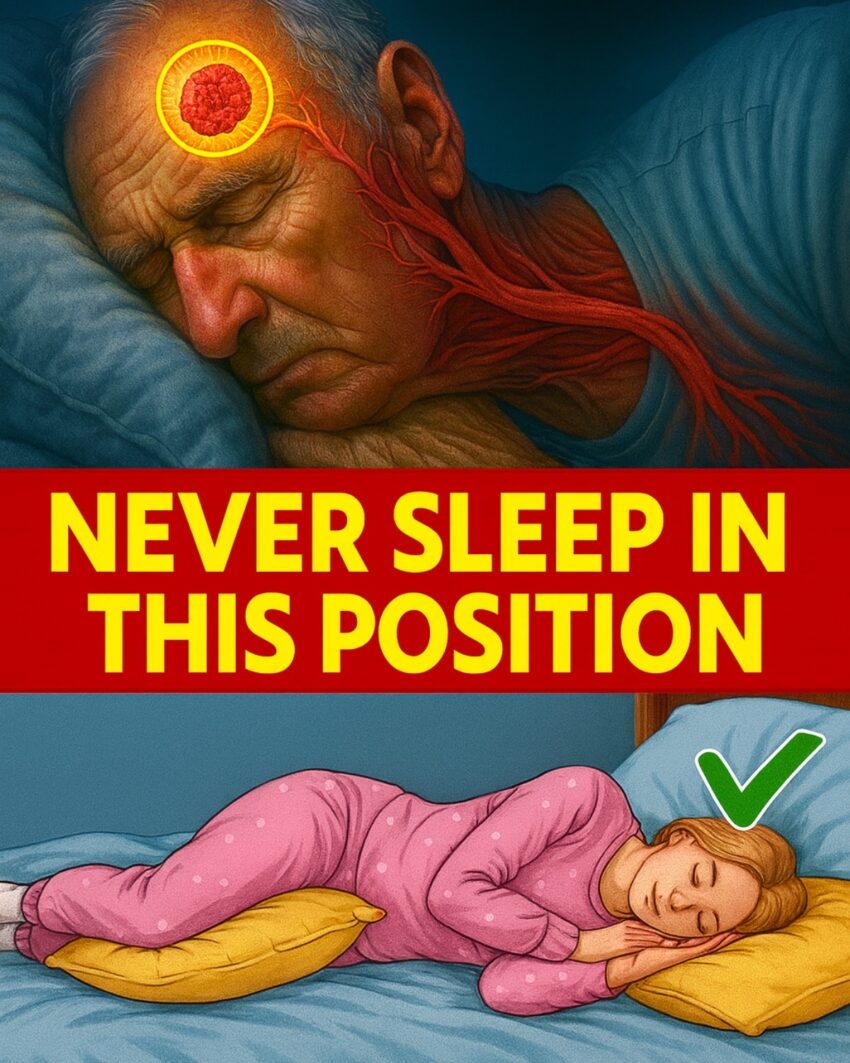
The claim you’re referring to usually comes from viral health articles/videos warning seniors about certain sleep positions and stroke risk. The real science is a bit more nuanced.
What research actually says
- Sleeping on your back (supine position) can worsen sleep apnea, because the tongue and soft tissues are more likely to block the airway. Sleep apnea is a well-established risk factor for stroke, especially in older adults. (www.heart.org)
- A few medical case reports suggest that in rare situations, prolonged awkward neck positioning (including some prone/stomach positions) may reduce blood flow in people with specific vascular problems—but this is uncommon and not a general population risk. (PubMed)
- More broadly, studies show that poor sleep quality, long sleep duration, and irregular sleep patterns are associated with higher stroke risk in seniors—but not one “dangerous sleeping position” alone. (ScienceDirect)
So is there a “stroke-risk sleeping position”?
Not in a simple, universal way.
What does matter more:
- Back sleeping + sleep apnea (the main evidence-based concern)
- Undiagnosed breathing problems during sleep
- Poor or irregular sleep over time
- Existing conditions (high blood pressure, atrial fibrillation, prior stroke)
Practical takeaway for seniors
- If you snore heavily or have sleep apnea → side sleeping is usually safer
- If you feel fine and have no breathing disorder → no sleeping position has been proven to directly cause stroke
- The biggest prevention factors remain: blood pressure control, heart health, diabetes management, and sleep quality
Bottom line
The idea that “one sleeping position raises stroke risk” is mostly oversimplified or exaggerated content online. The real link is indirect—mainly through sleep apnea and cardiovascular health, not posture alone.
If you want, I can break down which sleep positions are best specifically for snoring, blood pressure, or past stroke patients.
