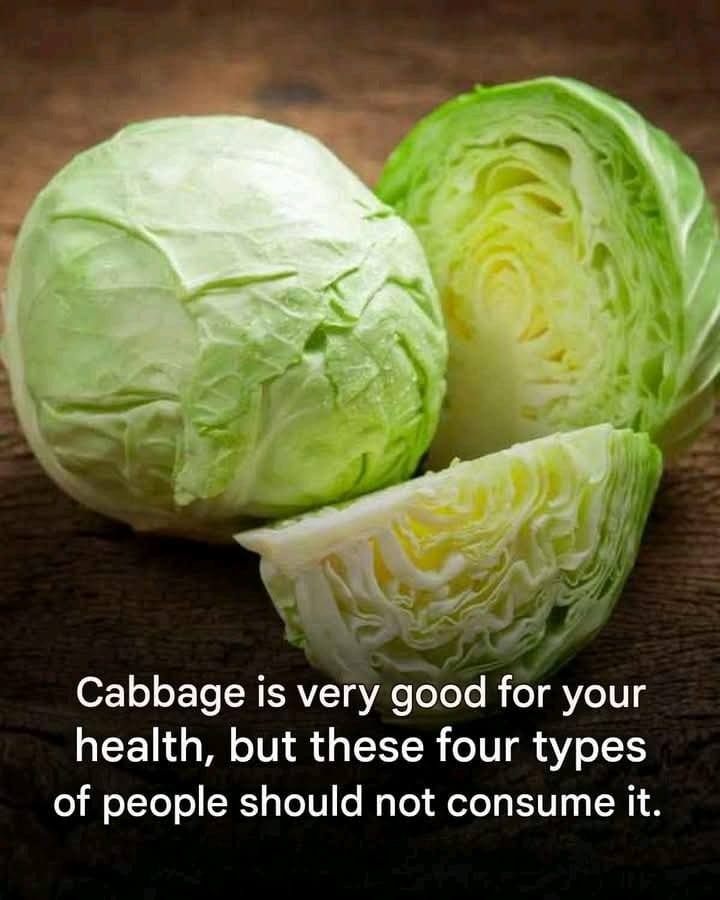
Cabbage is generally healthy, but it’s not ideal for everyone. Here are four groups of people who should be cautious:
1. People with thyroid issues (especially hypothyroidism)
Cabbage is a “goitrogenic” food, meaning it can interfere with iodine uptake and thyroid function when eaten in large amounts—particularly raw. If you have conditions like Hypothyroidism, it’s better to limit raw cabbage and eat it cooked instead.
2. People with digestive sensitivity or IBS
Cabbage is high in fiber and certain fermentable carbs (FODMAPs), which can cause bloating, gas, and discomfort. Those with Irritable Bowel Syndrome may find symptoms worsen after eating it.
3. People taking blood thinners
Cabbage is rich in vitamin K, which plays a role in blood clotting. If you’re on medications like Warfarin, sudden changes in cabbage intake can interfere with how the drug works. Consistency (not necessarily avoidance) is key.
4. People prone to kidney stones (in some cases)
While cabbage isn’t extremely high in oxalates, excessive intake of certain vegetables can contribute to stone formation in sensitive individuals, especially those with a history of Kidney Stones.
Bottom line: Most people can eat cabbage without any issues, especially when it’s cooked and eaten in moderate amounts. If you fall into one of these groups, it’s more about managing intake rather than completely avoiding it.
