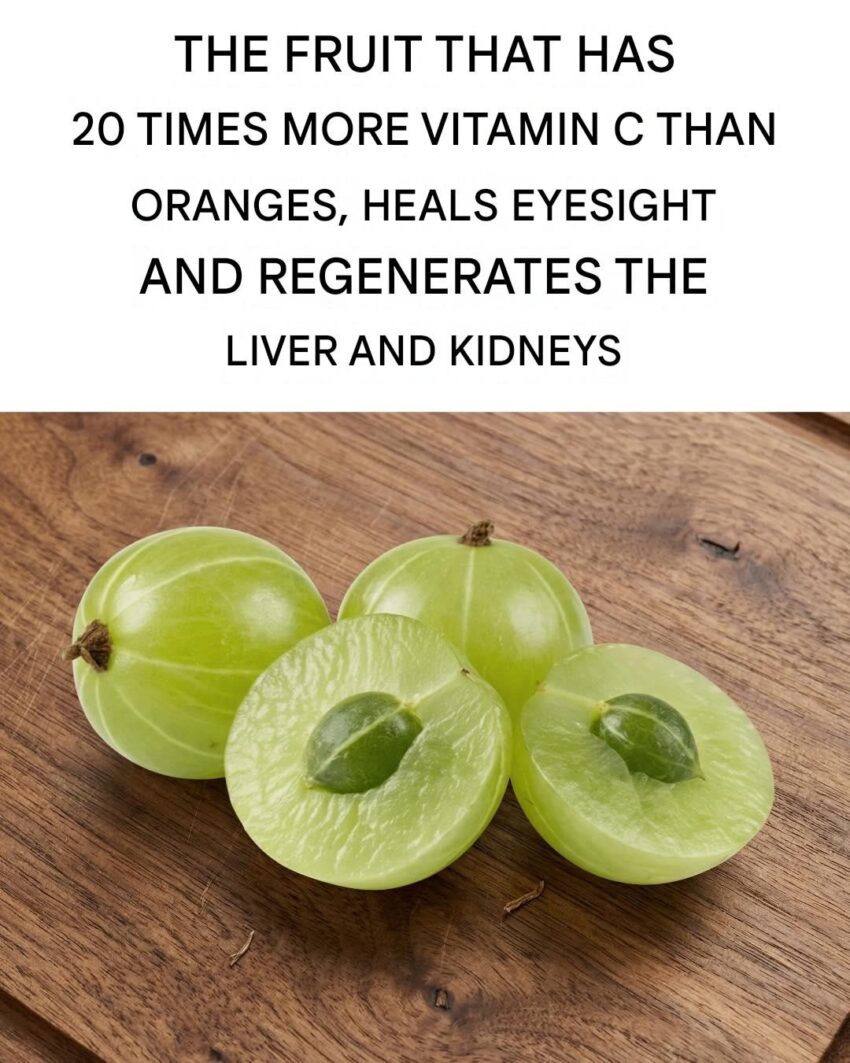
There isn’t a scientifically recognized fruit that “heals eyesight” or “regenerates the liver and kidneys” in the way that claim suggests. That’s a mix of exaggeration and wellness misinformation.
What people are usually referring to is a fruit extremely high in vitamin C—sometimes claimed to have “20× more than oranges.” A few fruits actually do have much higher vitamin C content than oranges:
Fruits with very high vitamin C
- Kakadu plum
One of the highest known natural sources of vitamin C in the world. It can contain dozens of times more vitamin C than oranges depending on conditions. - Acerola cherry
Commonly contains 20–30× more vitamin C than oranges. - Camu camu
Also one of the richest vitamin C sources, often far above oranges.
What vitamin C actually does (real effects)
Vitamin C is important for:
- Supporting the immune system
- Helping collagen production (skin, joints, blood vessels)
- Acting as an antioxidant
- Improving iron absorption
That’s related to the scientific concept of Vitamin C
What it does NOT do
- It does not “regenerate” the liver or kidneys
- It does not directly “heal eyesight”
- It does not cure organ damage or reverse disease on its own
Organs like the liver can regenerate to a degree naturally, but that’s a biological process—not something triggered by a single fruit.
Eye health, for example, is influenced by overall nutrition (vitamins A, C, E, zinc, omega-3s), not just one vitamin C-rich fruit.
Bottom line
- Yes: some fruits like camu camu, acerola cherry, and kakadu plum can have much more vitamin C than oranges
- No: they do not “repair organs” or “restore eyesight” in the dramatic way viral posts claim
If you want, I can break down which fruits actually do support eye health or liver function in a realistic, evidence-based way.
