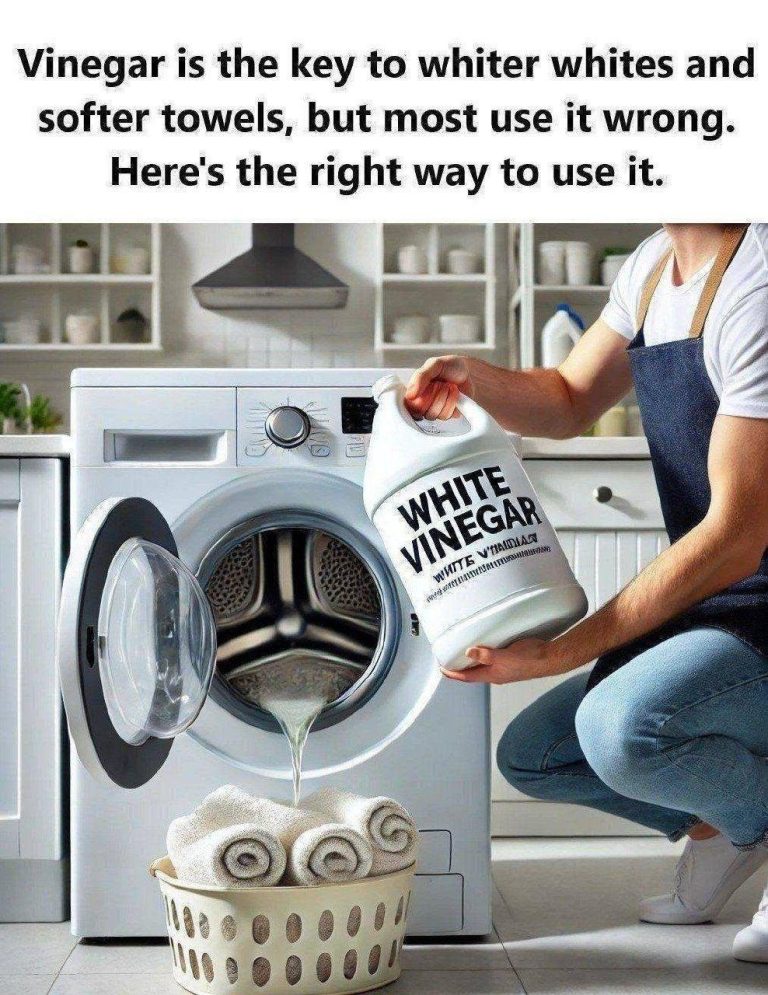
Vinegar is one of those laundry “hacks” that gets a lot of hype—and for good reason—but most people don’t use it correctly. Used the right way, it can help remove detergent buildup, soften fabrics, and brighten whites. Used the wrong way, it can do almost nothing… or even reduce the effectiveness of your wash.
Here’s how it actually works and how to use it properly.
Why vinegar works in laundry
White vinegar is mainly acetic acid. In washing, it helps by:
- Breaking down detergent and mineral residue in fabric
- Softening fibers naturally (so towels feel less stiff)
- Reducing musty smells
- Helping rinse away buildup that makes whites look dull
But it’s important to be clear: vinegar is not a bleach. It won’t whiten like chlorine bleach—it restores brightness by cleaning buildup.
The most common mistake
Most people pour vinegar directly into the drum with detergent.
That’s not ideal because:
- It can interfere slightly with detergent performance if mixed too early
- It doesn’t get a proper “rinse phase” benefit where it works best
The correct way to use vinegar in laundry
1. Use it in the rinse cycle (best method)
- Add ½ to 1 cup of white vinegar
- Pour it into the fabric softener compartment (if your machine has one)
- Or add it during the final rinse cycle
This is when it works best—after detergent has already cleaned the clothes.
2. For towels (best softness trick)
If your towels feel stiff or “coated”:
- Wash them with normal detergent first
- Then run a second rinse with vinegar only
OR - Add vinegar in the rinse cycle every few washes
This removes detergent buildup that causes scratchy towels.
3. For whitening dull whites
To refresh white fabrics:
- Wash normally with detergent
- Add vinegar in the rinse cycle
- Dry in sunlight if possible (sunlight boosts brightness naturally)
4. For odor removal
For gym clothes or musty fabrics:
- Add ½ cup vinegar to rinse cycle
- Works especially well on sweat and mildew smells
What NOT to do
Avoid these common mistakes:
- ❌ Don’t mix vinegar directly with bleach (toxic gas risk)
- ❌ Don’t use vinegar as a replacement for detergent
- ❌ Don’t overuse it every single wash on delicate elastics (sportswear can degrade over time)
Extra tip most people miss
If your washing machine smells, run an empty hot cycle with:
- 2 cups vinegar
It helps clean internal residue and detergent buildup inside the machine.
Bottom line
Vinegar doesn’t “whiten” in a chemical bleaching sense—it cleans what’s dulling your fabrics. The key is using it in the rinse cycle, not the wash cycle.
If you want, I can also give you a simple “laundry routine” for keeping whites bright and towels soft long-term without vinegar overuse.
