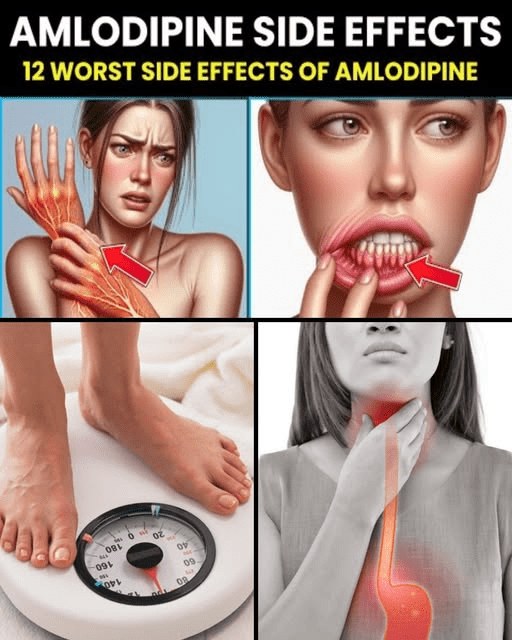
Amlodipine (a calcium channel blocker used for high blood pressure and angina) is generally well tolerated, but like all medicines, it can cause side effects. The phrase “worst side effects you should NEVER ignore” is a bit dramatic—most people don’t experience severe problems—but there are important reactions you should be aware of.
Here are 12 side effects of Amlodipine that deserve attention, especially if they are new, severe, or persistent:
1. Swelling of ankles or feet (edema)
One of the most common effects. It happens due to fluid buildup in the lower limbs.
2. Dizziness or lightheadedness
Often occurs when starting treatment or increasing dose, due to lowered blood pressure.
3. Flushing (feeling hot or red in the face)
A temporary widening of blood vessels can cause warmth or redness.
4. Palpitations (fast or irregular heartbeat)
Some people feel their heart beating strongly or irregularly.
5. Excessive fatigue or weakness
Low blood pressure can sometimes make you feel unusually tired.
6. Headache
A fairly common early side effect, often improves over time.
7. Gum swelling (gingival hyperplasia)
Less common but notable—gums may become enlarged or tender.
8. Shortness of breath (rare but important)
Could indicate fluid overload or an allergic-type reaction.
9. Severe drop in blood pressure
May cause fainting or extreme dizziness, especially when standing.
10. Chest pain worsening (rare)
While used for angina, rarely symptoms can worsen and need urgent review.
11. Liver function changes (rare)
May show up as yellowing of eyes/skin, dark urine, or abdominal discomfort.
12. Allergic reactions (rare but serious)
Includes rash, itching, swelling of face/lips/tongue, or breathing difficulty.
When you should contact a doctor urgently
Seek medical help if you notice:
- Severe swelling or sudden weight gain
- Fainting or repeated dizziness
- Chest pain that is new or worsening
- Signs of allergy (swelling, rash, breathing issues)
- Very slow or very fast heartbeat
Important context
Most people taking Amlodipine for high blood pressure or chest pain do not experience dangerous side effects. Many effects (like mild swelling or headache) are manageable or improve with time or dose adjustment.
If you want, I can also explain:
- How to reduce amlodipine side effects
- Safe alternatives
- Or whether it’s safe for long-term use 👍
