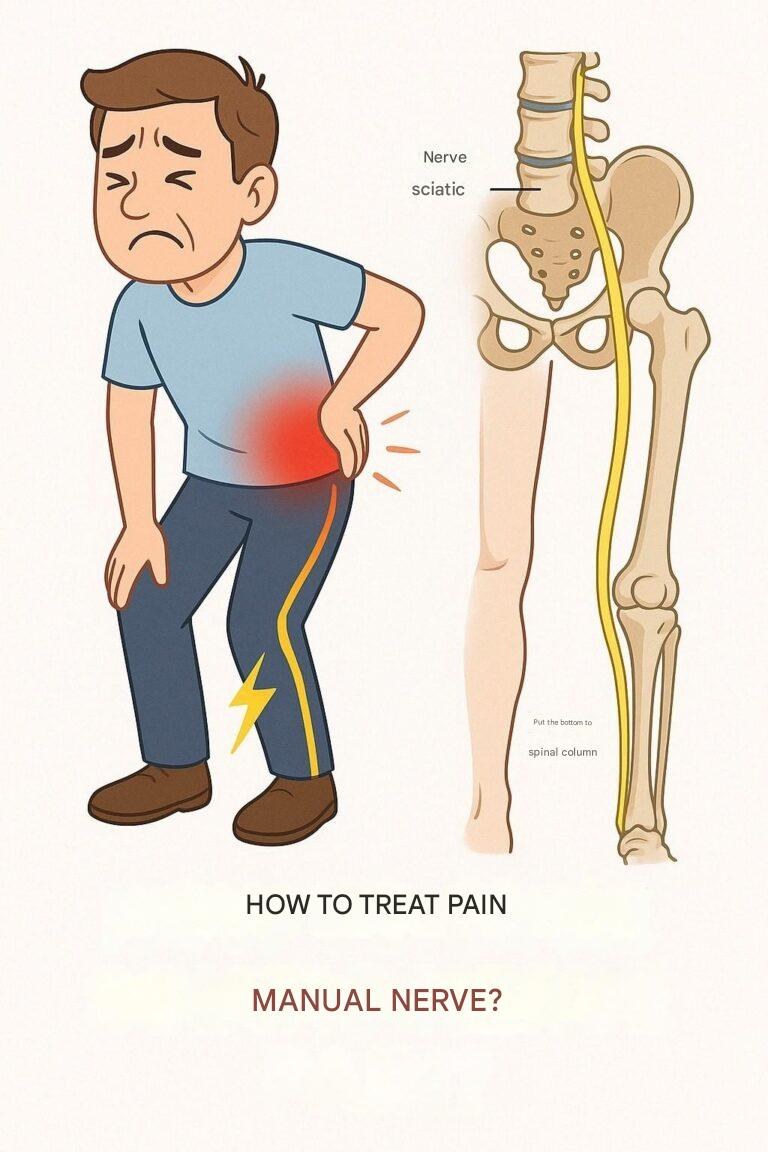
If your leg pain is from sciatica, the goal of exercises is usually to gently reduce pressure on the sciatic nerve and improve mobility—not to push through pain. If any movement sharply worsens symptoms, stop.
Here are 3 commonly effective exercises:
1) Piriformis stretch (lying figure-4 stretch)
This helps when the piriformis muscle irritates the sciatic nerve.
How to do it:
- Lie on your back with knees bent
- Cross your right ankle over your left knee (figure-4 shape)
- Pull your left thigh toward your chest
- Hold 20–30 seconds
- Switch sides
Why it helps:
Releases deep glute muscles that can compress the sciatic nerve.
2) Seated or lying hamstring stretch
Tight hamstrings can increase tension along the sciatic pathway.
How to do it:
- Sit on the floor or lie on your back
- Extend one leg straight
- Gently reach toward your toes (don’t force it)
- Keep your back neutral, not rounded
- Hold 20–30 seconds per leg
Tip: Use a towel behind the foot if reaching is difficult.
3) Sciatic nerve glide (nerve flossing)
This improves nerve mobility without overstretching.
How to do it (seated version):
- Sit upright on a chair
- Extend one leg slowly while lifting your head slightly
- Then bend the knee back while tucking your chin
- Move gently in a smooth rhythm
- Do 10–15 slow reps per leg
Why it helps:
Encourages the nerve to move freely through surrounding tissues.
Important safety notes
- Mild stretching discomfort is OK; sharp or worsening leg pain is not
- Avoid aggressive bending or twisting if symptoms are acute
- If you have numbness, weakness, or bladder/bowel changes, seek medical care urgently
If you want, I can also give you a 10-minute daily routine specifically for sciatica in sitting jobs or driving-related pain, which is often very relevant in your situation.
