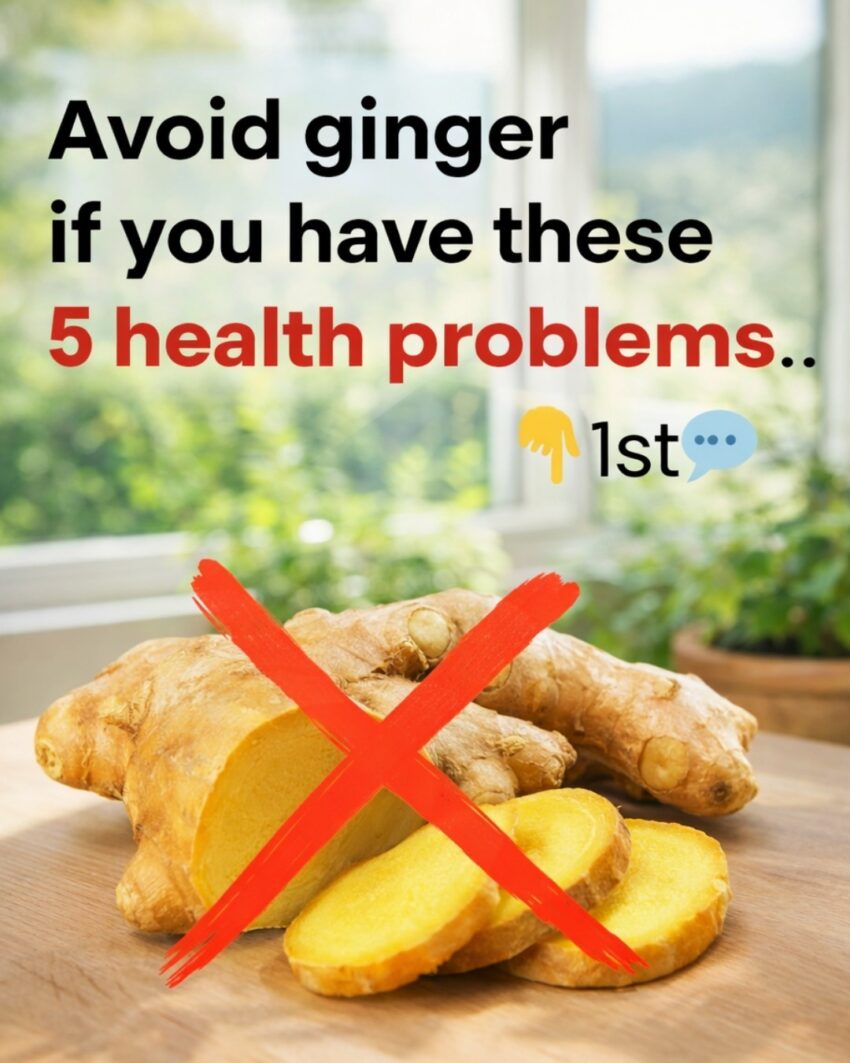
That headline is partly sensational. Ginger is generally safe for most people in normal food amounts, but there are a few situations where caution is sensible.
🌿 What ginger is
Ginger
It can help:
- Nausea
- Digestion
- Mild inflammation
But like anything active, it can interact with certain conditions or medicines.
⚠️ 5 situations where you should be cautious
💊 1. If you take blood-thinning medications
Anticoagulant drugs
- Ginger may slightly increase bleeding tendency in high amounts
- Usually only a concern with large supplements, not food use
🩸 2. If you have bleeding disorders
Bleeding disorder
- High doses may increase bruising or bleeding risk
🍬 3. If you have diabetes and take medication
Diabetes mellitus
- Ginger may slightly lower blood sugar
- Could enhance the effect of diabetes medicines → risk of low sugar if overused
🤰 4. Pregnancy (high doses only)
- Small food amounts are usually safe
- High-dose supplements should be avoided unless advised
❤️ 5. If you have heart rhythm or blood pressure issues
Hypertension
- Ginger may slightly lower blood pressure
- Usually mild, but caution if on multiple heart medications
❌ What the clickbait often exaggerates
- “Ginger is dangerous” → ❌ false
- “Ginger causes serious disease” → ❌ not true
- “Everyone should avoid ginger” → ❌ incorrect
💡 Simple safe guideline
👉 Normal cooking use = safe for most people
👉 Caution = high-dose supplements or medical conditions
🧠 Bottom line
Ginger is mostly beneficial, and problems only arise with:
- High doses
- Certain medications
- Specific medical conditions
If you want, I can also explain:
✔ Best daily amount of ginger
✔ Ginger tea benefits and side effects
✔ Foods that interact with common medicines like ginger does
