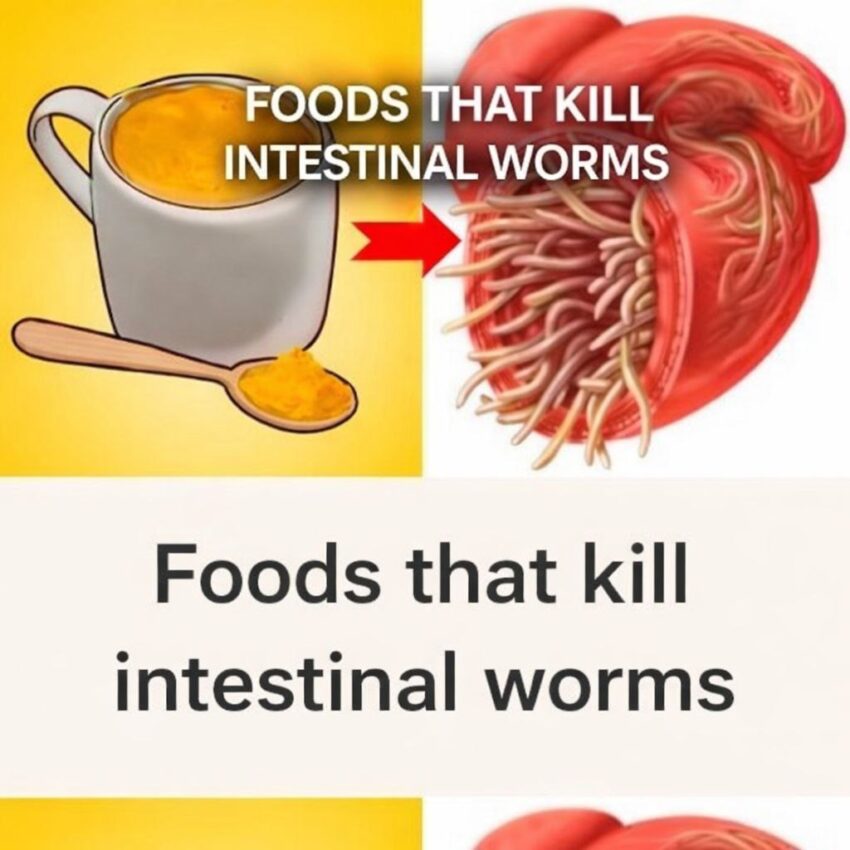
That headline is another classic “miracle cure” claim. There is no food that reliably kills intestinal worms on its own in humans.
Real intestinal worm infections require diagnosis and medication, not just diet.
🧠 First, what intestinal worms actually are
Intestinal parasites (Intestinal helminth infection) include organisms like roundworms, tapeworms, and pinworms. They live in the digestive tract and usually need antiparasitic drugs to eliminate.
🥗 Foods often claimed to “kill worms” (and the truth)
These foods are sometimes discussed for supportive or traditional use, but evidence in humans is limited:
1. Garlic
- Contains allicin (antimicrobial in lab studies)
- May support gut health
❌ Not proven to eliminate worms in humans
2. Pumpkin seeds
- Contain compounds that may affect parasites in lab settings
- Traditionally used in folk remedies
❌ Not a guaranteed treatment
3. Papaya seeds
- Studied for possible antiparasitic properties
- Mixed and limited evidence
❌ Not a reliable cure
4. Coconut
- Antimicrobial properties in some studies
❌ No proven effect on intestinal worms
5. Pineapple
- Contains bromelain (enzyme)
- May support digestion
❌ No evidence it kills parasites
6. Carrots
- High fiber may help gut movement
❌ Does not kill worms
7. Fermented foods (yogurt, kefir)
- Support gut microbiome balance
❌ Do not treat parasitic infections
⚠️ What actually works
Doctors treat worm infections with antiparasitic medications, depending on the parasite type:
- albendazole
- mebendazole
- ivermectin (in some cases)
🧠 Bottom line
No food kills intestinal worms in a medically reliable way. Some foods may support gut health, but true treatment requires proper medication.
If you want, I can explain symptoms of intestinal worms vs common digestive issues, so you know when it’s actually worth getting tested.
