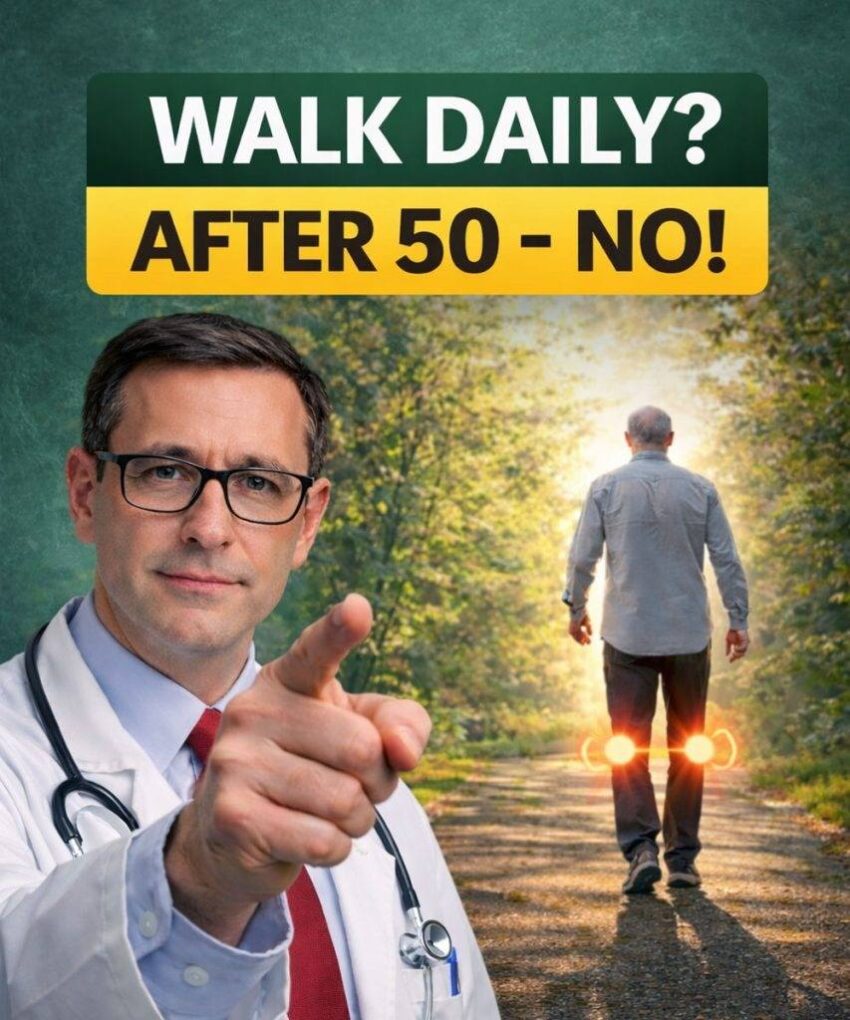
Walking is one of the best low-impact exercises for maintaining health after 50—but small technique or habit mistakes can quietly reduce its benefits or even contribute to joint, heart, or balance problems. Doctors who work in geriatrics and sports medicine often point out these common issues:
1. Slouching or Poor Posture
Leaning forward, hunching shoulders, or looking down at your feet shifts stress to the neck, lower back, and hips. Over time, this can contribute to stiffness and chronic pain. A better approach is to keep your head up, shoulders relaxed, and core lightly engaged so your body stays aligned.
2. Taking Overly Short, Shuffling Steps
Many people shorten their stride with age to feel “safer,” but shuffling actually increases fall risk and reduces hip mobility. It also lowers walking efficiency. A natural, slightly longer stride with controlled heel-to-toe movement is safer and more effective.
3. Wearing Unsupportive Shoes
Walking in worn-out soles, slippers, or fashion shoes without arch support can strain knees, ankles, and the lower back. Proper walking shoes should have cushioning, a stable heel, and good grip to reduce injury risk.
4. Walking Too Slowly All the Time
Very slow walking is better than no walking, but staying in a constant “stroll” pace may not challenge the heart or muscles enough. Doctors often recommend including short periods of brisk walking to support cardiovascular health and metabolism.
5. Ignoring Arm Movement
Not swinging the arms reduces balance efficiency and calorie burn. Natural arm movement helps stabilize your gait and improves overall coordination. Keeping arms stiff or in pockets can subtly affect posture and rhythm.
6. Overstriding or Heel Slamming
Taking steps that are too long or landing heavily on the heel increases joint impact, especially on knees and hips. This can aggravate conditions like osteoarthritis. A smoother roll from heel to toe reduces shock absorption stress.
7. Skipping Warm-Ups and Recovery
Jumping straight into long walks without loosening up can stiffen muscles and joints. Similarly, stopping abruptly after a brisk walk can cause dizziness or tightness. Gentle warm-up movements and a short cool-down walk help circulation and joint safety.
Bottom line
After 50, walking becomes less about just “getting steps in” and more about how you walk. Small corrections in posture, pace, footwear, and technique can significantly improve joint health, balance, and heart fitness—while lowering injury risk.
If you want, I can also give a simple “perfect walking form checklist” or a 20–30 minute walking routine tailored for joint protection and fat loss.
