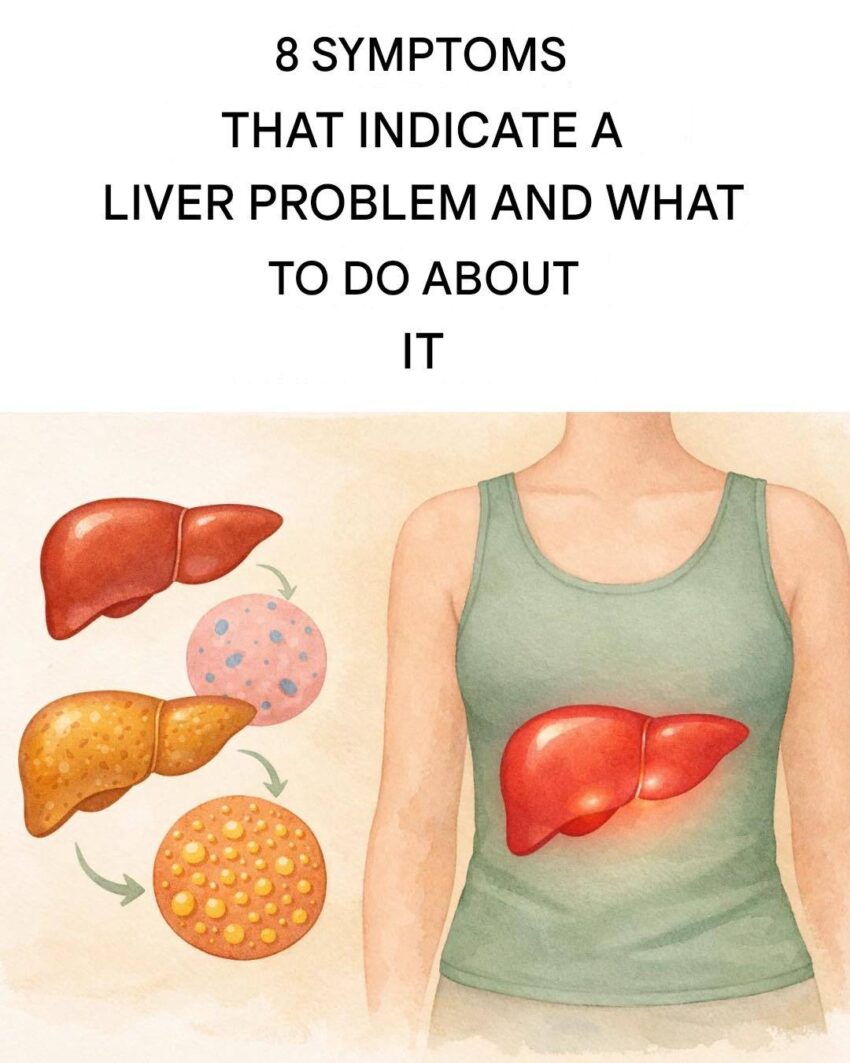
Liver problems can develop silently, and early recognition is crucial because the liver is essential for detoxification, digestion, and metabolism. Here are 8 key symptoms that may indicate a liver problem and guidance on how to address them:
1. Jaundice (Yellowing of Skin or Eyes)
- Why it happens: Buildup of bilirubin due to liver dysfunction.
- What to do: See a doctor promptly—jaundice can indicate hepatitis, bile duct obstruction, or liver disease.
2. Fatigue and Weakness
- Why it happens: The liver’s impaired metabolism leads to low energy and toxin buildup.
- What to do: If persistent fatigue occurs, get liver function tests (AST, ALT, ALP, bilirubin).
3. Swelling in Abdomen or Legs (Edema / Ascites)
- Why it happens: Fluid retention from low albumin or portal hypertension.
- What to do: Medical evaluation is critical; dietary sodium restriction and diuretics may be recommended.
4. Dark Urine and Pale Stools
- Why it happens: Bilirubin processing is impaired, changing urine and stool color.
- What to do: Track the change and consult a physician—can indicate hepatitis or bile obstruction.
5. Nausea, Vomiting, or Loss of Appetite
- Why it happens: Toxin buildup and impaired digestion affect gastrointestinal function.
- What to do: Persistent symptoms should trigger a liver function check.
6. Easy Bruising or Bleeding
- Why it happens: The liver produces clotting factors; dysfunction can reduce their levels.
- What to do: Report unexplained bruising to a doctor; may need coagulation tests and liver evaluation.
7. Itchy Skin (Pruritus)
- Why it happens: Bile salts accumulate under the skin.
- What to do: Persistent itching without rash should be assessed for liver or bile duct disease.
8. Confusion or Cognitive Changes (Hepatic Encephalopathy)
- Why it happens: Toxin buildup, especially ammonia, can affect brain function.
- What to do: This is a medical emergency—seek immediate care if you notice disorientation, sleepiness, or personality changes.
General Steps to Recognize & Treat Liver Issues
- Medical Evaluation: Blood tests (liver enzymes, bilirubin, albumin), imaging, and sometimes biopsy.
- Lifestyle Adjustments: Limit alcohol, avoid unnecessary medications, maintain a healthy weight, and eat a liver-friendly diet rich in vegetables, fruits, and lean protein.
- Follow Treatment Plans: Depending on the cause—hepatitis, fatty liver, or cirrhosis—medications or procedures may be required.
- Regular Monitoring: For chronic conditions, routine liver function tests are essential.
If you want, I can make a quick “Liver Warning Signs Checklist” that you can refer to at home to spot problems early and know when to see a doctor.
Do you want me to make that checklist?
