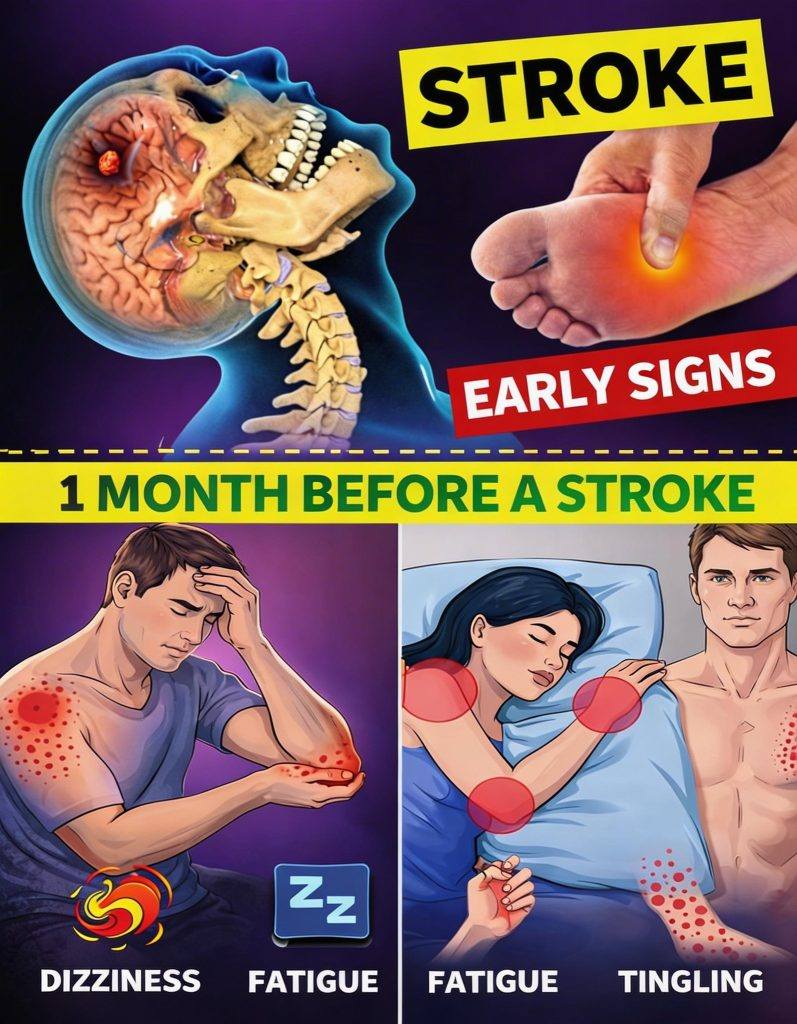
A stroke is a medical emergency involving interrupted blood flow to the brain. It is usually sudden, but in some people there can be warning symptoms days or weeks earlier, often related to a temporary blockage called a transient ischemic attack (TIA). These signals should never be ignored.
Possible early warning signs in the weeks before a stroke
It’s important to understand that there is no guaranteed “one month warning” pattern, but these symptoms can appear intermittently before a major stroke:
- Sudden numbness or weakness
Especially on one side of the face, arm, or leg—even if it comes and goes. - Brief speech problems
Slurred speech, trouble forming sentences, or difficulty understanding others. - Temporary vision disturbances
Blurred vision, double vision, or partial loss of sight in one or both eyes. - Unexplained dizziness or loss of balance
Feeling unsteady while walking or sudden coordination issues. - Short episodes of confusion
Difficulty concentrating, confusion, or memory lapses that resolve quickly. - Sudden severe headaches
Especially unusual “worst headache” sensations without a clear cause. - Tingling or “pins and needles” sensations
Especially if localized to one side of the body and recurring. - Transient ischemic attack (TIA) symptoms
Mini-stroke episodes that fully resolve within minutes or hours but signal high risk of a major stroke.
If any of these symptoms occur—even briefly—it is a strong warning to seek medical evaluation immediately.
9 powerful ways to reduce stroke risk
Stroke prevention focuses on controlling underlying risk factors that damage blood vessels over time.
- Control blood pressure (most important factor)
High blood pressure is the leading cause of stroke. - Manage diabetes carefully
Keep blood sugar within target ranges to protect blood vessels. - Reduce salt intake
Helps prevent hypertension and fluid strain on arteries. - Exercise regularly
Even 30 minutes of brisk walking most days improves circulation and heart health. - Stop smoking and avoid tobacco
Smoking significantly increases clot formation and vessel damage. - Limit unhealthy fats and fried foods
Reduces cholesterol buildup in arteries. - Maintain a healthy weight
Obesity increases risk of hypertension, diabetes, and stroke. - Limit alcohol intake
Excess alcohol raises blood pressure and irregular heartbeat risk. - Manage stress and sleep well
Chronic stress and poor sleep contribute to vascular inflammation and hypertension.
Key takeaway
A stroke linked to Stroke often happens suddenly, but warning signs can appear beforehand—especially in the form of TIAs. The most effective protection is not waiting for symptoms but actively controlling risk factors like blood pressure, lifestyle, and metabolic health.
If you want, I can also break down stroke vs TIA symptoms, or explain how to act within the first 5 minutes if stroke is suspected (FAST method).
