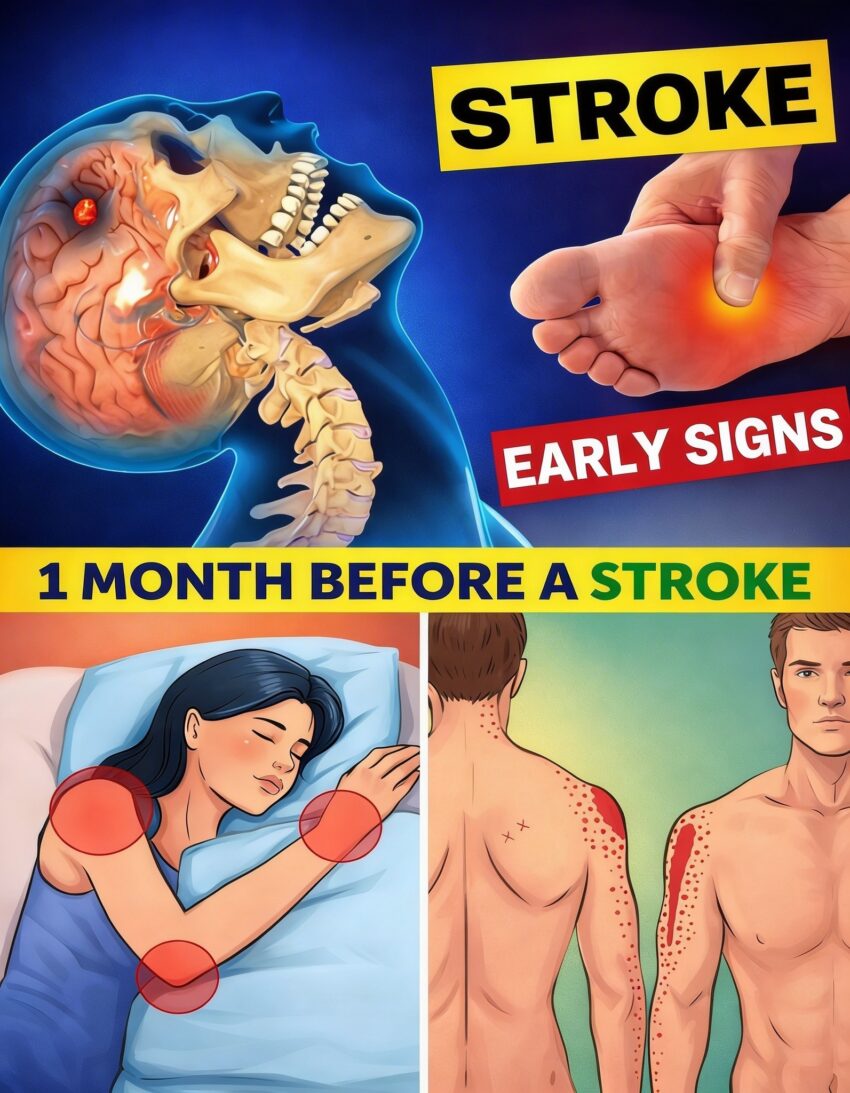
A lot of posts online claim there are clear “1-month warning signs of stroke,” but that’s not reliably true. Most strokes happen suddenly. However, some people do experience transient warning events or risk-related symptoms before a major stroke—especially mini-strokes (TIAs) or worsening circulation problems.
Here’s what science actually supports:
⚠️ Possible warning signs before a stroke (days to weeks in some cases)
1. 🧠 Transient weakness or numbness (especially one side)
- Face, arm, or leg
- May come and go (possible TIA)
2. 🗣️ Speech problems
- Slurred speech
- Trouble finding words
- Confusion while talking
3. 👁️ Temporary vision changes
- Blurred vision
- Loss of vision in one eye
- Double vision episodes
4. 😵 Sudden dizziness or loss of balance
- Trouble walking straight
- Feeling unsteady without clear reason
5. 🤕 Unusual headaches (especially sudden or severe)
- Not typical tension headache
- Can signal vascular issues (less common but important)
6. ⚡ Brief “mini-stroke” episodes (TIA)
- Symptoms last minutes to hours
- Fully resolve but signal high stroke risk
7. ❤️ Irregular heartbeat sensations (like atrial fibrillation)
- Fluttering chest
- Can increase clot risk
8. 🧠 Sudden confusion or cognitive changes
- Difficulty understanding simple things
- Short-term memory disturbance
🚨 Important truth
There is no guaranteed “1-month warning window”.
But TIAs and risk symptoms are strong predictors of stroke within days to months if ignored.
🛡️ 9 real ways to reduce stroke risk
1. 🩸 Control blood pressure (most important factor)
- High BP is the #1 cause of stroke
2. 🍽️ Reduce salt and processed foods
- Helps keep blood pressure stable
3. 🚶 Stay physically active
- Even 30 minutes walking daily helps circulation
4. 🚬 Stop smoking
- Smoking doubles stroke risk
5. 🍬 Control diabetes and blood sugar
- Prevents blood vessel damage
6. ❤️ Manage cholesterol
- Prevents artery blockage
7. ⚖️ Maintain healthy weight
- Reduces strain on heart and vessels
8. 🧠 Treat irregular heart rhythm (like atrial fibrillation)
- Often requires medication to prevent clots
9. 💊 Take prescribed medications consistently
- Blood pressure, cholesterol, and blood thinners (if prescribed)
🧠 FAST stroke warning (emergency rule)
If symptoms happen suddenly:
- Face drooping
- Arm weakness
- Speech difficulty
- Time to call emergency help immediately
⚖️ Bottom line
- Stroke usually has no long “clear warning list”
- Some people get mini-strokes (TIAs) that act as warnings
- The best prevention is controlling risk factors daily, not waiting for symptoms
If you want, I can also explain:
👉 early signs of mini-stroke vs normal dizziness
👉 or which BP numbers most strongly predict stroke risk
👉 or what foods actually reduce stroke risk in studies
