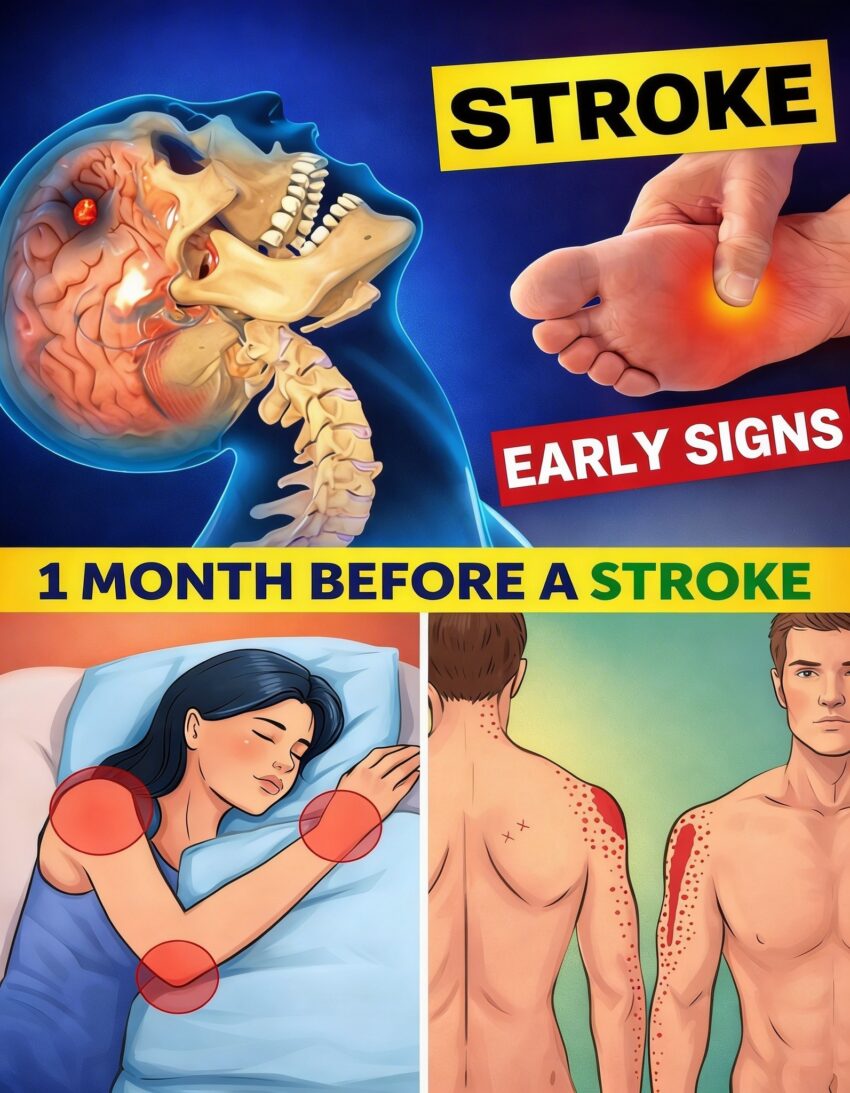
A stroke is a medical emergency that happens when blood flow to part of the brain is blocked or a blood vessel bursts. Many strokes happen suddenly, but in some people, the body may show warning signs in the days or weeks before, often called transient ischemic attacks (TIAs) or “mini-strokes.”
However, the idea of “exact symptoms appearing one month before” is not precise for everyone. Some people notice early warning signs weeks ahead, while others have no warning at all.
Here’s a clear, realistic breakdown:
⚠️ 8 Possible Warning Signs Before a Stroke (or TIA)
These symptoms may come and go, and should never be ignored:
1. Sudden numbness or weakness
Especially on one side of the face, arm, or leg.
2. Brief vision problems
Blurred vision, double vision, or temporary loss of sight in one eye.
3. Speech difficulties
Slurred speech, trouble finding words, or confusion while talking.
4. Sudden dizziness or loss of balance
Feeling unsteady, falling, or difficulty walking.
5. Severe or unusual headache
A sudden, intense headache with no known cause.
6. Tingling or “pins and needles”
Especially if it affects only one side of the body.
7. Short episodes of confusion
Trouble understanding simple conversations or instructions.
8. Temporary paralysis or heaviness
A limb may suddenly feel weak but later returns to normal (a classic TIA sign).
👉 Important: These symptoms may last minutes to hours and disappear—but that does NOT mean the risk is gone.
🧠 Stroke (Medical Context)
Stroke occurs when the brain is deprived of oxygen due to blocked or burst blood vessels. Even small warning events can signal a major stroke risk within days or weeks.
🛡️ 9 Tips to Help Prevent Stroke
1. Control blood pressure
High blood pressure is the biggest risk factor.
2. Manage diabetes
Keep blood sugar in a healthy range.
3. Eat a heart-healthy diet
Focus on vegetables, fruits, whole grains, and reduce salt and fried foods.
4. Stay physically active
At least 30 minutes of walking or exercise most days.
5. Stop smoking
Smoking significantly damages blood vessels.
6. Limit alcohol
Heavy drinking increases stroke risk.
7. Maintain healthy weight
Obesity increases pressure on the heart and arteries.
8. Treat heart conditions
Especially atrial fibrillation or high cholesterol.
9. Don’t ignore warning symptoms
If you experience sudden weakness, speech trouble, or vision loss—even if it passes—seek emergency care immediately.
🚨 When to act immediately
Use the FAST rule:
- Face drooping
- Arm weakness
- Speech difficulty
- Time to call emergency help
If you want, I can also explain:
- Difference between stroke and TIA
- Early prevention tests doctors use
- Or stroke risk factors specific to age or lifestyle in Pakistan
