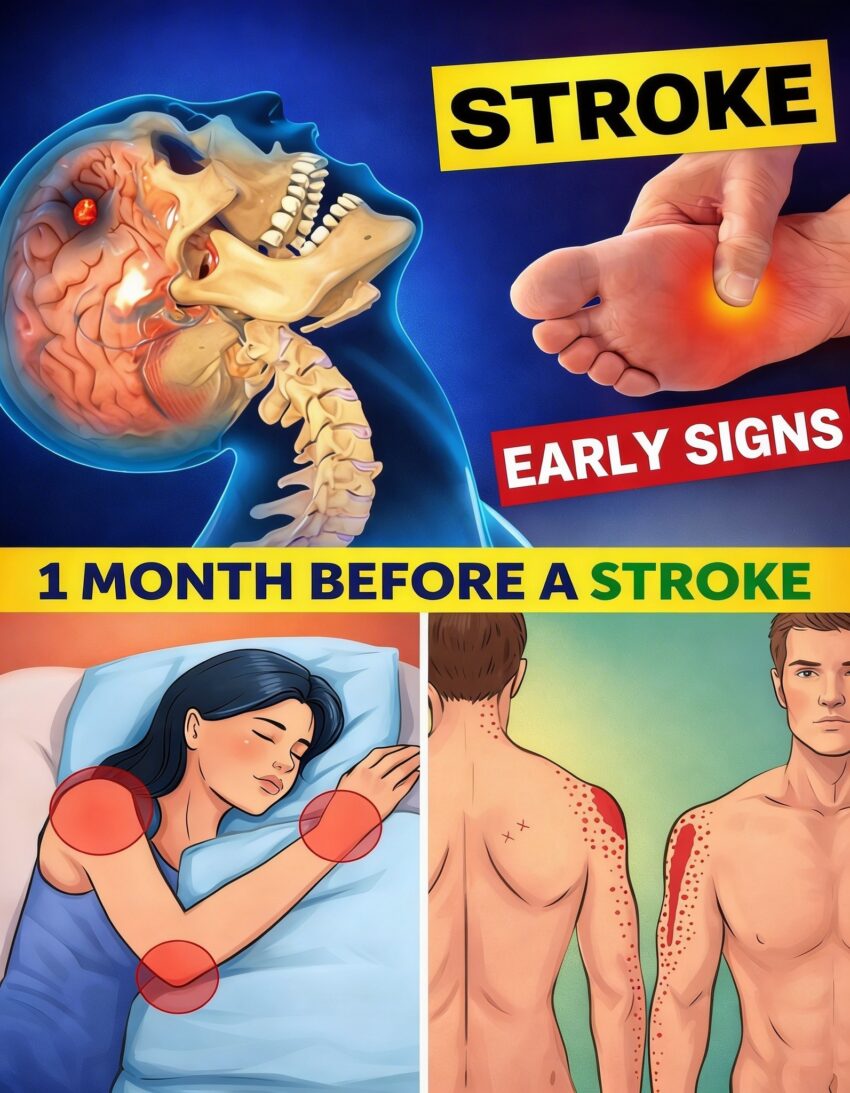
A stroke happens when blood flow to part of the brain is interrupted, causing brain cells to be damaged or die. The tricky part is that it can sometimes be preceded by warning signs days or even weeks earlier—especially in the case of a “mini-stroke” (transient ischemic attack or TIA). These early signals are not always obvious, but recognizing them can be life-saving.
8 Warning Signs That May Appear Weeks Before a Stroke
These symptoms don’t guarantee a stroke is coming, but they are red flags that blood flow to the brain may already be compromised:
- Sudden, unusual headaches
A new type of headache or a severe headache without a clear cause, especially if it feels different from usual. - Brief weakness or numbness
Especially on one side of the body—face, arm, or leg—that comes and goes. - Temporary vision problems
Blurred vision, double vision, or partial loss of vision in one or both eyes. - Speech difficulties
Slurred speech, trouble finding words, or briefly not understanding others. - Dizziness or loss of balance
Feeling unsteady, lightheaded, or having coordination problems without a clear reason. - Short episodes of confusion
Moments of disorientation, memory lapses, or difficulty focusing. - Sudden fatigue or weakness
Unusual exhaustion that appears without physical exertion. - Mini-stroke (TIA) symptoms
Stroke-like symptoms that last minutes to hours and then fully disappear. This is a major warning sign that a full stroke risk is high.
Important: A TIA is often called a “warning stroke” and requires urgent medical evaluation even if symptoms go away.
9 Tips to Help Prevent Stroke
Prevention focuses mainly on protecting blood vessels and controlling risk factors.
- Control blood pressure
High blood pressure is the leading cause of stroke. Regular monitoring is essential. - Manage blood sugar
If you have diabetes, keep glucose levels under control. - Reduce cholesterol
High LDL cholesterol can block arteries leading to the brain. - Quit smoking
Smoking damages blood vessels and greatly increases stroke risk. - Stay physically active
Even 30 minutes of brisk walking most days improves circulation and heart health. - Eat a balanced diet
Focus on fruits, vegetables, whole grains, lean protein, and limit fried and processed foods. - Maintain a healthy weight
Excess weight increases strain on blood vessels and raises blood pressure. - Limit salt and alcohol
Too much salt raises blood pressure; alcohol increases stroke risk when overused. - Manage stress and sleep well
Chronic stress and poor sleep contribute to hypertension and heart strain.
When to Seek Immediate Help
If you or someone experiences sudden face drooping, arm weakness, or speech difficulty—even if it improves—seek emergency care immediately. Stroke treatment is time-sensitive, and early intervention can prevent permanent brain damage.
If you want, I can also break down FAST stroke recognition, or explain how a TIA differs from a full stroke in simple terms.
