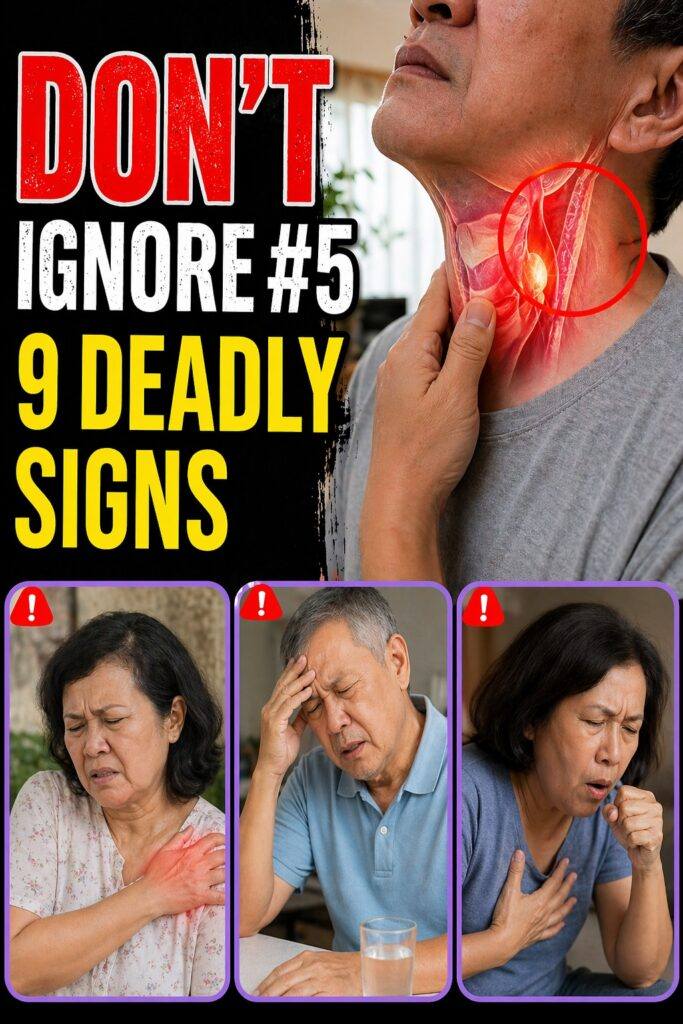
Blocked arteries in the neck usually refer to carotid artery disease, a condition where fatty deposits (plaque) narrow the carotid arteries and reduce blood flow to the brain. The danger is that it can lead to a stroke, sometimes with little warning.
Here are 9 warning signs you should not ignore:
1. Sudden weakness or numbness on one side of the body
This may affect the face, arm, or leg and can come on quickly. It’s often one of the earliest signs of reduced blood flow to the brain.
2. Brief loss of vision in one eye (like a “curtain” dropping)
This is called amaurosis fugax and can feel like temporary blindness in one eye.
3. Slurred speech or difficulty speaking
Words may come out unclear, or you may struggle to form sentences.
4. Sudden dizziness or loss of balance
You may feel unsteady, lightheaded, or have trouble walking straight.
5. Sudden confusion or trouble understanding others ⚠️
This is often overlooked. A person may seem disoriented, unable to follow conversations, or respond appropriately.
6. Severe or unexplained headache
Especially if it comes on suddenly and feels different from your usual headaches.
7. Drooping on one side of the face
One side of the face may appear uneven when smiling or talking.
8. Temporary numbness or tingling in the limbs
Especially if it comes and goes without a clear reason.
9. Transient Ischemic Attack (TIA) symptoms (“mini-stroke”)
Short episodes of stroke-like symptoms that resolve within minutes to hours. Even if they disappear, they are a major warning sign of future stroke risk.
Why this matters
These symptoms are often linked to reduced blood flow caused by Carotid artery disease, which can lead to a full stroke if untreated.
When to seek help
If any of these symptoms appear suddenly—even if they go away—medical attention is urgent. Early evaluation (often with ultrasound or imaging) can prevent serious complications.
If you want, I can also explain:
- what causes carotid artery blockage
- how doctors diagnose it
- or how it’s treated (medications vs. surgery vs. stents)
