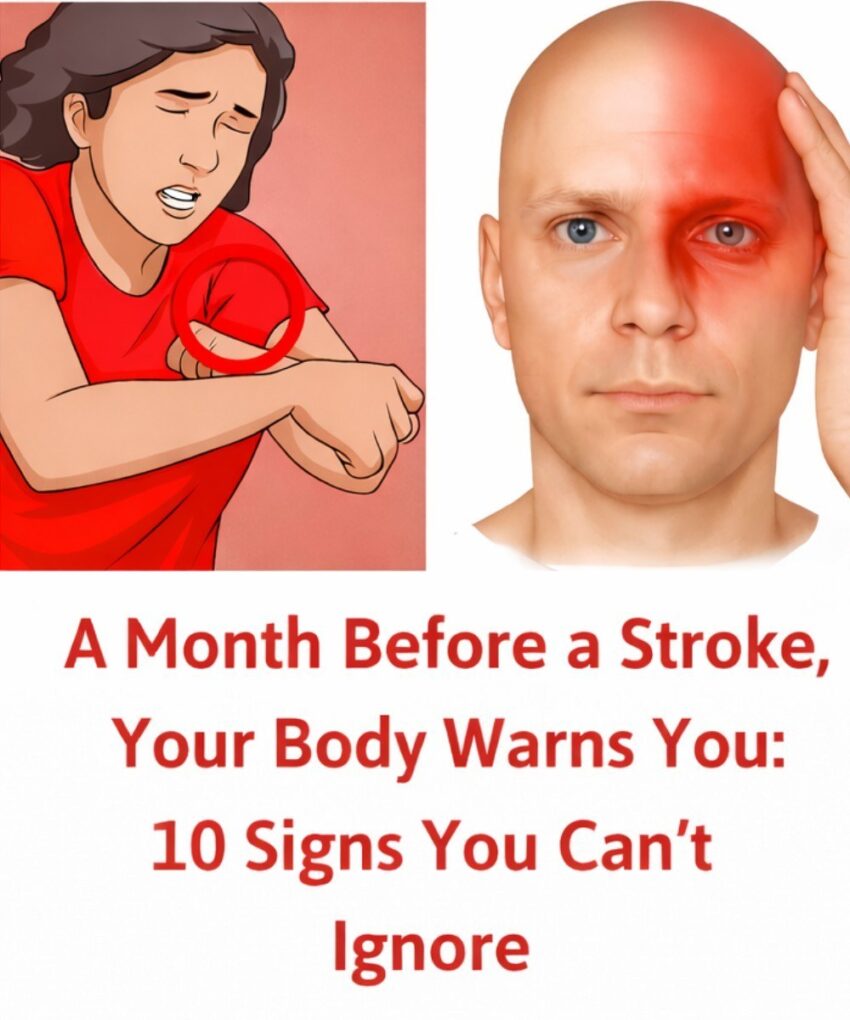
That headline has a grain of truth—but it’s often exaggerated.
Sometimes the body does give warning signs before a stroke, but not always “a month before,” and not always clearly.
🧠 The most important concept: mini-strokes
The clearest early warning is a Transient Ischemic Attack (TIA)
- It’s a temporary blockage of blood flow to the brain
- Symptoms come and go (often within minutes to hours)
- It’s a major red flag—a full stroke can follow within days or weeks
⚠️ Possible warning signs to never ignore
These can appear suddenly—even if they disappear:
1. Sudden numbness or weakness
- Face, arm, or leg (especially on one side)
2. Trouble speaking or understanding
- Slurred speech or confusion
3. Vision problems
- Blurred, double vision, or loss of vision in one eye
4. Dizziness or loss of balance
- Trouble walking or coordination issues
5. Severe, unusual headache
- Especially if it comes on suddenly
⏳ What about “a month before”?
Some people may notice subtle signs earlier, like:
- Repeated brief dizziness
- Short episodes of numbness
- Mild speech difficulty
But:
- These are not reliable predictors on their own
- Many strokes happen without long warning periods
🚨 What to do (this is critical)
Use the FAST rule:
- Face drooping
- Arm weakness
- Speech difficulty
- Time to call emergency help immediately
Even if symptoms go away → still seek urgent care
🧠 Bottom line
- There’s no guaranteed “1-month warning timeline”
- But mini-strokes and sudden neurological symptoms are serious alerts
- Acting quickly can prevent a major stroke and save a life
If you want, I can give you a simple daily checklist to reduce stroke risk, especially for people over 50.
