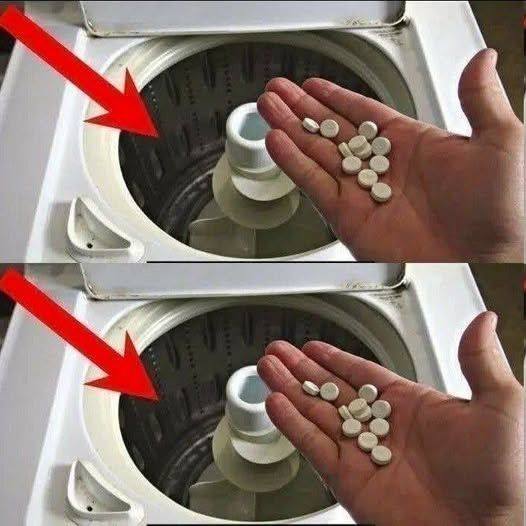
There’s no real laundry function for aspirin in the way he’s using it.
Aspirin is a medication whose active ingredient is acetylsalicylic acid. When it dissolves in water, it breaks down into salicylic acid, which is mildly acidic. That’s probably where the idea comes from.
Why people think it works
This is one of those old household “laundry hacks” that circulates by tradition. The theory is:
- The mild acidity might help loosen stains or brighten whites
- It’s vaguely similar to other additives like vinegar or baking soda (which do have some laundry uses)
What actually happens in reality
In a washing machine:
- The concentration is far too low to meaningfully remove stains
- It doesn’t act like a detergent, bleach, or stain remover
- It fully dissolves and gets rinsed away without doing much
Possible downsides
It’s not dangerous in small amounts, but it’s still not a good idea because:
- It’s unnecessary cost and effort
- It can contribute to residue buildup over time
- In some cases, acidic residues aren’t ideal for certain fabrics or machine parts
Why he might insist on it
What you’re seeing is pretty common in households where a spouse had a fixed routine—people sometimes associate the “ritual” with care or cleanliness, even if the science behind it is outdated or never existed.
A practical way to handle it
If you want to avoid conflict, you could:
- Quietly stop using it and see if he notices any difference (he likely won’t)
- Or swap it with something neutral like an extra rinse cycle if he insists on “a step”
Bottom line: aspirin doesn’t meaningfully improve laundry performance. It’s more tradition than technique.
