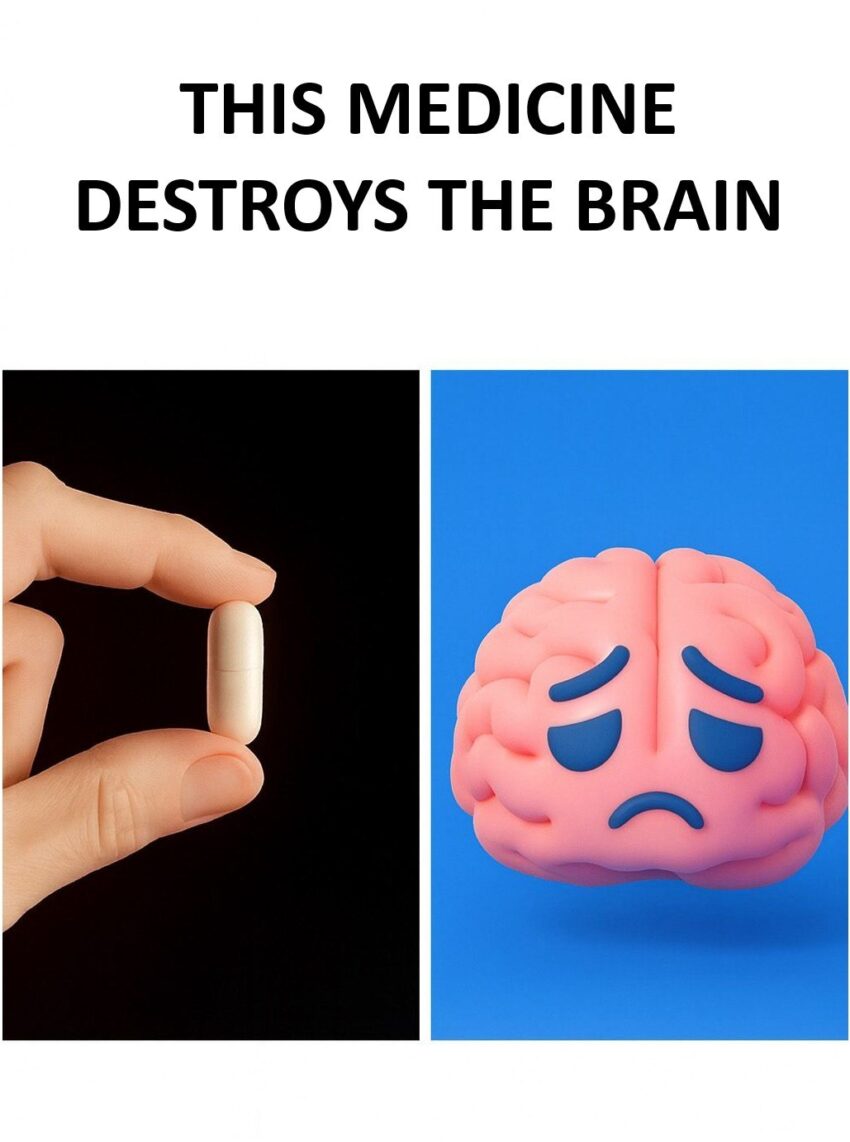
The claim “8 drugs that cause serious dementia” is often shared online, but it needs an important correction first:
No medication has been proven to directly “cause dementia” in a guaranteed way. What research shows is that some drugs are linked to a higher risk of cognitive decline or dementia-like symptoms, especially with long-term or high-dose use. (GoodRx)
The strongest evidence points to a few main drug groups:
1. Anticholinergic drugs (strongest link)
These are the most consistently associated with memory decline and dementia risk.
Examples:
- Diphenhydramine (Benadryl)
- Oxybutynin (for bladder problems)
- Amitriptyline (older antidepressant)
- Dicyclomine (for IBS)
They block acetylcholine, a key brain chemical for memory. Long-term use is linked to higher dementia risk. (GoodRx)
2. Benzodiazepines (sleep/anxiety drugs)
Examples:
- Diazepam (Valium)
- Alprazolam (Xanax)
- Lorazepam (Ativan)
Long-term use is associated with:
- memory loss
- confusion
- possibly increased dementia risk (evidence is mixed but concerning) (Healthline)
3. Opioid painkillers
Examples:
- Morphine
- Oxycodone
- Hydrocodone
Chronic use may impair cognition and is linked in some studies to increased dementia risk. (Psychreg)
4. Tricyclic antidepressants (older antidepressants)
Examples:
- Amitriptyline
- Nortriptyline
These also have anticholinergic effects, which can affect memory.
5. First-generation antihistamines (allergy/sleep meds)
Examples:
- Diphenhydramine (Benadryl)
- Chlorpheniramine
They cross into the brain and can cause sedation and cognitive slowing.
6. Proton pump inhibitors (PPIs)
Examples:
- Omeprazole (Prilosec)
- Esomeprazole (Nexium)
Some studies suggest a possible association with long-term use, but evidence is inconsistent. (Psychreg)
7. Antipsychotic medications
Examples:
- Olanzapine
- Clozapine
May worsen cognition, especially in older adults or long-term use.
8. Certain anti-seizure drugs
Some can affect memory and thinking speed, especially in high doses or combinations.
Key takeaway (important)
- These drugs do not “cause dementia” directly in most people
- The real risk comes from:
- long-term use
- high cumulative dose
- older age
- multiple interacting medications
In many cases, cognitive effects may improve after stopping or adjusting the medication under medical supervision.
If you want, I can also list:
- safer alternatives for these drugs
- or a simple “medication risk checklist” for dementia prevention
