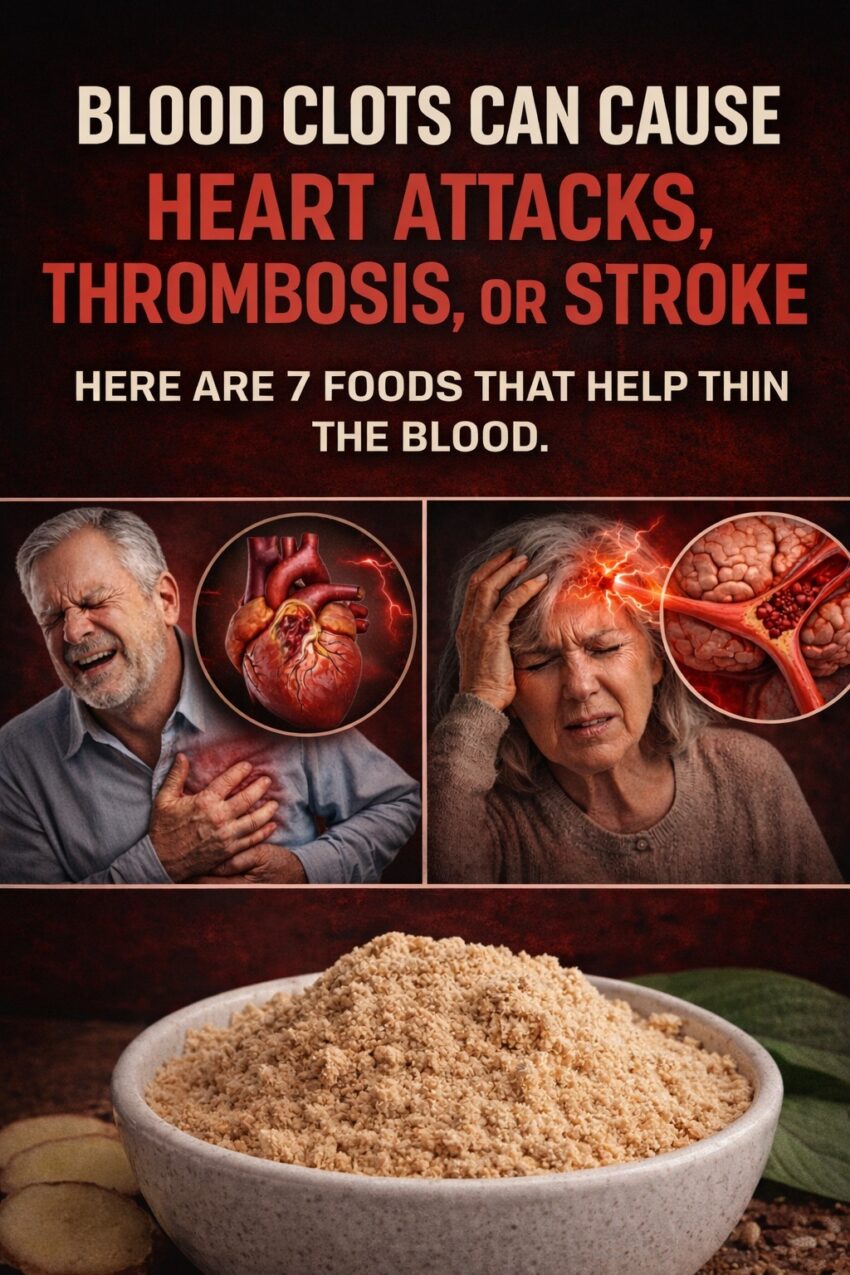
That headline is partly based on real science, but it’s over-simplified and often misleading.
Yes—blood clots can be involved in heart attack, stroke, and thrombosis, but no normal food can reliably “thin your blood” in a medical sense like prescription drugs do.
🩸 First, what “blood thinning” really means
In medicine, “blood thinning” refers to reducing clot formation using anticoagulant or antiplatelet drugs.
Related conditions include:
- Thrombosis
- Stroke
- Myocardial Infarction
Foods do not work like medication in this process.
🥗 Foods often said to “thin blood” (what’s actually true)
These foods may have mild anti-clot or circulation-support effects, but NOT strong medical blood thinning:
🧄 1. Garlic
- May slightly reduce platelet aggregation
- Mild effect, not a substitute for medication
🫚 2. Ginger
- Contains compounds that may reduce inflammation and clotting tendency
🫒 3. Olive oil
- Supports heart health through healthy fats
🐟 4. Fatty fish (salmon, sardines)
- Omega-3 fatty acids may reduce clot risk over time
🫐 5. Berries
- Antioxidants support blood vessel health
🌶️ 6. Turmeric
- Contains curcumin, studied for anti-inflammatory effects
🍵 7. Green tea
- May have mild effects on platelet activity
⚠️ Important reality check
- These foods do NOT “thin blood instantly”
- Effects are mild and long-term
- They cannot replace blood thinners like aspirin or warfarin when medically needed
🚨 Why this matters
Overstating food effects can be risky because:
- People may stop prescribed medication
- They may believe diet alone prevents serious conditions
- It oversimplifies complex diseases like clotting disorders
🧠 Bottom line
- Blood clots are serious and can cause stroke, heart attack, and thrombosis
- Some foods support heart and vessel health
- But no food works like a real blood thinner medication
If you want, I can explain early warning signs of dangerous blood clots (leg, lungs, brain) so you know when it becomes an emergency.
