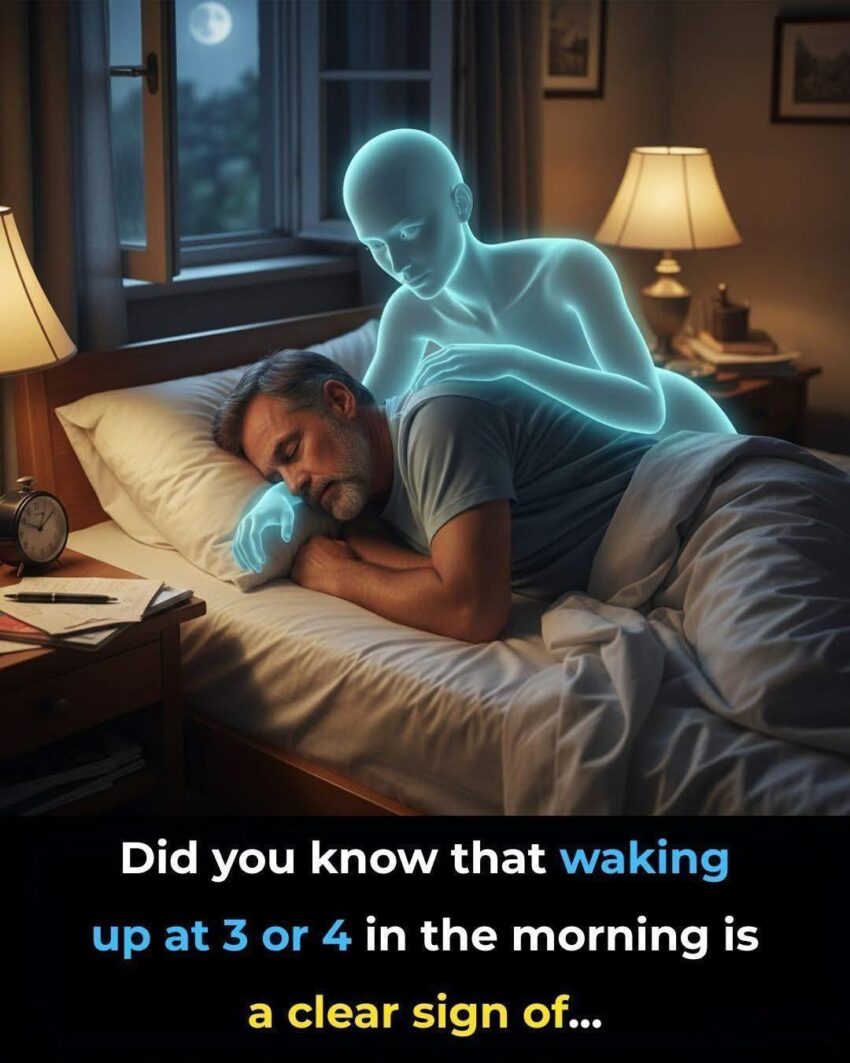
Here’s what real sleep science and sleep doctors say — waking up consistently at **3 a.m. or 4 a.m. is not a “clear sign of some mysterious cause” like clickbait claims — it usually has normal medical and lifestyle explanations, and there isn’t a single universal meaning behind it. (Healthline)
🕒 Why People Often Wake Up Around 3–4 AM
🧠 1. Natural Sleep Cycles
Your body goes through several cycles of light and deep sleep.
Around 3 a.m.–4 a.m., REM sleep becomes longer and sleep is lighter, so it’s easier to wake up compared with earlier deep sleep. (Cleveland Clinic)
😟 2. Stress and Hormones
Your body’s stress hormone cortisol naturally starts to rise before morning, and if you’re stressed, anxious, or tense, that rise can make you wake earlier than you’d like. (Healthline)
🚽 3. Bathroom Trips
Fluid you drank before bed may result in nocturia (nighttime urination), which can wake you up — especially around 3–4 a.m. (Cleveland Clinic)
💡 4. Environmental & Lifestyle Factors
Noise, light pollution, room temperature, caffeine or alcohol late in the day, and irregular routines can disrupt sleep and increase early waking. (Sleep Foundation)
😴 5. Sleep Disorders or Health Conditions
If you’re waking daily, can’t fall back asleep, or feel very tired in the day, it might be due to insomnia, sleep apnea, restless legs syndrome, depression/anxiety, or circadian rhythm disruption — which a doctor can help evaluate. (Sleep Foundation)
📉 So What Does It Mean?
Waking up at 3–4 AM isn’t a specific diagnostic sign of a disease or “secret body alarm” — it’s usually part of normal sleep patterns or a response to stress, hormones, sleep quality, or environment. (Healthline)
👉 Brief awakenings are common: Most people wake up multiple times at night and often don’t remember it — it becomes noticeable only when you stay awake instead of falling back asleep. (Healthline)
🛌 What You Can Do to Sleep Better
✔ Maintain a regular sleep schedule (same time to bed and wake up)
✔ Avoid caffeine and alcohol late in the day
✔ Limit fluids before bedtime
✔ Create a dark, quiet, cool bedroom environment
✔ Relaxation routine before bed (meditation, reading)
✔ Talk to a doctor if it’s interfering with daily life or lasting months
🧠 Bottom Line
Waking in the early morning hours is very common and usually related to your body’s sleep architecture, stress hormone patterns, or habits — not a mysterious indicator of some concealed disease. (Healthline)
If it’s frequent, distressing, and affecting your daytime function, a healthcare professional can help rule out sleep disorders and tailor solutions.
