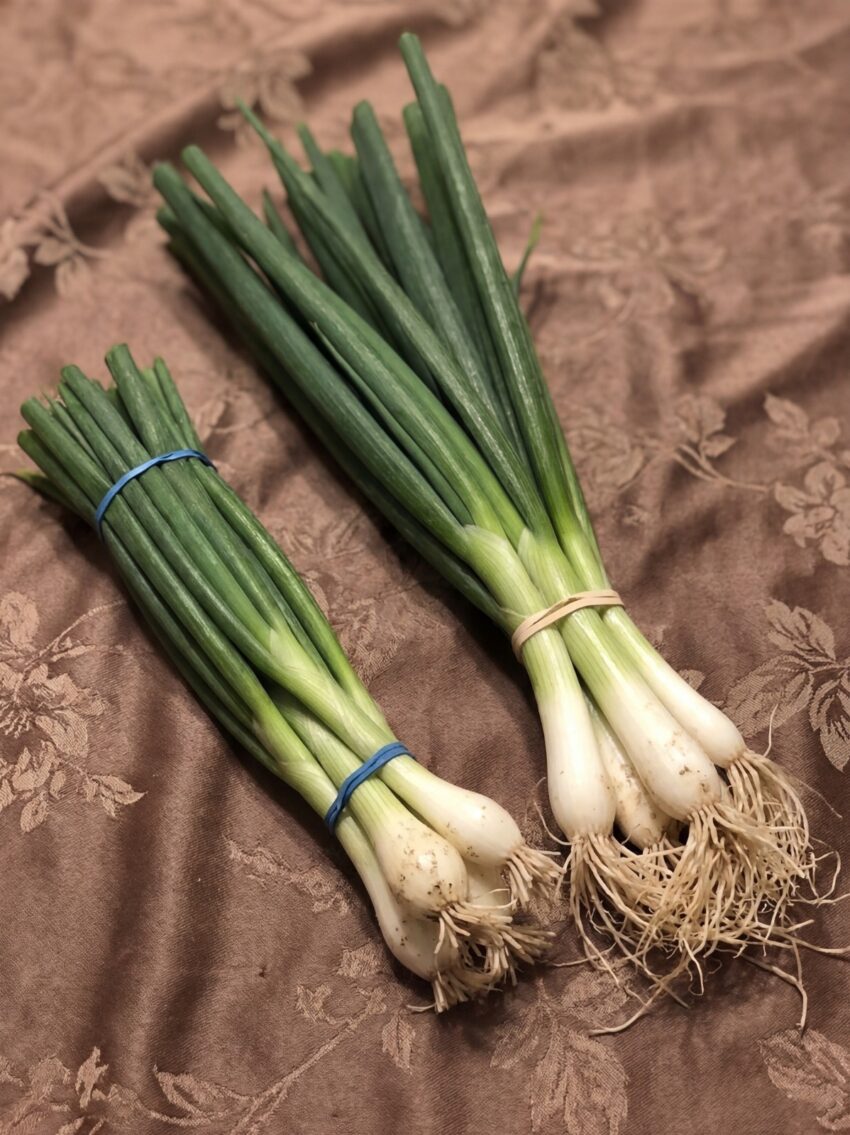
These four “onion-like” greens often confuse cooks because they look similar but differ in flavor, usage, and growth stage. Here’s a clear breakdown:
🌱 Green Onions vs. Scallions vs. Spring Onions vs. Chives
| Feature | Green Onions | Scallions | Spring Onions | Chives |
|---|---|---|---|---|
| Plant Stage | Young onions harvested before the bulb develops | Another name for green onions (same as above) | Slightly older onions with a small, visible bulb | Very small, grass-like plants |
| Appearance | Long white base with green stalks; no bulb | Same as green onions | White bulb at the base with green stalks; slightly thicker | Thin, hollow green leaves; no white bulb |
| Flavor | Mild, slightly sweet onion flavor | Mild, slightly sweet onion flavor | Stronger onion taste, more pungent | Delicate, mild onion/garlic flavor |
| Culinary Use | Raw in salads, garnishes, or cooked lightly | Raw in salads, garnishes, or cooked lightly | Sautéed, roasted, grilled, or in stews | Raw as garnish, in dips, soups, scrambled eggs |
| Storage | Fridge, a few days | Fridge, a few days | Fridge, up to a week | Fridge, a few days; freeze for longer |
🔹 Key Points
- Green onions = scallions in most grocery stores—they’re the same plant.
- Spring onions are slightly older, with a small bulb—more pungent, better for cooking.
- Chives are delicate, thin, and best used raw as a garnish—they have a subtle oniony taste.
- Flavor and texture dictate usage: chives for raw finishing, spring onions for cooked dishes, green onions/scallions for versatility.
💡 Cooking Tip:
- If a recipe calls for “green onions,” you can usually substitute scallions 1:1.
- If it calls for “spring onions,” using green onions is okay, but the flavor will be milder.
- Chives should not replace green onions in cooked recipes—they lose flavor when heated.
If you want, I can make a visual chart showing all four with pictures, flavor intensity, and best uses—so it’s easy to tell them apart at a glance.
Do you want me to do that?
