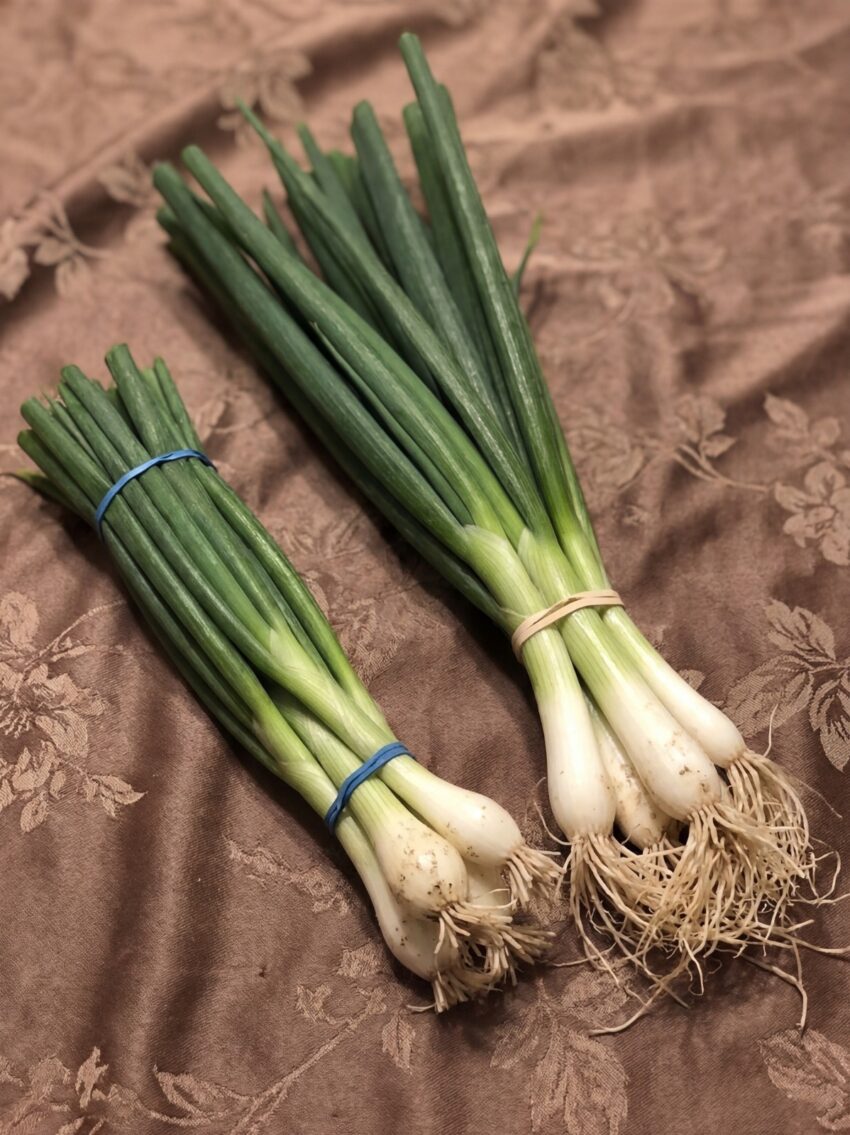
These terms—green onions, scallions, spring onions, and chives—are often used interchangeably in cooking, but there are subtle differences in flavor, size, and maturity. Here’s a clear breakdown:
🥗 1. Green Onions
- What they are: Young onions harvested before the bulb fully develops
- Appearance: Long white stalk with green tops
- Flavor: Mild onion taste, slightly sharper than chives
- Uses: Salads, garnishes, stir-fries, soups
🥢 2. Scallions
- Essentially the same as green onions in most countries
- Slight difference: In some regions, “scallion” refers specifically to very slender, immature green onions
- Used interchangeably with green onions in recipes
🌱 3. Spring Onions
- What they are: Slightly older than green onions, with a small, rounded bulb at the base
- Appearance: More pronounced white bulb, green tops intact
- Flavor: Sweeter and more intense than green onions
- Uses: Roasting, grilling, or cooking where a stronger onion flavor is desired
🌿 4. Chives
- What they are: A completely different species, part of the garlic family
- Appearance: Very thin, hollow green stems; no bulb
- Flavor: Delicate onion-garlic taste, much milder than green onions
- Uses: Garnishing, omelets, soups, creamy dips
⚡ Quick Comparison Table
| Feature | Green Onion/Scallion | Spring Onion | Chives |
|---|---|---|---|
| Bulb | Small/none | Small round | None |
| Stem | Long, green | Long, green | Thin, tubular |
| Flavor | Mild | Sweet/strong | Very mild |
| Common Use | Garnish, cooking | Roasting, stir-fry | Garnish only |
💡 Cooking Tip:
- Use chives raw for garnish.
- Spring onions are better cooked for flavor depth.
- Green onions/scallions work in both raw and cooked dishes.
If you want, I can make a visual guide showing all four with labels and best uses—it makes remembering the differences much easier.
