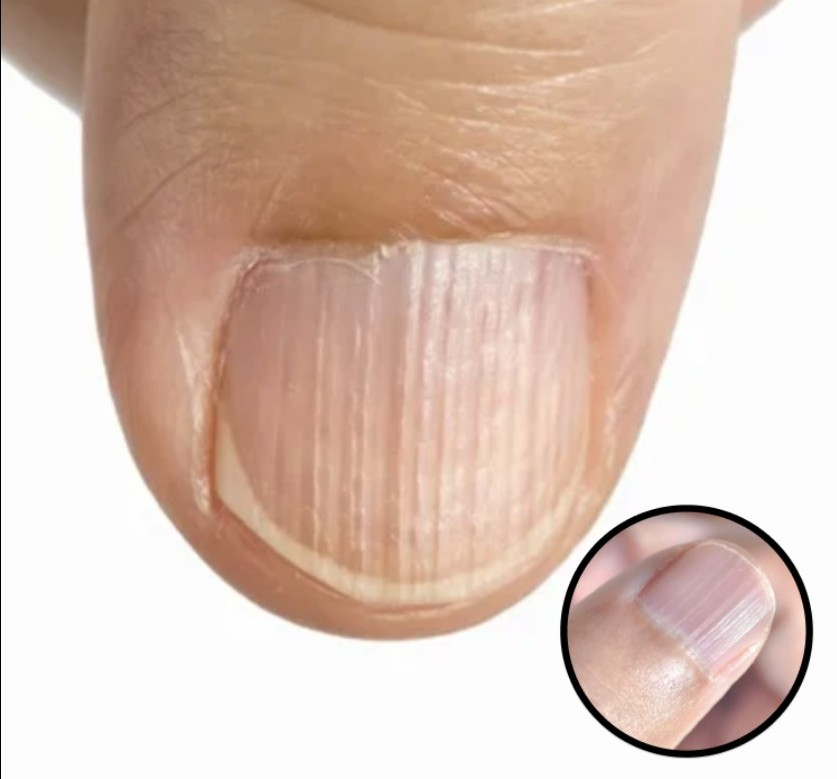
That headline is half useful, half exaggerated. Fingernail ridges are common, and in most cases they’re harmless.
💅 Ridges on fingernails — what they usually mean
Your nails naturally develop small lines as they grow. These ridges can be:
1. Vertical ridges (most common)
These run from the cuticle to the tip of the nail.
They’re usually linked to:
- normal aging
- mild dehydration
- frequent hand washing or exposure to chemicals
- minor nutrient gaps (sometimes iron or B vitamins, but not always)
In most people, vertical ridges are completely normal and not a sign of disease.
2. Horizontal ridges (more important)
These are called Beau’s lines and run across the nail.
They can appear after:
- a high fever or illness
- major stress on the body
- injury to the nail matrix
- serious infections or surgery
They usually show a past “pause” in nail growth.
🧠 When ridges are NOT a big concern
- they’re mild and long-term
- they don’t change suddenly
- you feel otherwise healthy
⚠️ When to pay attention
See a doctor if ridges come with:
- nail discoloration (yellow, dark, or green)
- splitting or crumbling nails
- sudden deep horizontal lines
- other symptoms like fatigue or weight loss
🧴 Simple ways to improve nail health
- moisturize hands and nails regularly
- avoid harsh nail chemicals or constant gel polish
- eat a balanced diet with protein, iron, and vitamins
- stay hydrated
🧾 Bottom line
Most nail ridges—especially vertical ones—are just a normal part of how nails grow and age. Horizontal ridges are more meaningful because they can reflect a past illness or stress on the body.
If you want, I can also show you how to tell the difference between “normal aging nails” and signs of actual nutrient deficiencies.
