The idea behind that statement is broadly aligned with what geriatric mobility research shows, but it’s a bit more dramatic than how doctors usually frame it.
After around 60, a slower walking speed can sometimes correlate with reduced muscle strength (especially in the calves and hips), lower balance control, or early functional decline. It’s not a diagnosis by itself—but it can be a useful “vital sign” of overall mobility.
Why calves matter more than people think
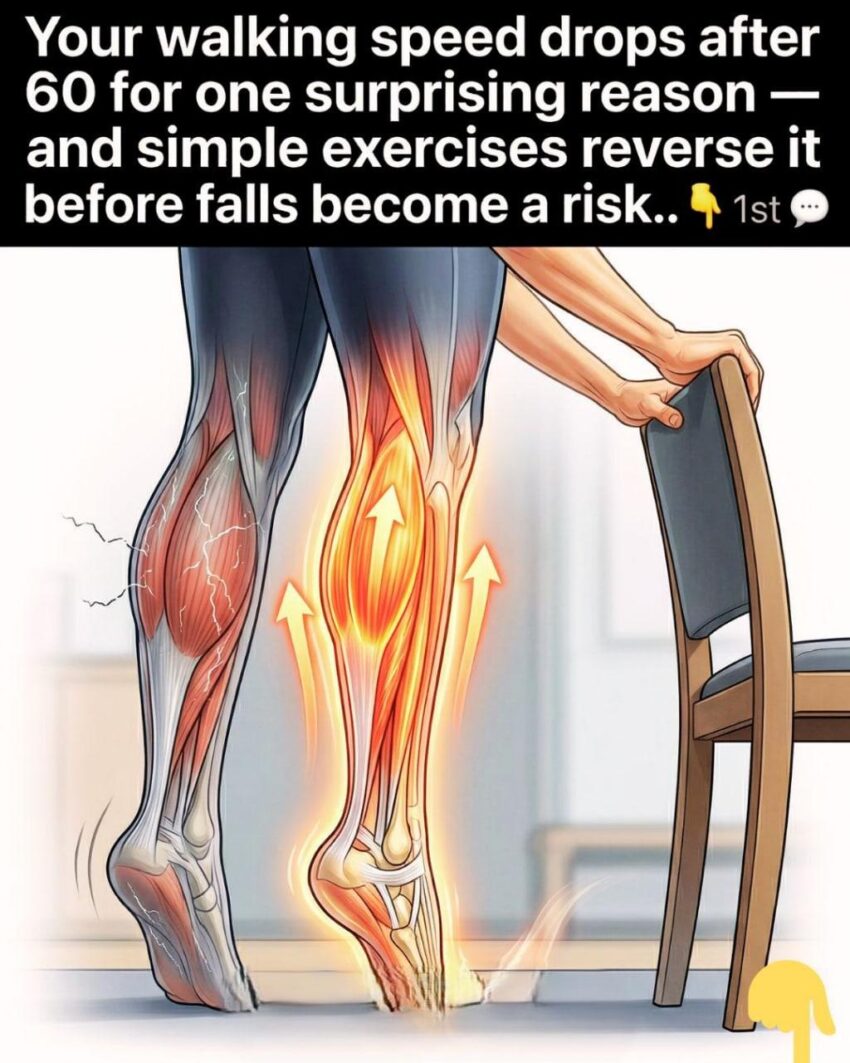
Your calf muscles (especially the gastrocnemius and soleus) are your main “push-off engine” when walking. When they weaken:
- Each step becomes shorter
- You fatigue faster
- Balance reactions slow down
- Stairs and uneven ground feel harder
The good news is that calf strength responds well to simple training—even in older adults.
3 simple calf-focused moves to start today
1. Standing calf raises
- Stand near a wall or chair for support
- Rise up onto your toes slowly
- Lower down under control
Do: 2–3 sets of 8–12 reps daily
👉 Progression: try doing them on one leg once stronger.
2. Seated calf raises
- Sit in a chair, feet flat
- Lift heels while keeping toes on the ground
- Pause briefly at the top
Do: 2–3 sets of 15–20 reps
👉 Good for beginners or stiff ankles.
3. Heel-to-toe walking
- Walk in a straight line
- Place heel directly in front of the opposite toe with each step
Do: 5–10 minutes daily
👉 This trains balance + coordination, not just strength.
Important reality check
Slow walking is not automatically a warning sign of “lost independence.” It becomes meaningful when combined with things like:
- frequent fatigue while walking
- difficulty rising from a chair
- recent falls or near-falls
- noticeable loss of balance
If any of those are present, it’s worth a medical or physiotherapy check—not just exercise alone.
If you want, I can turn this into a 7-day beginner plan for improving walking speed and balance after 60 (very simple, no equipment).
