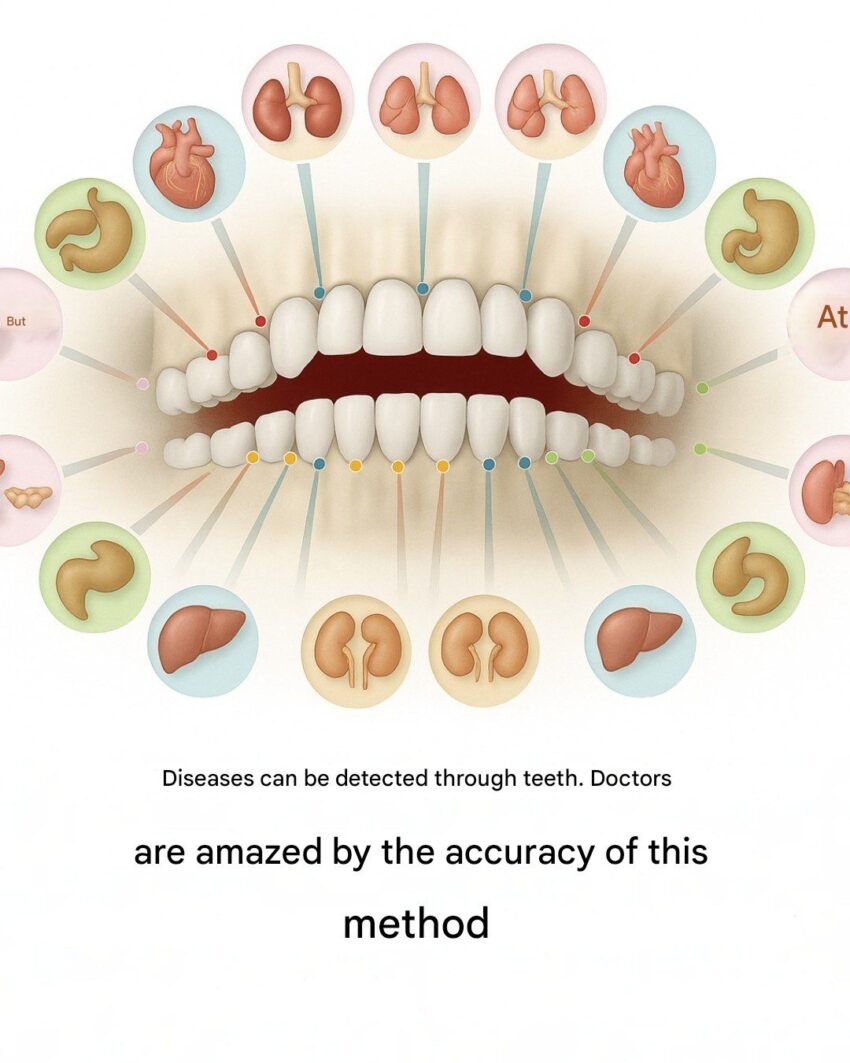
The idea that “each tooth is directly connected to a specific organ, and dental pain predicts future disease in that organ” is a popular claim—but it’s not supported by modern medical or dental science.
Here’s what’s actually true and what’s not:
🦷 What is true
- Your mouth is closely linked to overall health.
- Conditions like gum disease (periodontitis) have been associated with systemic issues such as:
- Heart disease
- Diabetes
- Respiratory infections
- Infections in teeth (like abscesses) can spread and affect other parts of the body if untreated.
❌ What’s not scientifically proven
- There is no anatomical or physiological evidence that:
- Each individual tooth maps to a specific organ (like liver, kidney, etc.)
- Pain in a specific tooth predicts disease in a corresponding organ
This idea sometimes comes from alternative practices like:
- Traditional Chinese Medicine
- Reflexology-style “energy meridian” charts
While these systems are meaningful in their own traditions, they don’t align with evidence-based dentistry or anatomy.
🧠 Why dental pain actually happens
Tooth pain is usually due to local issues such as:
- Cavities (tooth decay)
- Infection or abscess
- Gum disease
- Tooth cracks or sensitivity
🚨 When dental issues can signal broader problems
There are indirect links—for example:
- Chronic inflammation in gums may worsen systemic inflammation
- Poor oral health can reflect uncontrolled diabetes or immune problems
Bottom line
Dental pain is important and shouldn’t be ignored—but it’s a sign of a dental issue first, not a map of future organ disease.
If you’re interested, I can show you what those tooth–organ charts claim and compare them with actual anatomy—it’s pretty interesting to see the contrast.
