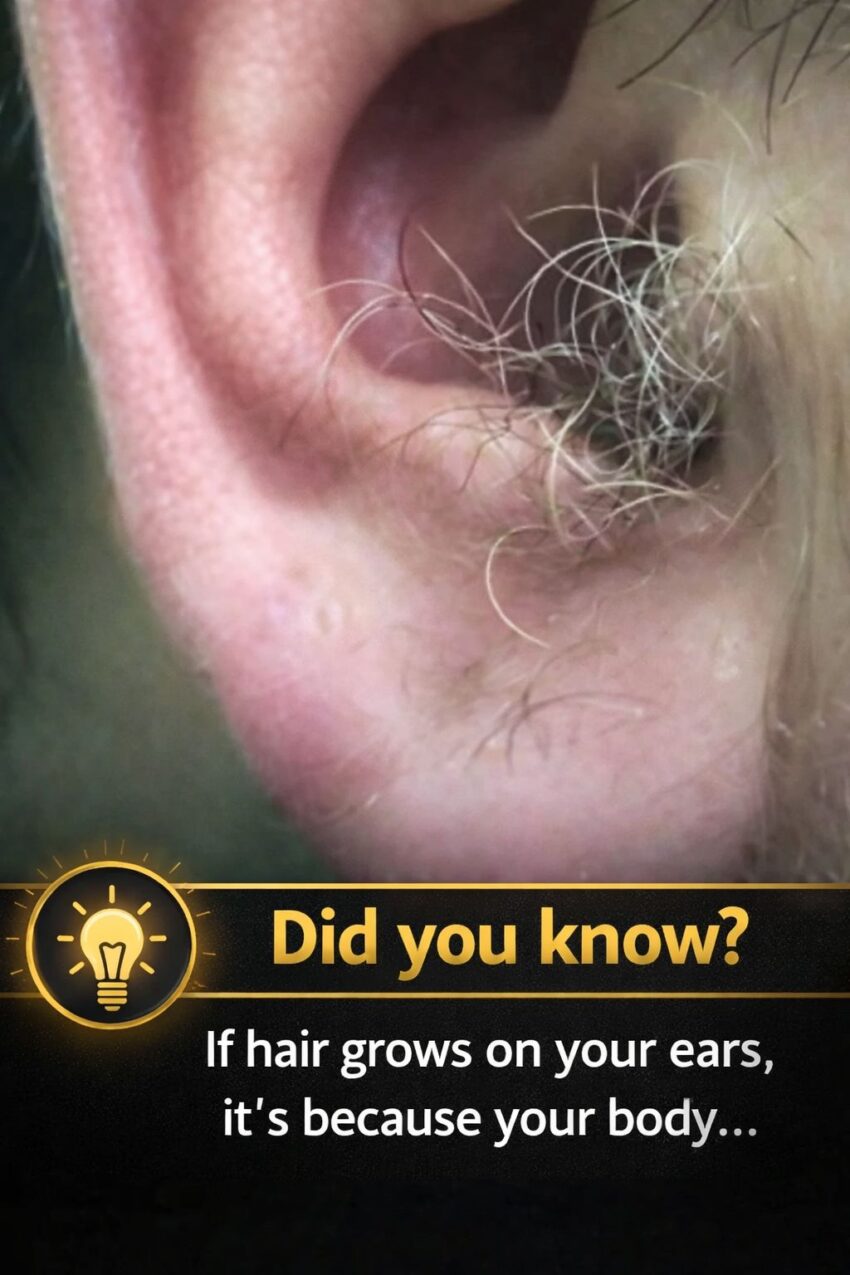
Ear hair is one of those body features that gets attention mostly for cosmetic reasons—but online claims often go further, suggesting it can reveal hidden health problems. The truth is more nuanced: ear hair is mainly a normal effect of aging and hormones, not a reliable medical “warning sign.”
Here’s what doctors actually say about it.
🧠 What ear hair really is
Hair inside and around the ear grows due to:
- Genetics
- Hormones (especially androgens like testosterone)
- Aging of hair follicles
- Natural changes in hair growth cycles
As people get older, certain follicles become more sensitive to hormones, so thicker or more visible ear hair can develop, especially in men.
👨⚕️ What doctors don’t agree with
There is a popular claim that:
“More ear hair = hidden disease or poor health”
Doctors generally do not support this idea. Ear hair alone is not used to diagnose any medical condition.
There is no strong scientific evidence linking ear hair directly to:
- Heart disease
- High cholesterol
- Diabetes
- Hormone imbalance (in a diagnostic sense)
These claims often come from anecdotal observations, not controlled medical studies.
🧬 What ear hair can indicate (indirectly)
While ear hair itself is not a disease marker, it can reflect normal biological changes:
1. Aging
- More common after age 40–50
- Hair growth patterns shift with age
- Similar to nose or eyebrow hair becoming thicker
2. Hormonal sensitivity
- Androgens influence body hair growth
- Some men naturally develop more terminal (thicker) hair in ears
3. Genetics
- Strong hereditary factor
- Often runs in families regardless of health status
⚠️ When ear changes might matter medically
Doctors only get concerned if ear changes come with other symptoms, such as:
- Sudden hair loss in patches (could indicate skin conditions)
- Pain, swelling, or discharge from the ear
- Skin growths, lumps, or bleeding lesions
- Rapid, unusual hair growth changes combined with other hormonal symptoms
In those cases, the concern is not the hair itself, but an underlying condition affecting skin or hormones.
🧾 Where the myth likely came from
The “ear hair = disease risk” idea likely spread because:
- Aging men develop both ear hair and higher risk of heart disease
- People mistakenly link two common age-related changes
- Online health content often simplifies complex biology into “signals”
But correlation is not causation.
✂️ Practical reality
Most doctors treat ear hair as:
- A cosmetic grooming issue, not a medical one
- Something safely trimmed if desired
- Completely normal unless accompanied by other symptoms
👍 Bottom line
Ear hair is:
- ✔ Mostly genetic and age-related
- ✔ Influenced by hormones
- ❌ Not a reliable indicator of hidden disease
- ❌ Not a diagnostic health signal on its own
If you want, I can also explain:
- why nose and ear hair increase with age
- or what actual visible signs doctors do use to assess hormone or heart health changes
