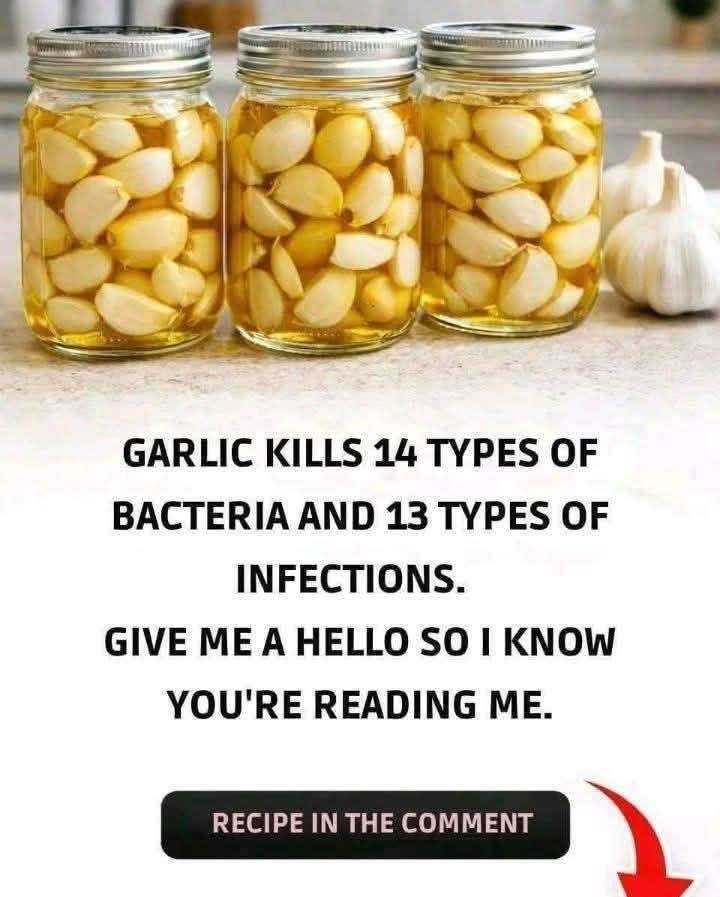
Garlic has been promoted for centuries as a natural remedy, often described in popular health writing as “nature’s antibiotic.” That phrase is catchy, but scientifically it needs a bit of nuance.
What researchers are actually interested in is a sulfur compound in garlic called allicin, which forms when garlic is crushed or chopped. This compound shows measurable antimicrobial activity in laboratory studies—but that doesn’t mean garlic works like a pharmaceutical antibiotic in the body.
Let’s break down what’s real, what’s exaggerated, and what garlic can genuinely do for health.
🧄 What makes garlic “active”?
Raw garlic contains a compound called alliin. When you crush or chop it, an enzyme converts it into allicin.
Allicin is responsible for:
- Strong smell
- Antimicrobial effects in lab settings
- Some biological activity in the human body
However, allicin is unstable—it breaks down quickly after digestion or cooking.
🦠 Does garlic actually fight infections?
What research suggests:
In laboratory (test tube) studies, garlic extracts can:
- Inhibit some bacteria
- Affect certain fungi
- Show mild antiviral activity in controlled conditions
But here’s the important distinction:
👉 These effects are mostly in vitro (outside the body)
👉 Real-world human effects are much weaker and inconsistent
So garlic is not a replacement for medical antibiotics when dealing with serious infections like pneumonia, strep throat, or bacterial sepsis.
🧠 What garlic can do in humans
While it’s not a “miracle antibiotic,” garlic does have evidence-backed health effects:
1. Immune support (modest)
Regular consumption may slightly improve immune response, potentially reducing frequency of common colds in some studies.
2. Heart health benefits
Garlic has stronger evidence here:
- May modestly reduce blood pressure
- Can improve cholesterol profiles in some people
- Supports blood vessel health
3. Anti-inflammatory effects
Compounds in garlic may help reduce low-grade inflammation over time.
⚖️ Fresh vs cooked garlic
- Raw garlic: Highest allicin potential (strongest biological activity)
- Cooked garlic: Milder, but still contains beneficial sulfur compounds
- Aged garlic extract: Often used in supplements for cardiovascular benefits
🚫 Common misconception: “garlic kills infections like antibiotics”
This is where popular health claims go too far.
Garlic:
- ❌ Does not reliably cure bacterial infections
- ❌ Cannot replace prescribed antibiotics
- ❌ Does not work fast enough or strongly enough for acute illness
Think of it more as a supportive food with mild antimicrobial properties, not a treatment.
🧄 Bottom line
Garlic is best understood as a health-promoting food with interesting antimicrobial compounds, not a true antibiotic substitute.
A more accurate way to say it would be:
Garlic may support the immune system and show mild antimicrobial activity, but it cannot replace medical antibiotics for treating infections.
If you want, I can also compare garlic with other “natural antibiotics” people talk about (like honey, ginger, or turmeric) and explain which claims are actually supported by science.
