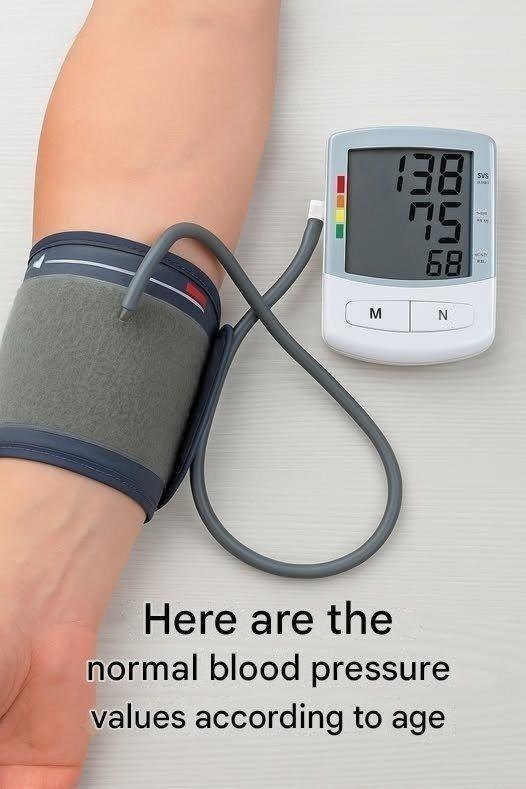
Blood pressure (BP) does not have strictly different “normal” values for each age in adults—the standard healthy range is mostly the same. However, average BP tends to rise slightly with age.
Here’s a clear breakdown:
🩺 Normal Blood Pressure (General Standard)
- Normal: < 120 / < 80 mmHg
- Elevated: 120–129 / < 80
- High BP (Stage 1): 130–139 / 80–89
- High BP (Stage 2): ≥ 140 / ≥ 90
- Hypertensive crisis: ≥ 180 / ≥ 120 (medical emergency)
👶 Blood Pressure by Age (Typical Averages)
Children
| Age | Typical Range (mmHg) |
|---|---|
| Newborn (0–1 month) | ~60–90 / 20–60 |
| Infant (1–12 months) | ~80–100 / 50–65 |
| Toddler (1–5 years) | ~95–105 / 55–70 |
| School age (6–12 years) | ~97–110 / 57–75 |
Teens & Adults
| Age | Typical Range (mmHg) |
|---|---|
| Teens (13–19) | ~105–120 / 65–80 |
| Adults (20–39) | ~110–125 / 70–80 |
| Adults (40–59) | ~115–135 / 75–85 |
| Seniors (60+) | ~120–145 / 75–90 |
⚠️ Important Notes
- Doctors usually focus on the 120/80 mmHg standard, not age-adjusted “normal” in adults.
- Slight increases with age can be normal, but consistently high readings are not healthy at any age.
- Children’s BP is interpreted using percentile charts, not fixed numbers.
If you want, I can also show:
- How to check BP correctly at home
- What BP is considered dangerous in Pakistan/South Asia populations
- Or a simple chart you can save on your phone
