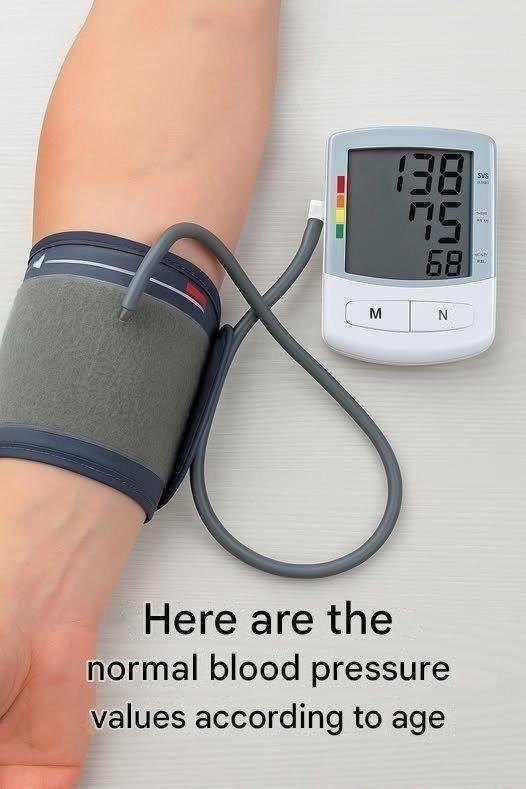
Blood pressure (BP) doesn’t have strict “normal values by age” for adults—modern guidelines define a healthy range for most adults regardless of age. For children and teenagers, however, normal BP is based on age, sex, and height percentiles.
Here’s a clear breakdown:
🧑 Adults (18 years and older)
- Normal: < 120 / < 80 mmHg
- Elevated: 120–129 / < 80 mmHg
- High BP (Hypertension Stage 1): 130–139 / 80–89 mmHg
- High BP (Stage 2): ≥ 140 / ≥ 90 mmHg
- Hypertensive crisis: > 180 / > 120 mmHg (urgent care needed)
👉 These values apply to most adults (age doesn’t significantly change the “normal” definition anymore in modern guidelines).
👶 Children & Teens (approximate general ranges)
| Age | Normal Systolic (top) | Normal Diastolic (bottom) |
|---|---|---|
| Newborn (0–1 month) | 60–90 | 20–60 |
| Infant (1–12 months) | 80–100 | 30–65 |
| Toddler (1–3 years) | 90–105 | 55–70 |
| Preschool (3–5 years) | 95–110 | 60–75 |
| School age (6–12 years) | 100–120 | 60–80 |
| Teen (13–17 years) | 110–130 | 65–85 |
⚠️ Important notes
- In children, BP is interpreted using percentile charts, not just fixed numbers.
- Stress, activity, fever, and anxiety can temporarily raise BP.
- A single reading is not enough for diagnosis—multiple readings are required.
If you want, I can also give you a simple BP chart for home monitoring or explain what causes high or low blood pressure in different ages.
