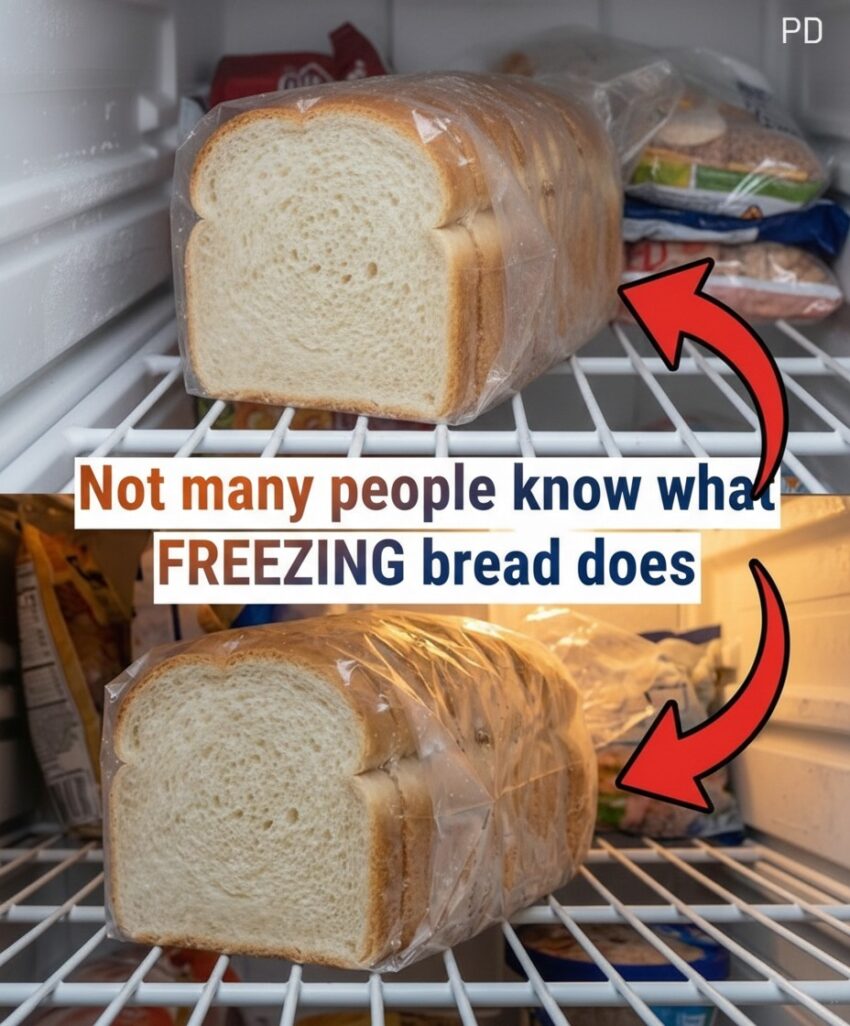
Freezing bread might seem simple, but some interesting science happens when you put a loaf into the freezer.
🍞 What Happens to Bread in the Freezer?
❄️ 1. Staling Slows Down (a lot)
Bread goes stale because of a process called
(Starch Retrogradation)
- At room temperature, starch molecules recrystallize → bread becomes hard
- Freezing almost stops this process, keeping bread fresher for longer
🧊 2. Moisture Gets Locked In
- Water inside the bread turns into ice
- This helps preserve softness, as long as the bread is wrapped properly
- Poor wrapping → freezer burn → dry, tough bread
⏳ 3. Shelf Life Extends Dramatically
- Room temp: 2–5 days
- Freezer: up to 2–3 months without major quality loss
🔥 4. Texture Returns When Reheated
When you thaw or toast frozen bread:
- Ice melts back into moisture
- Heat reverses some starch changes
- Bread becomes soft and fresh-like again
🧠 Best Way to Freeze Bread
- Slice before freezing (so you can take out only what you need)
- Wrap tightly in plastic or foil, then seal in a bag
- Remove as much air as possible
⚠️ What Can Go Wrong?
- Freezer burn → dry patches
- Repeated thawing → soggy texture
- Long storage → slight loss of flavor
✅ Pro Tip
Toast frozen slices directly—no need to thaw. It often tastes better than day-old bread.
🧾 Bottom Line
Freezing doesn’t ruin bread—it actually preserves freshness by slowing down the main cause of staling. Done right, it’s one of the easiest ways to reduce food waste and always have good bread on hand.
If you want, I can explain why refrigerated bread actually goes stale faster than frozen bread (it surprises most people).
