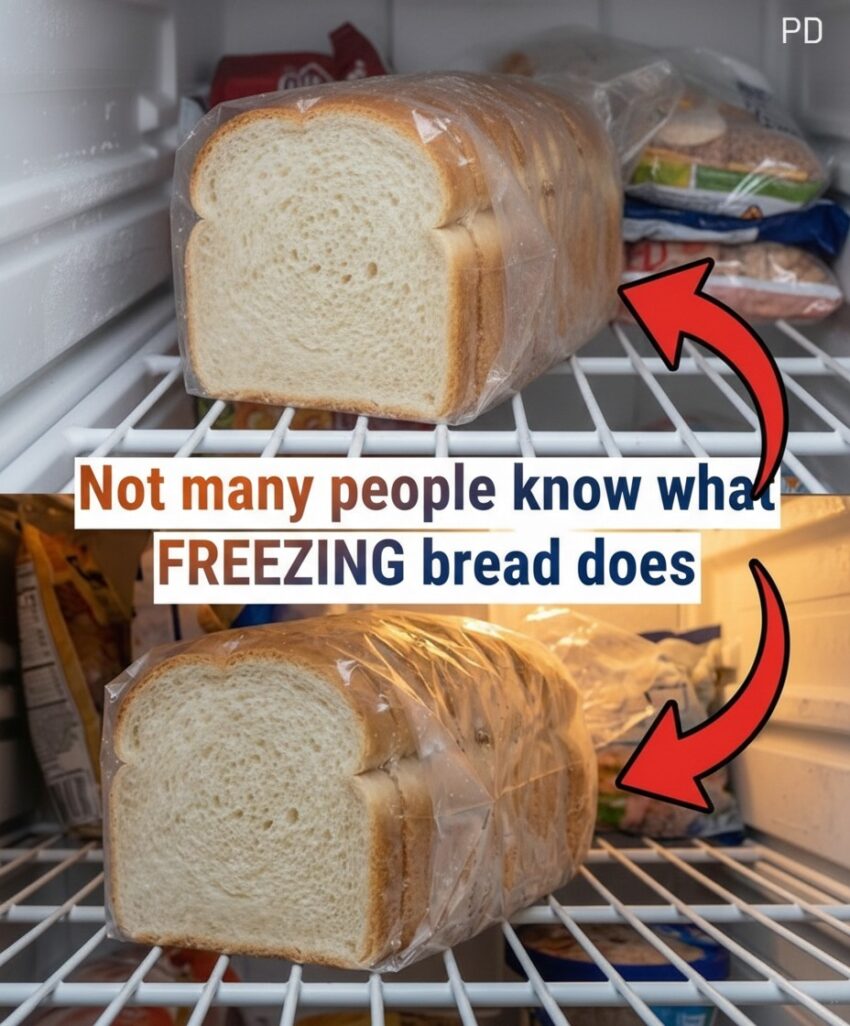
When bread goes into the freezer, a few interesting (and useful) things happen at the microscopic level:
❄️ What freezing does to bread
🧊 1. Water turns to ice
Bread contains a lot of moisture. When frozen:
- Water inside the bread forms ice crystals
- These crystals can slightly disrupt the bread’s structure
👉 This is why thawed bread can sometimes feel a bit drier or crumbly.
🧠 2. Staling basically pauses
Bread normally goes stale due to a process called
starch retrogradation
- Starches in bread recrystallize over time → making it hard
- Freezing slows this process dramatically
👉 So freezing preserves freshness much better than refrigeration.
🍞 3. Microbes stop growing
- Mold and bacteria go dormant in the cold
- Bread won’t spoil while frozen
👉 That’s why frozen bread lasts weeks to months.
🔥 What happens when you thaw it
🌡️ 4. Ice melts back into water
- Moisture returns, but not always evenly
- Texture might be slightly different
♨️ 5. Heat can “revive” it
- Toasting or warming reverses some staling
- Makes bread taste fresh again
⚠️ Biggest mistake to avoid
- Freezer burn (dry, white patches)
👉 Happens when air reaches the bread
✔ Prevent it by:
- Sealing tightly (zip bag, foil, or airtight container)
- Removing as much air as possible
💡 Bottom line
Freezing doesn’t ruin bread—it actually:
- Preserves freshness
- Stops mold
- Slows staling
…but may slightly affect texture due to ice crystal formation.
If you want, I can show you the best way to freeze and thaw bread so it tastes almost fresh-baked 👍
