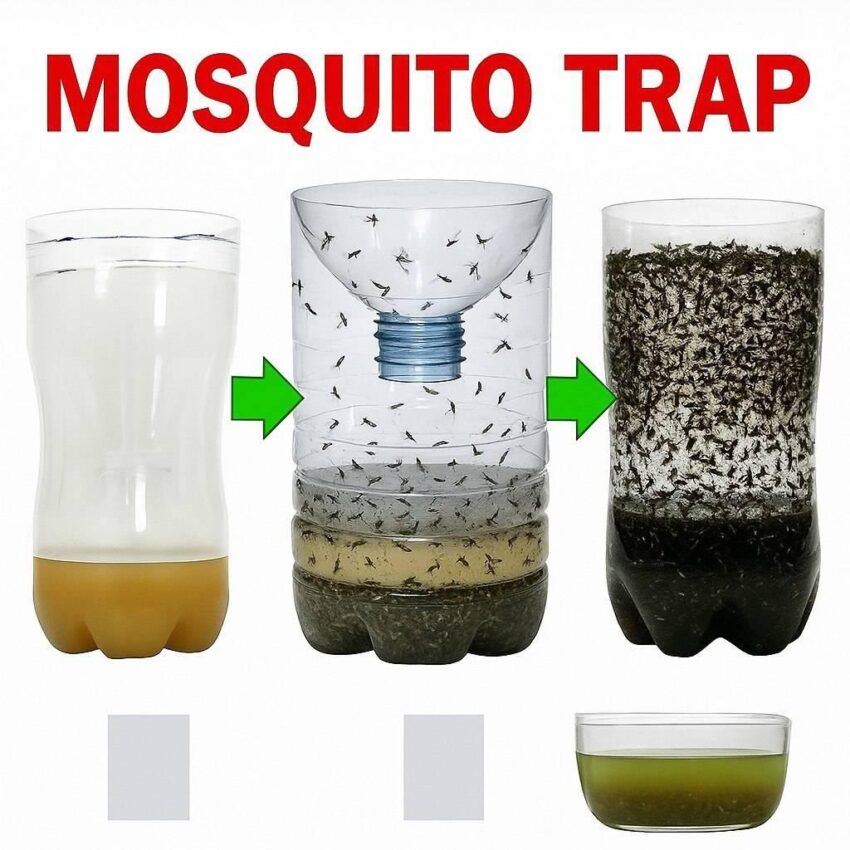
That claim is misleading. A homemade mosquito trap can reduce mosquitoes in a small area, but there is no “natural remedy that eliminates them all.” Mosquito control is always about reduction, not total elimination.
What homemade mosquito traps can actually do
Common DIY traps (like sugar-yeast bottles or vinegar traps) work by:
- Producing CO₂ or odors that attract mosquitoes
- Capturing some of them in a container
They can:
- Reduce local mosquito numbers slightly
- Help indoors or in small enclosed areas
But they:
- Don’t affect breeding sites outside (standing water, drains, plants)
- Don’t eliminate mosquitoes in a yard or neighborhood
Why mosquitoes keep coming back
Mosquitoes breed in:
- Standing water (even bottle caps or plant trays)
- Gutters and drains
- Ponds, puddles, and damp soil
A trap alone can’t compete with ongoing breeding sources.
What actually works (real mosquito control)
1. Remove breeding water (most important)
- Empty containers, plant saucers, buckets
- Clean gutters regularly
2. Physical barriers
- Window screens
- Bed nets in high-risk areas
3. Repellents
- DEET, picaridin, or oil of lemon eucalyptus (effective, evidence-based)
4. Fans (surprisingly effective indoors)
- Mosquitoes are weak fliers
5. Larvae control
- In ponds: biological agents like Bti (safe bacterial control)
Bottom line
Homemade traps can help a little, but they do not “eliminate all mosquitoes.” Real control requires removing breeding sites and using repellents/barriers.
If you want, I can show you a simple DIY trap that actually works reasonably well and explain how to set it up so it doesn’t just become a myth-based hack.
