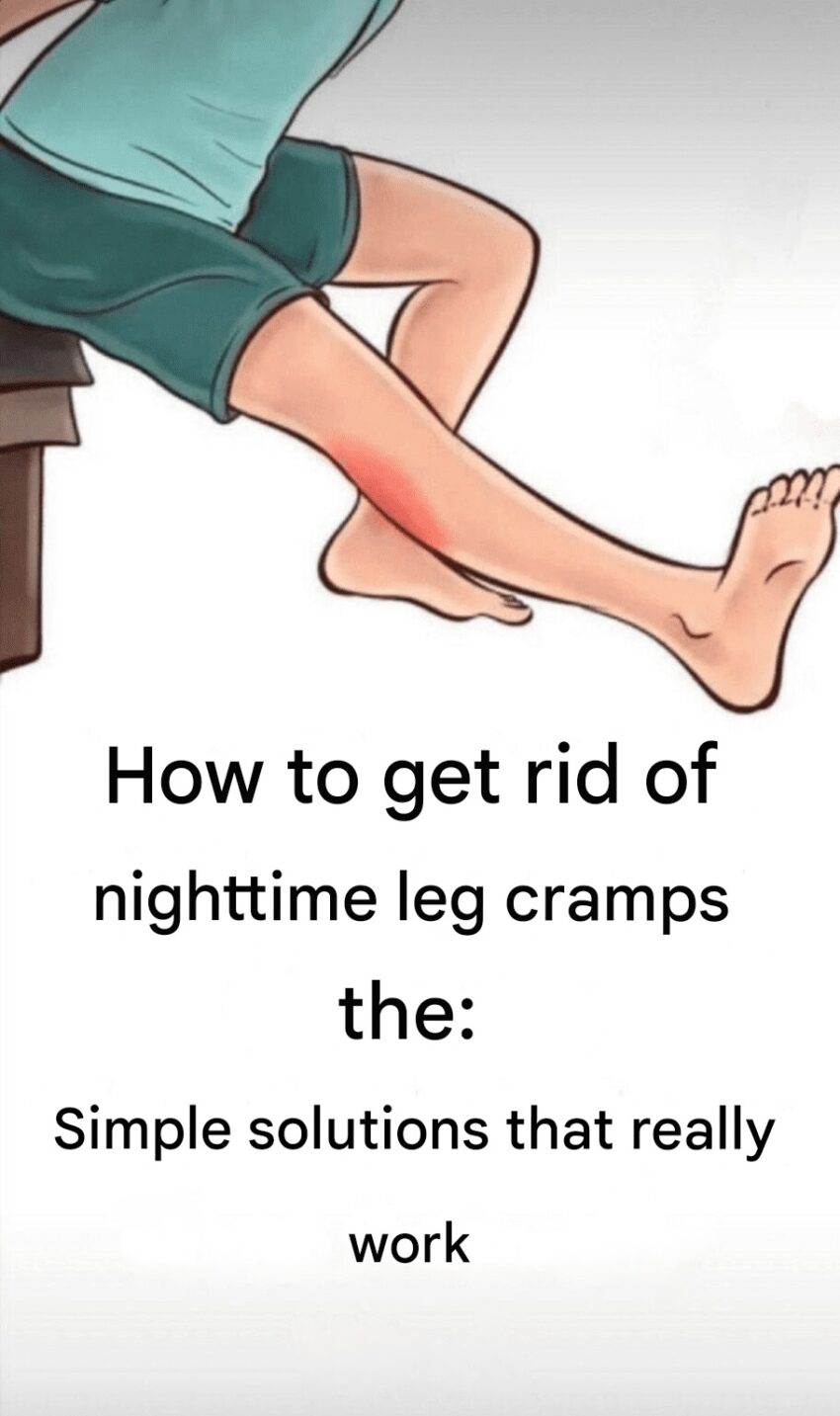
Nighttime leg cramps (often called sleep-related leg cramps) are sudden, painful muscle contractions that usually affect the calf, foot, or thigh during sleep. They’re common and can be linked to dehydration, mineral imbalance, or circulation issues.
Here are simple solutions that often help:
1. Stretch Before Bed 🦵
Gentle stretching can relax muscles and reduce cramps.
Calf stretch example
- Stand facing a wall.
- Place one foot behind the other.
- Keep the back leg straight and heel on the floor.
- Hold 20–30 seconds.
2. Stay Hydrated 💧
Dehydration can trigger cramps.
- Drink water throughout the day.
- Increase fluids after exercise or in hot weather.
3. Check Electrolytes 🥗
Low levels of minerals can contribute to cramps.
Helpful nutrients include:
- Magnesium (nuts, seeds, leafy greens)
- Potassium (bananas, potatoes, avocados)
- Calcium (dairy products, fortified foods)
4. Massage the Muscle 🤲
If a cramp occurs:
- Gently massage the tight muscle.
- Slowly stretch the foot upward toward your shin.
- Walking around briefly may also help.
5. Apply Heat or Warm Baths ♨️
Warmth relaxes muscles.
- Use a heating pad or take a warm bath before bed.
6. Improve Sleep Position 🛌
Sleeping with toes pointed downward can trigger calf cramps.
- Try loosening blankets at the foot of the bed.
- Some people place a pillow under the calves to keep feet relaxed.
When to See a Doctor
Seek medical advice if cramps are:
- Frequent or severe
- Accompanied by swelling, redness, or weakness
- Occurring with conditions like Peripheral Neuropathy, Diabetes, or Peripheral Artery Disease.
💡 Quick tip: A short 5-minute stretch routine before bed is one of the most effective and simple ways many people reduce nighttime leg cramps.
If you’d like, I can also show you 5 surprising medications that can cause nighttime leg cramps, which many people don’t realize.
