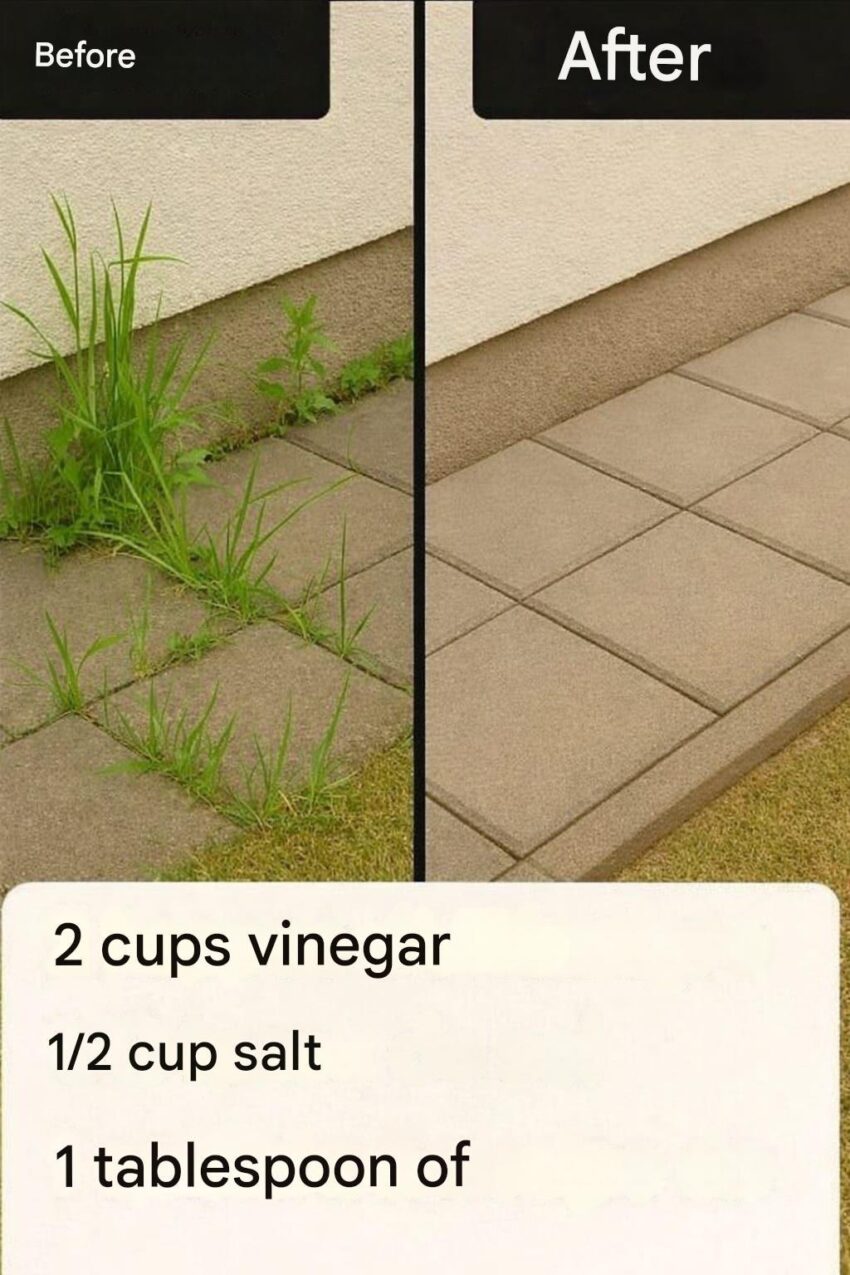
You can make a simple homemade herbicide, but it’s important to know upfront: “super effective” homemade mixes are usually non-selective, meaning they kill any plant they touch and can also affect soil health if overused.
Here are the safest and most commonly used DIY options:
🌿 1. Vinegar-based herbicide (most common)
Ingredients:
- White vinegar (5–20% acetic acid if available)
- A few drops of dish soap
How it works:
Vinegar burns the leaves, and soap helps it stick.
How to use:
- Spray directly on weeds on a sunny day
- Reapply after a few days if needed
✔ Works best on young, small weeds
❌ Not effective on deep-rooted weeds (like dandelions)
🧂 2. Salt-based weed killer (use with caution)
Ingredients:
- Salt
- Warm water
- A little dish soap
How it works:
Salt dehydrates plants and prevents regrowth.
Important warning:
- Can sterilize soil for a long time
- Should be used only on cracks, driveways, or areas you never want plants again
🔥 3. Boiling water (simplest method)
How it works:
- Hot water instantly damages plant cells
✔ Very effective for weeds in pavement cracks
✔ No chemicals needed
❌ Also kills any nearby plants it touches
⚠️ Safety and environmental notes
- Avoid spraying near flowers, lawns, or vegetable gardens
- Do not overuse salt solutions outdoors
- Wear gloves and avoid inhaling mist
- These methods are non-selective (they don’t “choose” weeds)
🧠 Bottom line
The most reliable DIY weed control is:
- Vinegar + soap for light weeds
- Boiling water for cracks and paths
- Salt only for permanent “no-growth” areas
If you want, I can also show you a weed-control method that actually prevents regrowth for weeks without damaging soil as much—that’s where most homemade solutions fall short.
