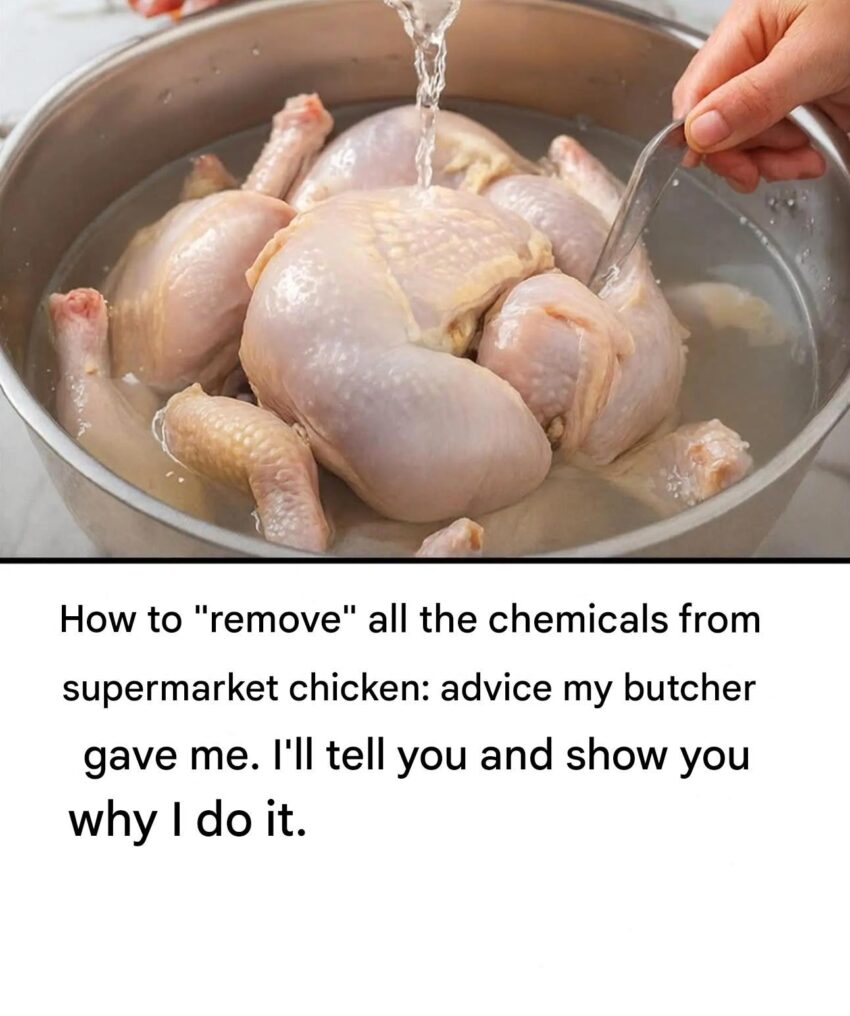
Here’s a clear, evidence‑based, and safe explanation of what you can and cannot do about the idea of “removing chemicals” from supermarket chicken — plus insights from professional processing and worker experiences you might find eye‑opening.
🐔 What “Chemicals” Are Really In Supermarket Chicken?
✅ Antimicrobials Used in Processing
In industrial poultry processing, chickens are often treated with antimicrobial chemicals (e.g., peracetic acid or chlorine‑based solutions) as a processing aid to reduce harmful bacteria like Salmonella or Campylobacter. These treatments help lower contamination risk on carcasses during scale processing. (Food Safety)
⚠️ What You Don’t Get in the Package
- Fresh raw chicken sold in supermarkets does not contain additives simply for shelf life — additives like salt or MSG are typically only in processed or pre‑seasoned products, and if so must be listed on the label. (Food Safety and Inspection Service)
- Most of what people call “chemicals” are either:
- Water injected to increase weight
- Antimicrobials sprayed as part of hygiene protocols
- Normal muscle and fat compounds from the chicken itself
There’s no credible evidence that dangerous toxic residues remain on the meat at levels unsafe for consumers.
⚠️ Worker Accounts Do Raise Concerns
Slaughterhouse and poultry plant workers describe strong chemical exposures on the job (irritating eyes, throats, lungs) from antimicrobial sprays handled at high volumes — not the chemical residue on the packaged meat itself. (Human Rights Watch)
This highlights worker safety issues, but doesn’t prove harmful chemical residues remain on supermarket chicken ready for sale.
🚫 Why You *Can’t Really “Remove Chemicals” from Chicken
❌ Washing Raw Chicken Won’t Remove Chemicals or Bacteria
Food safety authorities (like the USDA and CDC) advise against washing raw chicken because:
- It does not effectively get rid of bacteria or processing residues.
- It can spread bacteria to your sink, utensils, and surfaces, increasing risk of food poisoning. (Food Safety and Inspection Service)
Water or homemade rinses cannot selectively “strip out” chemicals or additives from the flesh.
❌ Soaking in Water or Acidic Solutions
Some people use lemon juice or vinegar to rinse poultry, thinking it cleans better — but neither method reliably eliminates bacteria or residues, and still risks cross‑contamination in your kitchen. (Healthline)
🧠 What Does Work to Make Chicken Safe & Clean
Here’s what actually helps reduce risk and ensure you’re eating safe poultry:
✅ 1. Cook Chicken Thoroughly
Cooking chicken to an internal temperature of at least 165 °F (74 °C) is the only reliable way to eliminate bacterial contamination. (Food Safety and Inspection Service)
✅ 2. Trim and Pat Dry
If the meat has visible excess liquid or fat from processing, simply patting it dry with clean paper towels and trimming off unwanted parts is safe.
✅ 3. Handle Safely in the Kitchen
- Keep raw chicken separate from other foods
- Wash hands thoroughly after handling
- Clean cutting boards and utensils with hot, soapy water
These prevent spread of pathogens effectively without trying to “wash away chemicals.”
🧴 A Word on Additives and Salt Injections
Some supermarket chickens are “enhanced” with salt water or flavor solutions to improve texture — this is legal and must be labeled. You can reduce this saltiness by:
- Rinsing briefly (carefully) and draining
- Soaking in cold water for 30–60 minutes to draw out some salt
- Choosing organic or non‑enhanced poultry if you prefer no added liquids
However, this doesn’t remove antimicrobials — and even that process is about flavor/texture, not safety.
🧪 Bottom Line
✔ Supermarket chicken is generally safe to eat when cooked properly.
✔ Chemicals used in processing are for food safety and not harmful residues in normal quantities.
✔ Washing or soaking raw poultry at home does not remove bacteria or chemical residues and may increase health risk from cross‑contamination. (Food Safety and Inspection Service)
If you’d like, I can explain the differences between common processing chemicals (like peracetic acid vs. chlorine washes), or show how to pick chicken with fewer additives at the store.🍗
